Budgeting for Beginners: Your Ultimate Guide to Financial Freedom

Budgeting for Beginners: Your Ultimate Guide to Financial Freedom
Are you feeling overwhelmed by your finances? Do you wish you had a clearer picture of where your money goes each month? You’re not alone. Many people struggle with managing their money effectively, but the good news is that it doesn’t have to be complicated. Our comprehensive guide to Budgeting for Beginners is here to demystify personal finance and equip you with the tools and knowledge you need to take control of your financial future. Whether you’re just starting your financial journey or looking to refine your money management skills, this article will provide actionable insights to help you achieve financial freedom.
Understanding your finances is the first step towards building a secure future. A budget isn’t about restricting yourself; it’s about empowering yourself to make informed decisions about your spending and saving. It’s a roadmap that guides your money towards your goals, whether that’s paying off debt, saving for a down payment, or simply having more peace of mind. By the end of this guide, you’ll not only understand the ‘how’ but also the ‘why’ behind effective budgeting, setting you on a path to lasting financial well-being.
Why Budgeting is Essential for Everyone
Many people view budgeting as a chore, a restrictive set of rules designed to limit their enjoyment. However, this couldn’t be further from the truth. Budgeting is a powerful tool that offers numerous benefits, regardless of your income level or financial situation. For Budgeting for Beginners, understanding these benefits is crucial for motivating consistent effort.
Gain Control Over Your Money
The most immediate and significant benefit of budgeting is gaining control. When you budget, you know exactly how much money you have coming in and going out. This transparency eliminates financial surprises and allows you to make conscious choices about your spending. Instead of wondering where your paycheck disappeared, you’ll have a clear understanding of every dollar’s destination. This sense of control reduces financial stress and empowers you to steer your financial ship in the direction you desire.
Identify and Eliminate Wasteful Spending
Without a budget, it’s easy for small, seemingly insignificant expenses to add up. Those daily coffees, subscriptions you no longer use, or impulsive online purchases can silently erode your savings. Budgeting forces you to confront these habits. By tracking your spending, you can easily identify areas where you might be overspending or where cuts can be made without significantly impacting your quality of life. This process isn’t about deprivation; it’s about optimizing your spending to align with your values and goals.
Achieve Your Financial Goals Faster
Do you dream of buying a house, taking a dream vacation, or retiring early? These goals often seem daunting without a clear plan. A budget transforms abstract dreams into concrete objectives. By allocating specific amounts to savings and debt repayment, you create a direct path to achieving your goals. Each month, you’ll see tangible progress, which serves as a powerful motivator to stay on track. For Budgeting for Beginners, setting small, achievable goals initially can build confidence and momentum.
Reduce Financial Stress and Anxiety
Money worries are a leading cause of stress. When you don’t know if you’ll have enough to cover your bills or handle an unexpected expense, anxiety can quickly build. A well-crafted budget provides a sense of security. You’ll know your financial limits and capabilities, reducing the fear of the unknown. This peace of mind is invaluable, allowing you to focus on other aspects of your life without the constant shadow of financial concern.
Prepare for Unexpected Expenses
Life is unpredictable. Car repairs, medical emergencies, or job loss can throw even the most stable finances into disarray. A budget encourages you to build an emergency fund, a financial safety net that can cushion the blow of unexpected events. By proactively saving, you can navigate these challenges without resorting to high-interest debt, protecting your long-term financial health.
The Foundation of Budgeting: Tracking Your Income and Expenses
The cornerstone of any effective budget is a clear understanding of your income and expenses. This might sound obvious, but many people have only a vague idea of where their money truly goes. For Budgeting for Beginners, this step is non-negotiable and provides the raw data needed to build an accurate budget.
Step 1: Calculate Your Monthly Income
Your income is the money you have coming in. This includes your net pay (after taxes and deductions), any side hustle income, rental income, alimony, child support, or other regular sources of funds. It’s crucial to use your net income, not your gross income, as this is the actual amount available to you for spending and saving. If your income varies month to month, it’s best to take an average of the last few months or use your lowest monthly income to be conservative. This ensures you’re not overestimating your available funds.
Step 2: Track Your Expenses
This is where many people get stuck, but it’s arguably the most insightful part of the budgeting process. You need to know where every dollar is going. There are several ways to track your expenses, and the best method is the one you’ll actually stick with.
- Manual Tracking: Keep a small notebook and pen, or use a spreadsheet. Write down every single expense, no matter how small, as soon as you make it. This method offers a high level of awareness.
- Digital Spreadsheets: Google Sheets or Excel templates can be incredibly powerful. You can categorize expenses, create charts, and automate calculations. This is a great option for those comfortable with basic computer skills.
- Budgeting Apps: Many apps like Mint, YNAB (You Need A Budget), Personal Capital, or PocketGuard can link directly to your bank accounts and credit cards, automatically categorizing transactions. This offers convenience and real-time insights.
- Bank and Credit Card Statements: Review your statements regularly. While this is retrospective, it can help you identify recurring charges and spending patterns you might not have noticed.
Commit to tracking your expenses for at least one month, ideally two or three. This will give you an accurate snapshot of your spending habits and reveal where your money is truly going. Don’t judge yourself during this phase; simply observe.

Categorizing Your Expenses: Needs vs. Wants
Once you’ve tracked your expenses, the next critical step in Budgeting for Beginners is to categorize them. This allows you to differentiate between essential spending and discretionary spending, which is vital for finding areas to optimize.
Needs (Fixed and Variable)
Needs are expenses that are essential for your survival and well-being. These are non-negotiable. They can be further broken down into fixed and variable needs:
- Fixed Needs: These are expenses that are generally the same amount each month and are difficult to change in the short term. Examples include:
- Rent/Mortgage payments
- Loan payments (car, student)
- Insurance premiums (health, car, home)
- Minimum debt payments
- Variable Needs: These are essential expenses that fluctuate from month to month. Examples include:
Wants (Discretionary Spending)
Wants are expenses that improve your quality of life but are not strictly necessary for survival. These are the areas where you have the most flexibility to cut back if needed. Examples include:
- Dining out/Takeaway
- Entertainment (movies, concerts, streaming services)
- Vacations and travel
- New clothes and accessories (beyond basic needs)
- Hobbies and recreational activities
- Expensive coffees or daily treats
Be honest with yourself during this categorization process. Sometimes, a ‘want’ can feel like a ‘need’ because it’s deeply ingrained in your routine. However, recognizing the distinction is key to making conscious financial decisions. This exercise is particularly enlightening for anyone doing Budgeting for Beginners, as it often highlights spending patterns that can be easily adjusted.
Choosing the Right Budgeting Method for You
There isn’t a one-size-fits-all approach to budgeting. What works for one person might not work for another. The best budgeting method for you is the one you can stick with consistently. Here are some popular methods, perfect for Budgeting for Beginners:
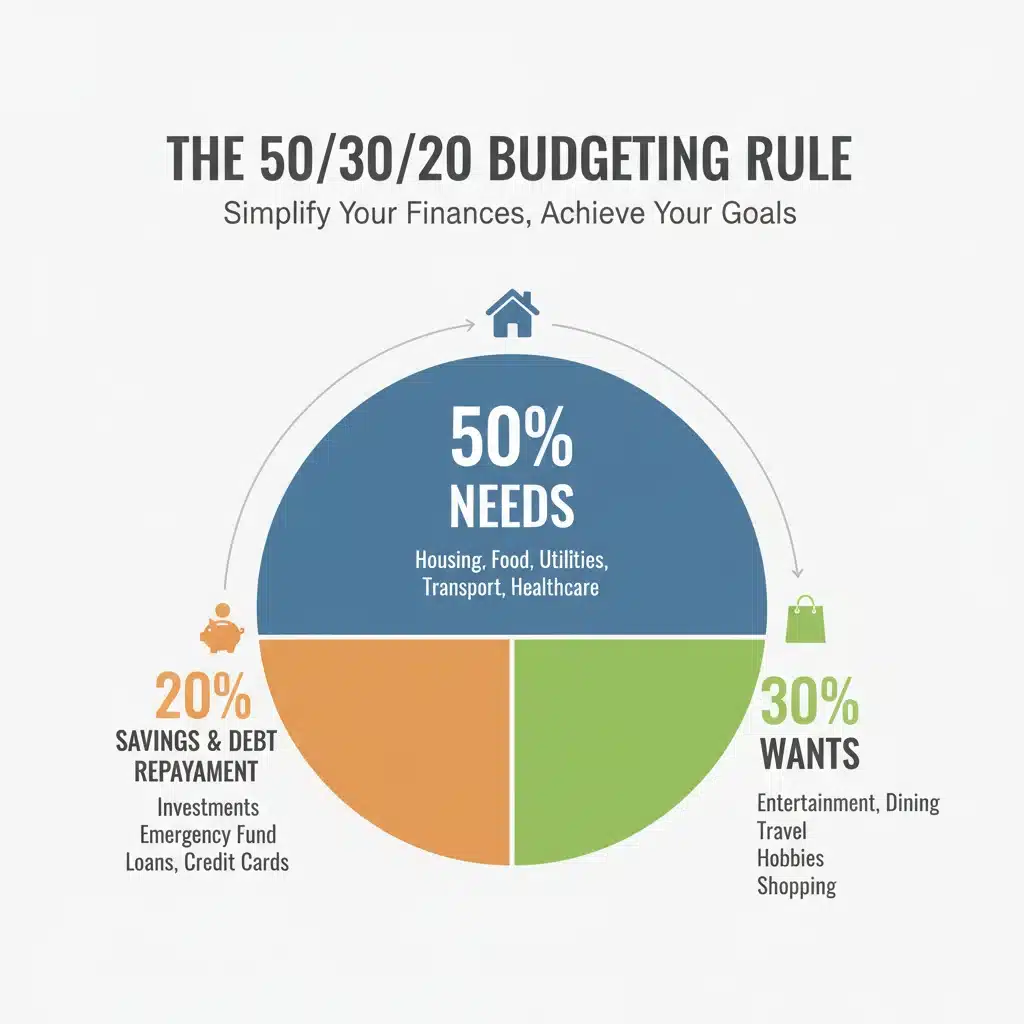
1. The 50/30/20 Rule
This is a simple and widely recommended budgeting framework, especially for beginners. It suggests allocating your after-tax income as follows:
- 50% to Needs: This covers essential expenses like housing, utilities, groceries, transportation, and minimum debt payments.
- 30% to Wants: This includes discretionary spending like dining out, entertainment, hobbies, and shopping.
- 20% to Savings & Debt Repayment: This portion is dedicated to building an emergency fund, retirement savings, investing, and paying down additional debt beyond the minimums.
The 50/30/20 rule offers a great starting point because it’s flexible and easy to implement. You can adjust the percentages slightly to fit your unique situation, but it provides a clear guideline.
2. Zero-Based Budgeting
With zero-based budgeting, every dollar of your income is assigned a job. This means that your income minus your expenses should equal zero. You allocate money to all categories – needs, wants, savings, and debt repayment – until there’s nothing left over. This method requires more detailed planning but ensures that no money is left unaccounted for. It’s incredibly effective for those who want maximum control over their cash flow and is a powerful tool for Budgeting for Beginners who are committed to a strict financial plan.
3. The Envelope System (Cash Budgeting)
This method is a classic for a reason. You withdraw cash for your variable expense categories (like groceries, entertainment, and personal care) and place that cash into separate envelopes. Once an envelope is empty, you stop spending in that category until the next budgeting period. This is particularly effective for people who tend to overspend with credit cards or struggle with impulse purchases. It provides a tangible limit and makes you more aware of each spending decision.
4. Pay Yourself First
This isn’t a full budgeting system but a crucial principle to incorporate into any method. The idea is to prioritize saving and investing by allocating money to these categories *before* you pay your bills or spend on wants. Set up automatic transfers to your savings and investment accounts on payday. This ensures that your financial goals are met first, rather than being an afterthought. For Budgeting for Beginners, automating savings is one of the most effective habits to build.
5. The Anti-Budget (Automated Budget)
If you find traditional budgeting too restrictive or time-consuming, the anti-budget might be for you. This method focuses on automating your savings and bill payments first. Once those are taken care of, you can spend the rest of your money freely without tracking every single transaction. This works best for individuals who have a good handle on their spending habits and whose fixed expenses and savings goals are already well-established. It offers freedom but requires discipline in setting up those initial automatic transfers.
Experiment with different methods to see which one resonates most with your personality and financial goals. The key is to find a system that you can consistently maintain over the long term.
Creating Your First Budget: A Step-by-Step Guide
Now that you understand the ‘why’ and have explored different methods, let’s walk through the practical steps of creating your first budget. This actionable guide is designed specifically for Budgeting for Beginners to make the process straightforward and effective.
Step 1: Gather Your Financial Information
Collect all necessary documents: pay stubs, bank statements, credit card statements, loan statements, and any other income or expense records from the past 1-3 months. This will provide the data you need for accurate tracking.
Step 2: Calculate Your Total Monthly Income
As discussed, sum up all your net income sources for the month. Be realistic and use a conservative estimate if your income fluctuates.
Step 3: List All Your Fixed Expenses
Go through your bank and credit card statements and list every fixed expense. These are usually the easiest to identify as they are consistent. Examples: rent/mortgage, car payment, insurance, student loan payment, subscriptions.
Step 4: Estimate Your Variable Expenses
This is where your expense tracking from the previous section comes in handy. Review your spending over the last few months to get an average for categories like groceries, utilities, transportation, and personal care. Don’t forget infrequent expenses like annual memberships or car maintenance; divide them by 12 and budget that amount monthly.
Step 5: Allocate Money to Savings and Debt Repayment
Decide how much you want to save each month for your emergency fund, retirement, or specific goals (like a down payment). Also, plan for any extra debt payments you want to make beyond the minimums. Remember the ‘Pay Yourself First’ principle here.
Step 6: Subtract Expenses from Income
Now, do the math: Total Monthly Income – Total Monthly Expenses (Needs + Wants + Savings + Debt Repayment). Ideally, this number should be zero (if using zero-based budgeting) or a small positive number that you can put towards additional savings or minor discretionary spending. If you have a negative number, it means you’re spending more than you earn, and adjustments are needed.
Step 7: Adjust and Optimize
If your budget shows you’re overspending, it’s time to make adjustments. Start by looking at your ‘wants’ categories. Can you reduce dining out, cut down on subscriptions, or find cheaper entertainment options? Even small cuts can make a big difference over time. If cuts to ‘wants’ aren’t enough, evaluate your ‘variable needs’ – can you save on groceries by meal planning or reduce utility costs? For Budgeting for Beginners, this iterative process of adjusting and optimizing is key to creating a sustainable budget.
Step 8: Implement and Monitor Regularly
Once your budget is set, start using it! Track your spending throughout the month to ensure you’re staying within your allocated amounts. At the end of each month, review your budget. Did you stick to it? Where did you overspend or underspend? What worked well, and what didn’t? Make adjustments as needed. Your budget is a living document, not a rigid set of rules. It will evolve as your life and financial situation change.
Common Budgeting Mistakes to Avoid
Even with the best intentions, it’s easy to fall into common budgeting traps. Being aware of these pitfalls can help Budgeting for Beginners stay on track and avoid discouragement.
Being Unrealistic
One of the biggest mistakes is creating a budget that’s too restrictive or doesn’t align with your actual spending habits. If you love your daily coffee, cutting it out entirely might lead to frustration and ultimately abandoning your budget. Instead, find a balance. Budget for a reasonable number of coffees, or find cheaper alternatives. An overly strict budget is unsustainable.
Ignoring Small Expenses
Those “small” purchases – a vending machine snack, an app purchase, a parking meter – can quickly add up. Often referred to as “phantom expenses” or “money leaks,” they can derail your budget if not accounted for. Remember, every dollar counts, especially when you’re just starting with Budgeting for Beginners.
Not Tracking Consistently
A budget is only as good as the data it’s based on. If you stop tracking your spending mid-month, you lose visibility and control. Choose a tracking method you can commit to daily or weekly, whether it’s an app, a spreadsheet, or a notebook.
Forgetting Infrequent Expenses
Annual subscriptions, car registration, holiday gifts, or semi-annual insurance payments can wreak havoc on a monthly budget if not planned for. Create a ‘sinking fund’ for these expenses by setting aside a small amount each month so you’re prepared when they come due.
Not Budgeting for Fun
A budget shouldn’t be about deprivation. If you don’t allocate money for entertainment, hobbies, or dining out, you’re more likely to feel restricted and break your budget. Include a ‘fun money’ or ‘personal spending’ category to ensure you still enjoy life while staying on track.
Giving Up After One Slip-Up
No one’s perfect. You will likely overspend in a category or forget to track an expense at some point. The key is not to let one mistake derail your entire effort. Acknowledge it, learn from it, adjust your budget if necessary, and get back on track. Consistency over perfection is the goal for Budgeting for Beginners.
Not Reviewing and Adjusting Your Budget
Your life changes, and so should your budget. A budget created today might not be relevant six months from now. Review your budget regularly (monthly or quarterly) to ensure it still aligns with your income, expenses, and financial goals.
Advanced Tips for Budgeting Success
Once you’ve mastered the basics of Budgeting for Beginners, you can start incorporating more advanced strategies to optimize your financial plan and accelerate your progress towards financial freedom.
Automate Your Savings and Bill Payments
This is perhaps the most powerful tip for long-term budgeting success. Set up automatic transfers from your checking account to your savings and investment accounts on payday. Similarly, automate as many bill payments as possible. This ensures you ‘pay yourself first’ and never miss a due date, reducing stress and avoiding late fees. Automation removes the need for constant willpower and makes saving effortless.
Utilize the Cash Envelope System for Problem Areas
If you consistently overspend in specific variable categories (e.g., groceries, dining out, entertainment), consider using the cash envelope system for those areas. By limiting yourself to a set amount of physical cash, you create a tangible barrier to overspending and become more mindful of each purchase.
Implement a ‘No-Spend’ Challenge
Periodically challenge yourself to a ‘no-spend’ day, weekend, or even a week. During this time, you only spend money on absolute necessities. This exercise can be incredibly eye-opening, revealing how much you typically spend on discretionary items and helping you identify habits you can change. It’s a great way to reset your spending habits and boost your savings.
Create Sinking Funds for Irregular Expenses
Beyond your emergency fund, create separate ‘sinking funds’ for specific future expenses that aren’t monthly bills. Examples include holiday gifts, car maintenance, home repairs, annual subscriptions, or a planned vacation. By setting aside a small amount each month into these dedicated funds, you avoid financial shocks and can pay for these expenses without dipping into your emergency savings or going into debt.
Regularly Review Your Subscriptions
Subscription services (streaming, apps, gyms, delivery services) can quietly add up. Make it a habit to review all your subscriptions every few months. Cancel anything you’re not actively using or getting value from. You might be surprised how much you can save.
Meal Plan and Cook at Home
Food is often one of the largest variable expenses. Meal planning, cooking at home, and bringing your lunch to work can significantly reduce your grocery bill and eliminate expensive dining out habits. This is a practical and impactful tip for Budgeting for Beginners looking to find quick savings.
Negotiate Bills and Shop Around
Don’t just accept your current rates for services like internet, cable, or insurance. Call your providers and negotiate for better deals. Be willing to switch providers if you can find a more competitive offer elsewhere. Even small reductions in your fixed expenses can free up significant funds over time.
Set Financial Goals with Deadlines
Specific, measurable, achievable, relevant, and time-bound (SMART) goals are powerful motivators. Instead of saying ‘I want to save more,’ say ‘I want to save $5,000 for a down payment by December 31st.’ This clarity makes it easier to allocate funds in your budget and track your progress.
Educate Yourself Continuously
Personal finance is a journey, not a destination. Continue to read books, listen to podcasts, and follow reputable financial blogs. The more you learn, the better equipped you’ll be to make smart financial decisions and adapt your budget as your life circumstances evolve. This continuous learning is vital for anyone engaged in Budgeting for Beginners and beyond.
The Psychological Benefits of Budgeting
Beyond the tangible financial gains, budgeting offers profound psychological benefits that contribute to overall well-being. For Budgeting for Beginners, understanding these non-monetary rewards can provide additional motivation to stick with the process.
Increased Peace of Mind
Living paycheck to paycheck or constantly worrying about money is incredibly stressful. A clear budget provides a sense of security. You know where your money is going, that your bills are covered, and that you’re making progress towards your goals. This knowledge significantly reduces financial anxiety and fosters a deeper sense of calm.
Empowerment and Control
Taking control of your finances is an empowering experience. Rather than feeling like money is something that happens *to* you, budgeting allows you to actively direct your financial future. This sense of agency can translate into other areas of your life, boosting confidence and decision-making abilities.
Reduced Guilt and Shame
Many people experience guilt or shame around their spending habits, especially if they feel out of control. Budgeting brings transparency and intentionality to your spending. When you allocate funds for ‘wants’ or ‘fun money,’ you can enjoy those purchases without guilt, knowing they fit within your financial plan.
Improved Relationships
Money is a frequent source of conflict in relationships. When couples budget together, it fosters open communication, shared goals, and a sense of teamwork. Having a clear financial plan can reduce arguments and strengthen the bond between partners. For single individuals, budgeting reduces the pressure of financial stress, allowing for healthier relationships with friends and family.
Greater Freedom and Flexibility
It might seem counterintuitive, but a budget doesn’t restrict; it creates freedom. By managing your money effectively, you gain the freedom to pursue opportunities, take calculated risks, and achieve dreams that might otherwise seem out of reach. It gives you the flexibility to handle unexpected events without derailing your entire financial life.
Better Sleep
Financial worries often keep people awake at night. When you have a clear plan and are confident in your financial standing, you’re more likely to experience better, more restful sleep. This improved sleep quality has a ripple effect on your overall health, mood, and productivity.
A Sense of Accomplishment
Each time you stick to your budget, hit a savings goal, or pay down a debt, you experience a sense of accomplishment. These small victories build momentum and reinforce positive financial habits, leading to sustained motivation and long-term success. This positive feedback loop is particularly beneficial for Budgeting for Beginners as they build new habits.
Conclusion: Your Journey to Financial Empowerment Starts Now
Embarking on the journey of Budgeting for Beginners is one of the most impactful steps you can take towards securing your financial future. It’s not merely about numbers and spreadsheets; it’s about gaining control, reducing stress, and empowering yourself to live the life you desire. We’ve covered the essential ‘whys’ and ‘hows’ of budgeting, from understanding your income and expenses to choosing the right method and avoiding common pitfalls.
Remember, budgeting is a skill that improves with practice. Don’t aim for perfection from day one. Start small, be patient with yourself, and celebrate your progress along the way. Your budget is a dynamic tool that will evolve with your life, so be prepared to review and adjust it regularly. The discipline you cultivate now will pay dividends for years to come, offering not just financial stability but also invaluable peace of mind and the freedom to pursue your dreams.
Take the first step today. Start tracking your expenses, choose a budgeting method that resonates with you, and commit to reviewing your finances regularly. The path to financial freedom is within your reach, and effective budgeting is your most reliable guide.