Loyalty Program Expiration: 2026 US Consumer Guide

In the dynamic world of consumer loyalty, where every purchase, flight, and stay can earn you valuable points, miles, or rewards, there’s a looming threat that often goes unnoticed until it’s too late: loyalty program expiration. For US consumers in 2026, understanding and actively managing these expiration dates is more crucial than ever. The landscape of loyalty programs is constantly evolving, with terms and conditions frequently updated, making it challenging for even the most diligent consumers to keep track. This comprehensive guide is designed to empower you with the knowledge and strategies needed to navigate the intricacies of loyalty program expiration, ensuring your hard-earned rewards never vanish into thin air.
Loyalty programs are designed to foster customer retention, offering incentives that encourage continued engagement with a brand. From airline miles that promise dream vacations to hotel points that unlock luxurious stays, and retail rewards that provide discounts on everyday essentials, these programs represent significant value. However, this value is contingent on your ability to utilize it before it expires. The sad reality is that billions of dollars worth of loyalty points go unredeemed each year, largely due to consumers being unaware of or misunderstanding expiration policies. As we look towards 2026, with an increasingly competitive market and sophisticated loyalty schemes, staying informed is your best defense against losing your valuable rewards.
This article will delve deep into the various types of loyalty program expiration policies, provide actionable tips for tracking your points, and outline effective strategies to prevent them from expiring. We’ll explore common pitfalls, highlight specific program examples, and offer a proactive approach to managing your loyalty portfolio. Whether you’re a seasoned points hacker or just starting to accumulate rewards, this guide will equip you with the tools to master loyalty program expiration and ensure every point counts.
Understanding the Nuances of Loyalty Program Expiration Policies
The first step to safeguarding your points is to comprehend the different ways in which loyalty programs implement expiration policies. These policies are rarely uniform across brands or even within different tiers of the same program. Generally, loyalty program expiration falls into a few key categories:
Fixed Date Expiration
Some programs operate on a straightforward fixed-date expiration. This means your points expire on a specific date, regardless of your activity. For instance, points earned within a certain calendar year might expire on December 31st of the following year. This type of policy is less common for major travel and credit card reward programs but can be found in some retail or smaller loyalty schemes. The key here is to note the earning period and the corresponding expiration date carefully.
Activity-Based Expiration
This is arguably the most prevalent type of loyalty program expiration policy, especially among airlines, hotels, and major credit card rewards programs. Under activity-based expiration, your points will expire if there is no qualifying activity on your account within a specified timeframe, often 12 to 24 months. The good news is that ‘qualifying activity’ can encompass a wide range of actions, not just earning more points. It might include:
- Earning points (e.g., through a purchase, flight, or stay)
- Redeeming points (e.g., for a reward, upgrade, or gift card)
- Transferring points to or from a partner
- Making a small purchase using a co-branded credit card
- Donating points to charity
The critical takeaway here is that *any* activity can reset the expiration clock. Understanding what constitutes ‘qualifying activity’ for each of your programs is paramount. A small, strategic action can often prevent a large sum of points from expiring.
Soft Expiration (Account Closure)
While not strictly an expiration policy in the traditional sense, some programs reserve the right to close inactive accounts and forfeit points after an extended period of no activity, often much longer than standard activity-based expiration (e.g., 3-5 years). This is less about individual point expiration and more about account dormancy. It’s a less common but still important consideration for very infrequent users of a particular program.
Tier-Based Expiration
In some programs, particularly those with elite status tiers, the expiration policy might vary depending on your status level. Higher tiers might enjoy more lenient expiration terms, or even have points that never expire as long as elite status is maintained. This is another incentive for customers to reach and retain higher status within a loyalty program.
Program-Specific Exceptions and Changes
It’s vital to remember that loyalty program expiration rules are subject to change. Economic conditions, mergers, acquisitions, and strategic shifts can all lead to updates in terms and conditions. What was true last year might not be true in 2026. Therefore, regularly reviewing the terms and conditions of your most valuable loyalty programs is a best practice. Subscribing to program newsletters can also provide timely alerts about such changes.
The Economic Impact of Expiring Points on US Consumers
The collective value of unredeemed and expired loyalty points in the US is staggering. Estimates suggest billions of dollars are lost annually by consumers who fail to utilize their rewards. This isn’t just a minor inconvenience; it’s a direct financial loss. For many, loyalty points represent a significant saving opportunity, whether it’s for travel, merchandise, or daily necessities. Losing these points due to expiration is akin to throwing away money.
Consider the average American household that participates in multiple loyalty programs – perhaps an airline, a hotel chain, a major credit card, and several retail stores. Each program holds a small portion of their accumulated value. Without a centralized tracking system or proactive management, it’s easy for these individual balances to slip into expiration territory. The economic impact is felt individually through lost travel opportunities or forfeited discounts, and collectively as a drain on consumer purchasing power.
Furthermore, the psychological impact of losing points can be significant. It can lead to frustration, disillusionment with loyalty programs in general, and a feeling of wasted effort. Brands that have clear, transparent, and manageable expiration policies often foster greater customer trust and loyalty in the long run. Conversely, programs with overly complex or punitive expiration rules can inadvertently alienate their most valuable customers.
Proactive Strategies to Combat Loyalty Program Expiration in 2026
Now that we understand the various types of loyalty program expiration and their impact, let’s explore practical, actionable strategies you can implement in 2026 to ensure your points remain active and available for redemption.
1. Centralize Your Loyalty Program Information
The first and most crucial step is to get organized. Many consumers are members of dozens of loyalty programs across various categories. Keeping track of them all manually is nearly impossible. Consider using:
- Spreadsheets: A simple Excel or Google Sheet can be incredibly effective. Create columns for Program Name, Account Number, Current Balance, Last Activity Date, Expiration Policy, and Next Expiration Date. Regularly update this sheet.
- Loyalty Tracking Apps: Several third-party apps (e.g., AwardWallet, Points.com) are designed to aggregate your loyalty accounts, track balances, and often send expiration alerts. These can be invaluable tools for managing a large portfolio of programs.
- Calendar Reminders: Once you know an expiration date or the window for activity, set multiple reminders in your digital calendar (e.g., 3 months, 1 month, 1 week before).
2. Understand Each Program’s Specific Policy
Do not assume all programs are the same. Dedicate time to review the terms and conditions for each of your key loyalty programs. Pay close attention to:
- The exact definition of ‘qualifying activity.’
- The timeframe for inactivity before points expire.
- Whether elite status impacts expiration.
- Any specific clauses regarding account closure due to dormancy.
This deep dive will save you from making assumptions that could lead to lost points.
3. Implement ‘Activity Reset’ Strategies
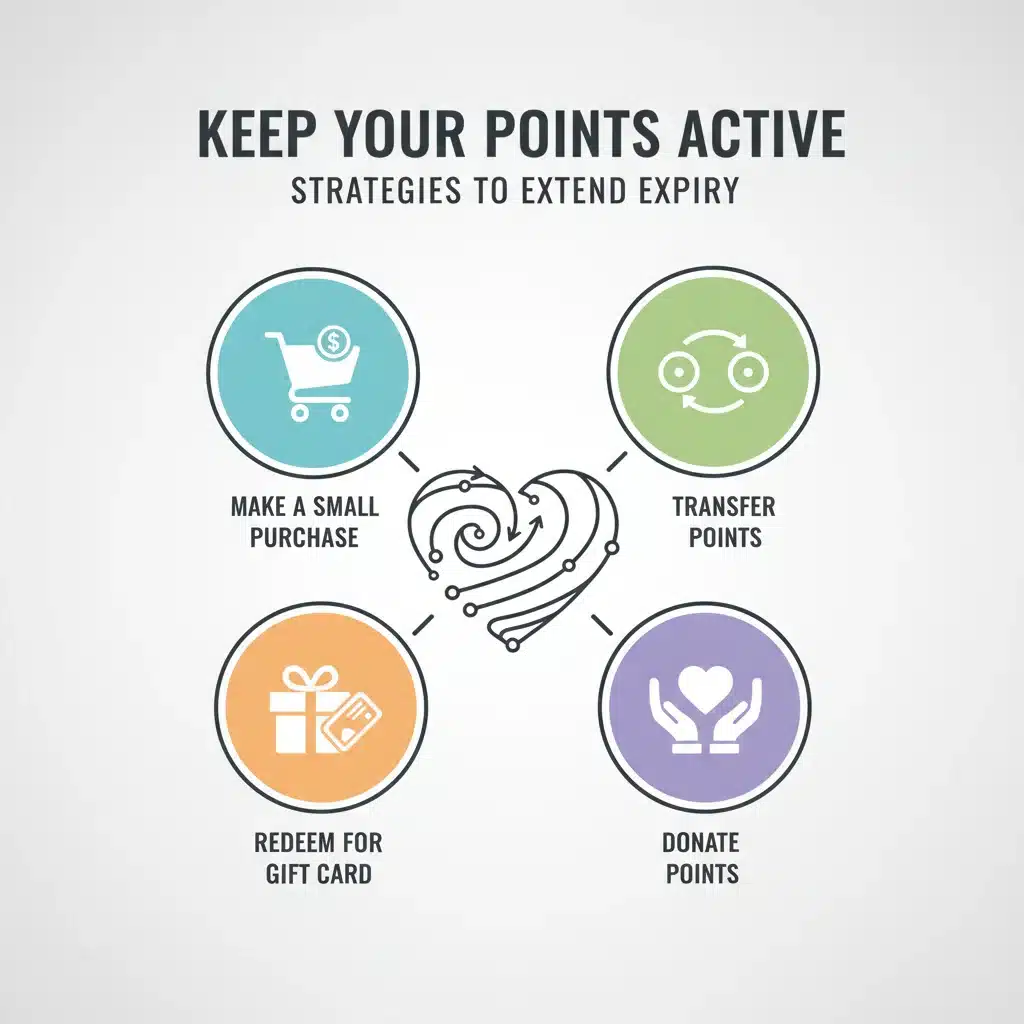
For programs with activity-based expiration, a small action can often reset the clock. Here are common and effective ways to generate qualifying activity:
- Make a Small Purchase: Use a co-branded credit card for a minor purchase (e.g., a coffee, a snack). This often counts as activity.
- Shop Through Portals: Many loyalty programs offer online shopping portals where you earn points for purchases made at participating retailers. Even a small purchase through these portals can reset the clock.
- Redeem a Small Amount: If you have a substantial balance, consider redeeming a small portion for a gift card, a magazine subscription, or a low-cost item. This is particularly useful if you don’t have immediate plans for a larger redemption.
- Transfer Points: If the program allows, transfer a small number of points to or from a partner program. Be mindful of transfer ratios and potential fees, but sometimes a small transfer is worth it to save a larger balance.
- Donate Points: Many programs allow you to donate points to charity. This is a win-win: you keep your account active and support a good cause.
- Engage with Program Promotions: Participating in surveys, clicking on promotional emails, or engaging with social media campaigns offered by some programs can sometimes count as activity. Always verify this in the terms.

4. Set Up Email Alerts and Notifications
Most loyalty programs offer email notifications for account activity and impending expiration. Ensure your contact information is up-to-date and that these emails aren’t going to your spam folder. Combine these official alerts with your own calendar reminders for a robust notification system.
5. Prioritize Programs with Non-Expiring Points (Where Possible)
While not always feasible, when choosing new loyalty programs or deciding where to concentrate your earning, give preference to programs that offer points that never expire, or have very lenient activity-based policies. Some premium credit cards, for example, offer points that do not expire as long as the card account remains open and in good standing. This can significantly reduce your management burden.
6. Consolidate Points When Appropriate
If you have points spread across multiple programs that allow transfers to a central partner (e.g., a major airline or hotel group that partners with several credit card reward programs), consider consolidating them. This not only makes tracking easier but can also help you reach a higher redemption threshold faster. Always evaluate transfer ratios and any potential fees before consolidating.
Common Pitfalls and How to Avoid Them in 2026
Even with the best intentions, consumers can fall victim to common mistakes that lead to loyalty program expiration. Here’s what to watch out for:
Ignoring Small Balances
It’s easy to overlook a small balance of points, assuming they’re not worth the effort to save. However, these small balances can add up, and the activity required to keep them alive is often minimal. Don’t let a few hundred points expire; a small redemption or charity donation can save them and potentially a much larger balance in the same program.
Relying Solely on a Single Activity Type
If your strategy is always to earn more points, what happens if your travel plans change or your spending habits shift? Diversify your activity reset strategies. Have a backup plan, whether it’s a small online purchase through a portal or a points donation, to ensure you can always generate qualifying activity when needed.
Not Reading the Fine Print on Program Changes
Brands will often announce changes to their terms and conditions, including expiration policies, well in advance. These announcements might be buried in a lengthy email or on a dedicated page on their website. Make it a habit to skim these updates, especially for your most valuable programs. A small change could have a significant impact on your points.
Forgetting About Family Accounts
If you manage loyalty accounts for family members, ensure you’re tracking their expiration dates as diligently as your own. Often, a single activity can keep multiple linked accounts active, but confirm the specific program rules.
Assuming All Points are Created Equal
Some points (e.g., those from a credit card’s proprietary rewards program) might have different expiration rules than points transferred to an airline or hotel partner. Always understand the specific expiration policy of the *holding entity* for your points. If you transfer points from a credit card to an airline, they then fall under the airline’s expiration policy.
Case Studies: Navigating Loyalty Program Expiration for Major US Programs (2026 Outlook)
While specific policies can always change, understanding the general approach of major US loyalty programs can provide valuable insight for 2026.
Airline Loyalty Programs (e.g., American AAdvantage, Delta SkyMiles, United MileagePlus)
Most major US airlines employ an activity-based expiration policy. For example, American AAdvantage miles typically expire after 24 months of inactivity, while United MileagePlus miles also expire after 18 months of inactivity. Delta SkyMiles famously do not expire. To keep airline miles active, you can:
- Fly with the airline or a partner airline.
- Use a co-branded credit card for purchases.
- Shop through their online shopping portals.
- Dine through their dining programs.
- Convert points from a hotel program or a transferable credit card rewards program.
- Donate miles to charity.
The key is consistent, even minimal, engagement. For Delta, the non-expiration policy is a significant advantage, but it doesn’t mean you shouldn’t track your balance and redemption opportunities.
Hotel Loyalty Programs (e.g., Marriott Bonvoy, Hilton Honors, World of Hyatt)
Hotel loyalty programs also commonly use activity-based expiration. Marriott Bonvoy points typically expire after 24 months of inactivity, Hilton Honors points after 24 months, and World of Hyatt points after 24 months. Similar to airlines, qualifying activity includes:
- Staying at a participating hotel.
- Using a co-branded credit card.
- Earning points through partners (e.g., rental cars, cruises).
- Redeeming points for a free night, merchandise, or experiences.
- Transferring points from a credit card rewards program.
A single paid night or a small points redemption can often extend the life of your entire points balance.
Credit Card Rewards Programs (e.g., Chase Ultimate Rewards, American Express Membership Rewards)
These programs often have more forgiving expiration policies. Points earned with Chase Ultimate Rewards or American Express Membership Rewards generally do not expire as long as your card account remains open and in good standing. This makes them highly valuable as a ‘holding tank’ for points, allowing you to transfer them to airline or hotel partners when you’re ready to redeem, thus effectively sidestepping partner expiration rules until the transfer occurs. However, if you close the card account, you typically forfeit any unredeemed points, so it’s crucial to redeem or transfer them beforehand.
Retail Loyalty Programs
Retail programs vary widely. Some, like Starbucks Rewards, might have points (Stars) that expire after a fixed period (e.g., 6 months from the month they were earned). Others, like store credit cards, might offer points that never expire as long as the account is active. Always check the specific terms for each retailer, as these programs can be less standardized than travel programs.
The Future of Loyalty Programs and Expiration in 2026 and Beyond
As we look beyond 2026, the trend in loyalty programs is towards greater personalization, flexibility, and potentially, more sophisticated expiration tracking tools provided directly by the brands. However, this doesn’t absolve consumers of their responsibility to stay informed. Brands will continue to balance the desire to reward loyal customers with the need to manage their liabilities from outstanding points. Therefore, expiration policies will remain a critical component of program design.
We might see more integration between loyalty programs, allowing for easier point transfers and potentially more universal activity definitions across partners. The rise of blockchain and decentralized loyalty programs could also introduce new paradigms for point ownership and expiration, but these are still in nascent stages. For the foreseeable future, the onus will largely remain on the consumer to actively manage their points.
Final Thoughts: Your Action Plan for Mastering Loyalty Program Expiration
Mastering loyalty program expiration in 2026 is a commitment, but one that pays significant dividends. By adopting a proactive and organized approach, you can ensure that your hard-earned points translate into tangible rewards, rather than becoming a statistic of forfeited value. Here’s your condensed action plan:
- Audit Your Accounts: List all your loyalty programs, account numbers, and current balances.
- Understand the Rules: For each program, specifically identify its expiration policy (fixed date, activity-based, non-expiring).
- Set Up Tracking: Use a spreadsheet, loyalty app, or calendar reminders to track last activity dates and upcoming expiration windows.
- Be Proactive: Before points get close to expiring, execute a small, qualifying activity to reset the clock.
- Stay Informed: Regularly check for program updates and changes to terms and conditions.
- Redeem Strategically: Don’t hoard points indefinitely; redeem them for experiences or items you value before expiration becomes a pressing concern.
Your loyalty points are a valuable asset. Treat them as such. With this guide, US consumers are well-equipped to navigate the complexities of loyalty program expiration in 2026 and beyond, ensuring that every point earned contributes to their financial well-being and enriches their lives. Don’t let your rewards slip away; take control and make your loyalty work for you.