Loyalty Program Credit Cards 2026: Are They Worth It for US Consumers?

Are Loyalty Program Credit Cards Worth It in 2026? An Analysis of US-Based Offers with 25,000+ Bonus Points.
In the dynamic landscape of personal finance, the allure of loyalty program credit cards remains a powerful draw for consumers. With the promise of lucrative rewards, from free flights and hotel stays to significant cash back and exclusive experiences, these cards can seem like an undeniable financial boon. However, as we look ahead to 2026, the question persists: are loyalty program credit cards truly worth it for the average US consumer, especially those enticed by offers boasting 25,000 or more bonus points?
This comprehensive guide delves deep into the evolving world of loyalty program credit cards, examining their benefits, potential drawbacks, and key considerations for 2026. We’ll explore what makes these cards appealing, analyze the practicality of achieving and redeeming significant bonus points, and help you determine if a loyalty card aligns with your financial strategy and lifestyle. The goal is to provide a clear, unbiased perspective to empower you to make informed decisions in a competitive marketplace.
The Enduring Appeal of Loyalty Program Credit Cards
The fundamental premise of loyalty program credit cards is simple yet compelling: use your card for everyday purchases, and in return, earn points, miles, or cash back that can be redeemed for valuable rewards. This value proposition has cemented their place in many consumers’ wallets. In 2026, this appeal is only amplified by increasingly sophisticated reward structures and partnerships designed to cater to diverse spending habits and aspirational goals.
Understanding the Core Benefits
The primary benefit of loyalty program credit cards is, of course, the rewards. These can manifest in several forms:
- Travel Rewards: Often the most sought-after, travel cards offer points or miles redeemable for flights, hotel stays, car rentals, and other travel-related expenses. Many come with premium travel perks like lounge access, free checked bags, and elite status.
- Cash Back: For those who prefer direct financial flexibility, cash back cards offer a percentage of your spending back as a statement credit, direct deposit, or gift card.
- Retailer/Brand-Specific Rewards: Some cards are tied to specific brands (e.g., airline, hotel chain, department store), offering enhanced rewards and benefits when you spend with that brand.
- Flexible Rewards Programs: Cards associated with major financial institutions (like Chase Ultimate Rewards or American Express Membership Rewards) offer points that can be transferred to various airline and hotel partners or redeemed for a wide array of options, providing maximum flexibility.
Beyond the direct rewards, many loyalty cards come packed with additional perks that can add significant value:
- Sign-Up Bonuses: This is often the biggest draw, with many cards offering substantial bonus points (like the 25,000+ we’re focusing on) for meeting a minimum spending requirement within the first few months.
- Purchase Protection and Extended Warranties: These provide peace of mind by covering eligible purchases against damage, theft, or extending manufacturer warranties.
- Travel Insurance: Coverage for trip cancellations, delays, lost luggage, and rental car insurance can save considerable money and stress.
- Concierge Services: Access to a personal assistant for booking travel, making reservations, or finding hard-to-get tickets.
- Exclusive Access: Invitations to special events, presale tickets, or unique experiences.
These benefits, when strategically utilized, can translate into substantial savings and enhanced experiences, making loyalty cards an attractive proposition for the savvy consumer.
The "Worth It" Equation: Weighing Pros and Cons in 2026
Determining if a loyalty program credit card is "worth it" requires a careful evaluation of its benefits against its potential drawbacks, particularly in the context of your individual spending habits and financial discipline. For 2026, several factors will influence this equation.
The Advantages: Why Loyalty Cards Can Be a Smart Choice
The advantages of loyalty program credit cards, especially those with generous bonus offers, are numerous:
- Significant Initial Value from Bonus Points: A 25,000+ bonus point offer can be incredibly valuable. Depending on the program, 25,000 points could translate to a domestic round-trip flight, several nights at a mid-tier hotel, or hundreds of dollars in cash back. This initial boost can set you up for substantial savings or a memorable experience right from the start.
- Maximizing Everyday Spending: By using a loyalty card for purchases you’d make anyway, you effectively get a discount or reward on everything. This passive earning can accumulate significantly over time.
- Enhanced Travel Experiences: Travel-focused loyalty cards often provide perks that elevate your journeys, from expedited security and airport lounge access to complimentary upgrades and free checked bags. These can transform a standard trip into a more luxurious and stress-free experience.
- Financial Flexibility Through Cash Back: For those who prefer not to travel, cash back cards offer direct monetary value, which can be used to offset expenses, save for a goal, or simply enjoy a return on spending.
- Building Credit History: Responsible use of any credit card, including loyalty cards, contributes positively to your credit score, which is crucial for future financial endeavors like mortgages or car loans.
The Disadvantages: What to Watch Out For
Despite the appealing rewards, loyalty program credit cards come with potential pitfalls that can erode their value if not managed carefully:
- Annual Fees: Many of the most rewarding loyalty cards, especially those with large bonus offers, come with annual fees that can range from under $100 to several hundred dollars. You must calculate if the value of the rewards and perks you receive outweighs this fee.
- Minimum Spending Requirements: To earn the attractive sign-up bonuses (e.g., 25,000+ points), you typically need to spend a significant amount within a short period (e.g., $3,000 in 3 months). If you can’t meet this naturally, you might overspend, negating the value of the bonus.
- High Interest Rates: Loyalty cards often have higher APRs than basic credit cards. Carrying a balance negates any reward value, as interest charges will quickly outpace what you earn. These cards are only "worth it" if you pay your balance in full every month.
- Complexity of Redemption: Some loyalty programs can be complex, with varying point values, blackout dates for travel, and intricate transfer partner systems. Maximizing your rewards often requires research and strategic planning.
- Devaluation of Points/Miles: Loyalty programs can change their redemption charts or point values without much notice, potentially diminishing the value of your accumulated rewards.
- Impact on Credit Score (if misused): Applying for multiple cards in a short period can temporarily lower your credit score due to hard inquiries. Additionally, missing payments or carrying high balances will severely damage your credit.
Navigating US-Based Offers with 25,000+ Bonus Points in 2026
For US consumers, the market for loyalty program credit cards with substantial bonus point offers is robust. As we approach 2026, card issuers continue to innovate, offering enticing incentives to attract new customers. When evaluating offers of 25,000+ bonus points, it’s crucial to look beyond the headline number and understand the true value and feasibility.
What Do 25,000+ Bonus Points Mean in Real Value?
The "worth" of 25,000 points varies significantly by loyalty program:
- Travel Programs: In airline programs, 25,000 miles might get you a domestic round-trip flight on a saver award ticket. In hotel programs, it could be one or two nights at a mid-tier hotel, or even more at a budget-friendly option. Flexible travel points (like Chase Ultimate Rewards or Amex Membership Rewards) often offer 1 to 1.5 cents per point when redeemed for travel through their portals or transferred to partners, meaning 25,000 points could be worth $250 to $375 or more.
- Cash Back Programs: For cash back, 25,000 points typically equate to $250. This is a straightforward and often preferred redemption method for many.
- Gift Cards/Merchandise: Redemption for gift cards or merchandise often yields a lower value per point (e.g., 0.7 to 1 cent per point), so 25,000 points might be worth $175 to $250.
Therefore, when you see a 25,000+ bonus point offer, immediately consider the program it’s tied to and its typical redemption values.

Key Factors to Consider When Choosing a Card
To ensure a loyalty program credit card is worth it for you in 2026, consider these factors:
- Your Spending Habits: Does the card offer bonus points in categories where you spend the most (e.g., groceries, dining, travel, gas)? If not, your earning potential will be limited.
- Your Financial Discipline: Can you consistently pay off your balance in full each month? If not, the interest charges will quickly negate any rewards earned.
- Your Travel Goals: Are you a frequent traveler, or do you prefer cash back? If travel, do you have specific airlines or hotel chains you prefer? Some cards align better with specific travel preferences.
- Annual Fee vs. Benefits: Carefully weigh the annual fee against the total value of the rewards, perks, and credits you realistically expect to use. For example, if a card has a $95 annual fee but offers a $100 travel credit you’d use anyway, the effective fee is much lower.
- Redemption Simplicity: Do you prefer straightforward cash back or are you willing to navigate complex travel redemption charts for potentially higher value?
- Credit Score Requirements: Most premium loyalty cards require good to excellent credit (typically 670+ FICO score). Ensure you meet the criteria before applying to avoid unnecessary hard inquiries.
Top Loyalty Program Credit Card Categories to Watch in 2026
In 2026, several categories of loyalty program credit cards will likely continue to dominate the market, each catering to different consumer needs:
1. Premium Travel Cards
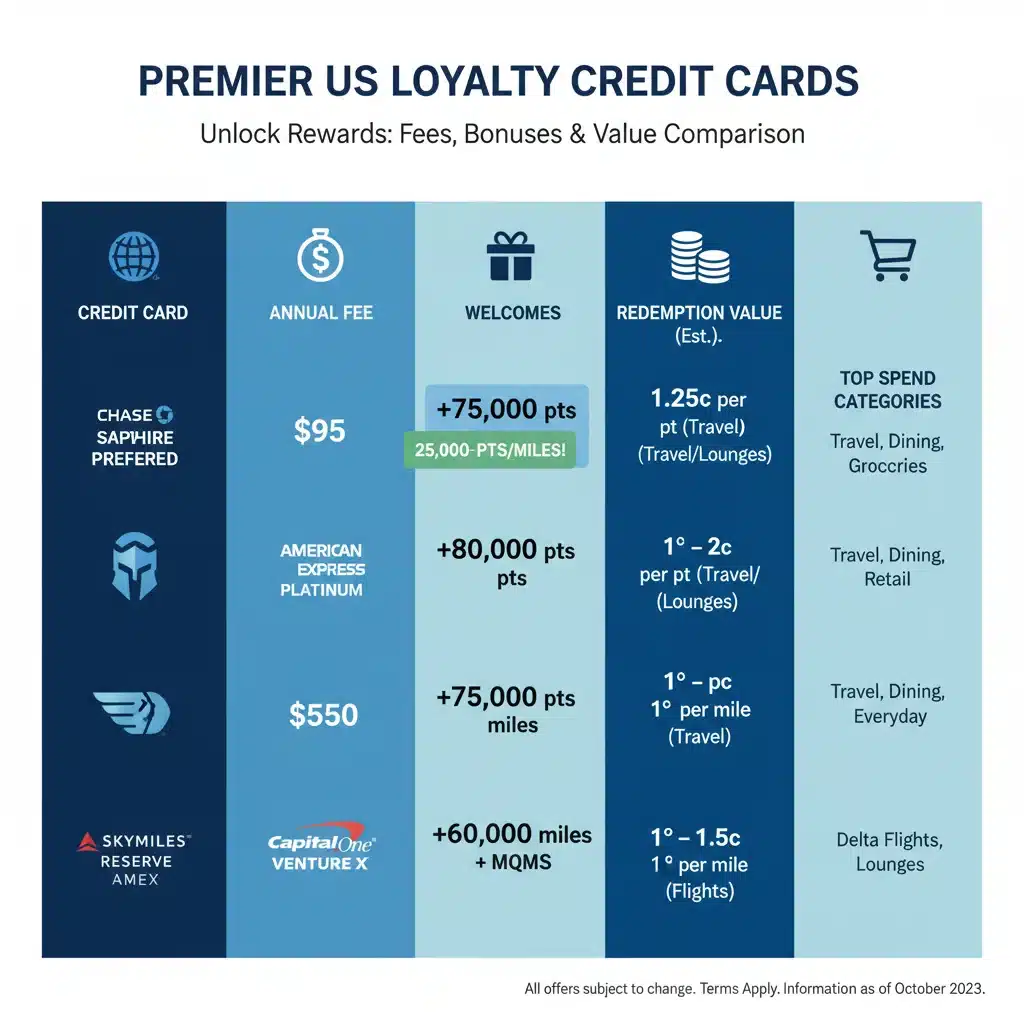
These cards, often with higher annual fees ($95-$550+), are designed for frequent travelers. They typically offer substantial bonus points (often well over 25,000), accelerated earning on travel and dining, and a suite of luxury perks like airport lounge access, travel credits, and elite status benefits. Examples often include the Chase Sapphire Reserve, The Platinum Card from American Express, and various co-branded airline or hotel cards.
Is it worth it? Yes, if you travel frequently, can maximize the travel credits and perks, and consistently pay your balance in full. The value derived from lounge access, insurance, and transfer partners can easily outweigh the annual fee.
2. Everyday Spend & Flexible Rewards Cards
These cards strike a balance between earning potential and flexibility. They often have moderate annual fees (or none at all) and offer bonus points on common spending categories like groceries, gas, and dining. Their points are usually part of a flexible rewards program (like Chase Ultimate Rewards or Amex Membership Rewards) that allows transfer to travel partners or redemption for cash back, making them highly versatile. Examples include the Chase Sapphire Preferred and American Express Gold Card.
Is it worth it? Highly likely, for a broad range of consumers. They offer solid bonus point opportunities (often 25,000+ for the Sapphire Preferred, for instance), good earning rates on everyday spending, and the flexibility to choose how you redeem, whether for travel or cash back.
3. Cash Back Cards
For those who prefer simplicity and direct monetary value, cash back cards remain a strong contender. While some offer flat rates on all purchases, others provide rotating bonus categories or higher rates on specific spending (e.g., 5% on groceries, gas, or online shopping for a quarter). Many cash back cards have no annual fee and can still offer significant sign-up bonuses (e.g., $250 which is equivalent to 25,000 points at 1 cent per point).
Is it worth it? Absolutely, for consumers who prioritize straightforward savings and don’t want the complexity of travel rewards. They are particularly valuable for those who spend consistently in bonus categories without incurring annual fees.
4. Business Loyalty Cards
Small business owners also have access to a wealth of loyalty program credit cards, often with even higher bonus point offers (sometimes 50,000+ points) due to higher typical business spending. These cards offer benefits tailored to business needs, such as expense tracking, employee cards, and bonus categories on business-related purchases. Examples include the Ink Business Preferred Credit Card and the American Express Business Platinum Card.
Is it worth it? If you own a small business and can manage business expenses separately, these cards can unlock immense value through large sign-up bonuses and accelerated earning on business spending.
Maximizing Your Loyalty Card Rewards: Strategies for 2026
Simply having a loyalty program credit card isn’t enough; strategic use is key to making it truly worth it. Here are some tips for maximizing your rewards in 2026:
- Meet Sign-Up Bonuses Responsibly: Focus on one card at a time to meet its minimum spending requirement without overspending. Use it for all your regular bills and purchases.
- Understand Bonus Categories: Know which card to use for which purchase. If one card offers 3x points on dining and another offers 2x on groceries, use the appropriate card for each category.
- Utilize Card Benefits: Don’t pay an annual fee for perks you don’t use. Make sure you’re taking advantage of travel credits, lounge access, and insurance benefits to offset the cost.
- Strategic Redemption: Research the best ways to redeem your points. For travel, transferring points to airline or hotel partners often yields the highest value, but requires flexibility. For cash back, ensure you’re getting at least 1 cent per point.
- Monitor Program Changes: Loyalty programs are dynamic. Stay informed about any changes to earning rates, redemption values, or partner relationships to adapt your strategy.
- Avoid Interest: This cannot be stressed enough. Always pay your full statement balance on time to avoid high interest charges that will quickly erase any value earned from rewards.
- Consider a Card Ecosystem: Some issuers offer a "card ecosystem" where points from different cards can be pooled and transferred, allowing for even greater flexibility and maximization (e.g., Chase Ultimate Rewards, American Express Membership Rewards).
The Future of Loyalty Programs in 2026
Looking ahead to 2026, we can anticipate several trends influencing loyalty program credit cards:
- Increased Personalization: Issuers will likely leverage AI and data analytics to offer increasingly personalized rewards and offers based on individual spending patterns.
- Sustainability Focus: Expect to see more loyalty programs integrate sustainability initiatives, allowing members to redeem points for eco-friendly products, carbon offsets, or donations to environmental causes.
- Digital Integration: Seamless integration with digital wallets, banking apps, and travel platforms will become even more crucial, making earning and redemption easier and more intuitive.
- Experiential Rewards: Beyond flights and hotels, there will be a continued emphasis on unique experiences, from exclusive concerts and culinary events to once-in-a-lifetime adventures, offering higher perceived value.
- Competitive Bonus Offers: The battle for new cardholders will likely continue, meaning attractive sign-up bonuses (including the 25,000+ point offers) will remain a common tactic.
These evolving trends suggest that loyalty program credit cards will continue to adapt to consumer preferences, potentially making them even more appealing and valuable for those who engage thoughtfully with them.
Conclusion: Making the "Worth It" Decision for You
So, are loyalty program credit cards worth it in 2026 for US consumers, especially with those enticing 25,000+ bonus point offers? The unequivocal answer is: it depends. For the financially disciplined individual who can pay their balance in full each month, strategically use bonus categories, and leverage the associated perks, these cards offer immense value. They can unlock free travel, provide significant cash back, and enhance everyday experiences.
However, for those who struggle with credit card debt, are prone to overspending to meet minimum requirements, or simply don’t have the time or inclination to navigate complex redemption systems, the annual fees and potential for interest charges can quickly diminish any perceived benefit. In such cases, a simple cash back card with no annual fee might be a more suitable and less risky option.
As you approach 2026, take the time to evaluate your financial habits, spending patterns, and aspirational goals. Research specific card offers, understand their terms and conditions, and calculate whether the projected value of the rewards truly outweighs the costs. With careful planning and responsible usage, a loyalty program credit card with 25,000+ bonus points can indeed be a remarkably rewarding addition to your financial toolkit.