Mastering 2026 Retailer Return Policies: Your Guide to Smart Shopping & Avoiding Losses

The retail landscape is constantly evolving, and with it, the intricacies of retailer return policies 2026. As we step further into the mid-2020s, consumers are encountering a more complex and often stricter environment when it comes to returning unwanted or faulty purchases. This comprehensive guide is designed to equip you with the knowledge and strategies needed to navigate these changes effectively, protect your consumer rights, and ultimately, avoid losing money on your purchases. Understanding the nuances of these policies is not just about convenience; it’s about financial prudence and ensuring you get fair value for your hard-earned money.
Gone are the days of universally lenient return windows and no-questions-asked refunds. Retailers, grappling with rising operational costs, increased return fraud, and the environmental impact of returns, are tightening their belts. This shift means that what you knew about returns last year might not hold true for retailer return policies 2026. From shorter return windows and restocking fees to stricter conditions for product eligibility and mandatory proof of purchase, the rules are changing. Our aim with this article is to demystify these changes, provide actionable advice, and empower you to make informed decisions before, during, and after your shopping experiences.
The Evolving Landscape of Retailer Return Policies 2026
The year 2026 marks a significant period of adjustment for both retailers and consumers regarding return policies. Several factors are driving these changes:
- Economic Pressures: Inflation and supply chain disruptions continue to squeeze retailers’ profit margins, making every return a potential financial hit.
- Sustainability Concerns: The environmental impact of returns, particularly in e-commerce (shipping, waste, refurbishment), is pushing companies to reduce return rates.
- Return Fraud: ‘Wardrobing’ (wearing an item and returning it) and other forms of fraudulent returns cost businesses billions annually, leading to stricter enforcement.
- Technological Advancements: AI and data analytics are enabling retailers to personalize return policies based on customer behavior, potentially penalizing frequent returners.
- Increased Online Shopping: The boom in e-commerce has led to higher return rates (often 20-30% compared to 5-10% for brick-and-mortar), forcing online retailers to adapt.
These trends culminate in a retail environment where understanding the specific terms and conditions of each store’s retailer return policies 2026 is more critical than ever. General assumptions can lead to disappointment and financial loss.
Key Changes You Can Expect in 2026
While policies vary widely, here are some common trends and changes you should be aware of:
- Shorter Return Windows: Many retailers are reducing their standard 30-day return periods to 14 days or even less, especially for electronics, seasonal items, or sale merchandise.
- Restocking Fees: Expect to see more widespread application of restocking fees, particularly for high-value items, electronics, or items returned without original packaging. These fees can range from 10% to 25% of the item’s price.
- Mandatory Proof of Purchase: While always important, proof of purchase is becoming non-negotiable. Digital receipts, order numbers, or original transaction IDs are often required even for exchanges or store credit.
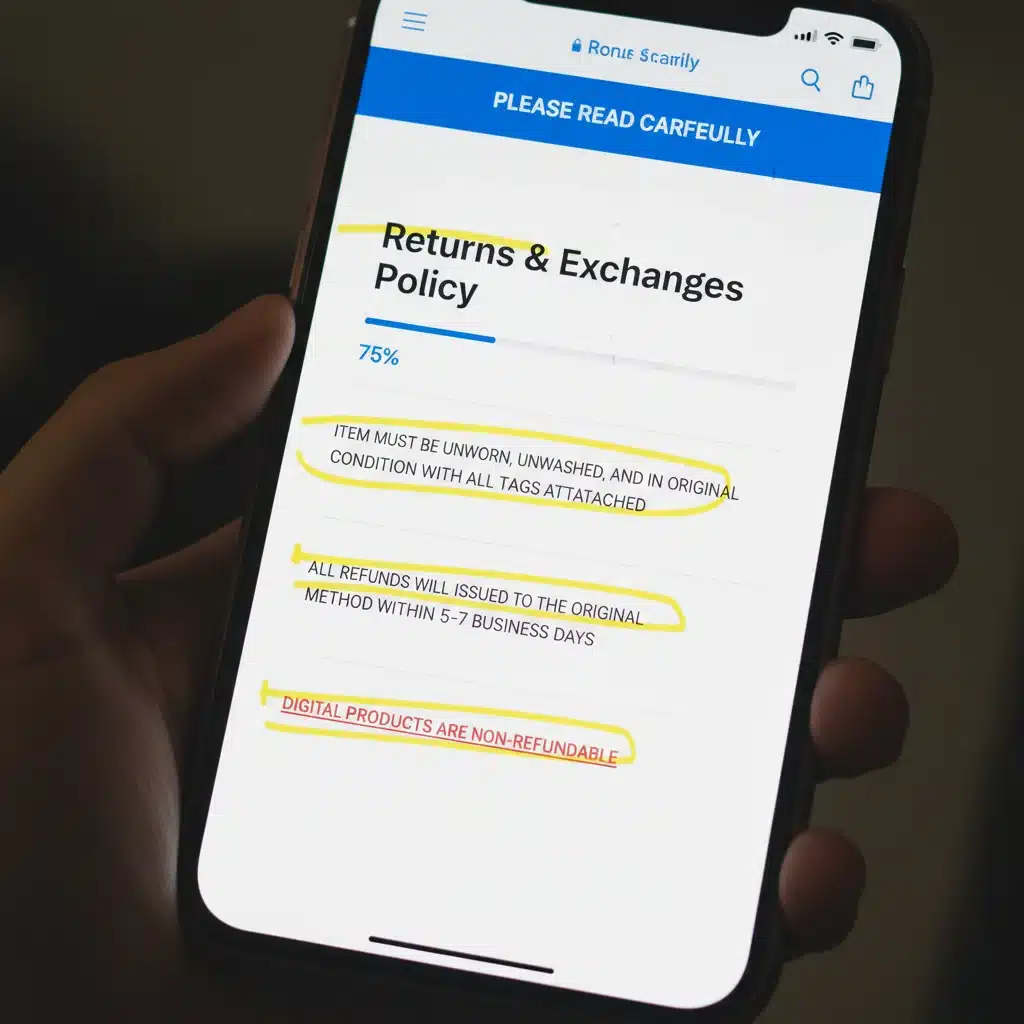
- Condition of Returned Items: Retailers are scrutinizing the condition of returned goods more closely. Items must be in their original, resalable condition, with all tags attached, and often unworn/unused.
- Differentiated Policies: Loyalty program members might enjoy more lenient policies than general customers. Conversely, customers with a high return rate might face stricter terms or even be flagged.
- Return Shipping Costs: For online purchases, free return shipping is becoming less common. Many retailers now expect customers to cover return shipping costs, or deduct it from their refund.
- Final Sale Items: The category of ‘final sale’ items is expanding, especially for discounted goods, personalized products, or hygiene items. Always check if an item is final sale before purchasing.
Being informed about these shifts in retailer return policies 2026 is the first step towards protecting your wallet. Don’t assume; always verify.
Before You Buy: Proactive Steps to Protect Your Purchase
The best way to avoid return headaches is to be proactive before you even make a purchase. A little foresight can save you significant time, money, and frustration down the line.
Read the Return Policy Carefully (Every Single Time!)
This cannot be stressed enough. Before clicking ‘buy’ or heading to the checkout, take a few minutes to read the retailer’s return policy. Don’t just skim it. Look for:
- Return Window: How many days do you have to return the item?
- Required Condition: Must it be unopened? With tags? Unworn?
- Proof of Purchase: What exactly do they require (receipt, order number, original payment method)?
- Restocking Fees: Are there any? Under what circumstances?
- Refund Method: Will it be a full refund to your original payment method, store credit, or exchange only?
- Exceptions: Are there specific items (e.g., electronics, swimwear, personalized items, sale items) that have different policies or are non-returnable?
- Online vs. In-Store Returns: Can an online purchase be returned in-store? Are there different rules?
- Return Shipping: Who pays for return shipping for online orders?
Many retailers now have easily accessible return policies on their websites, often linked from the product page or in the footer. For in-store purchases, ask a sales associate or look for signage near the registers. Knowledge is your best defense against unfavorable retailer return policies 2026.
Document Everything: Receipts, Packaging, and Communication
This is where diligent record-keeping pays off. Treat every purchase as if you might need to return it.
- Keep Original Receipts: Always keep your physical or digital receipts. For physical receipts, consider taking a photo as a backup, as thermal paper can fade. For digital receipts, save them in a dedicated folder or email tag.
- Retain Original Packaging: Many retailers require items to be returned in their original packaging, complete with all accessories, manuals, and tags. Do not discard these until you are certain you’re keeping the item.
- Photograph Condition: For valuable items, or if you suspect an item might be faulty, take photos or even a video of the item’s condition upon arrival/purchase, and if you need to return it, before you ship it. This provides proof in case of disputes.
- Document All Communication: If you interact with customer service regarding a potential return (via chat, email, or phone), keep records of the conversation, including dates, times, names of representatives, and any reference numbers.
These practices are crucial for navigating retailer return policies 2026, especially if a dispute arises.
Understand Product Specifics and Warranties
Beyond general return policies, some products have specific conditions:
- Electronics: Often have shorter return windows, require all seals intact, and may have different policies for software.
- Perishable Goods: Generally non-returnable unless faulty.
- Customized/Personalized Items: Almost always final sale.
- Hygiene Products: Often non-returnable once opened.
- Warranties: Differentiate between a retailer’s return policy and a manufacturer’s warranty. A return policy covers dissatisfaction or initial defect, while a warranty covers defects that arise after a period of use. Know which applies to your situation.
During the Return Process: Practical Solutions for a Smooth Experience
Even with careful preparation, the actual return process can sometimes be challenging. Here’s how to ensure it goes as smoothly as possible.
Act Promptly
Time is often of the essence. As return windows shrink, delays can cost you. If you know you need to return an item, initiate the process as soon as possible. Don’t wait until the last day.
Follow Instructions Precisely
Whether it’s an online return portal or an in-store process, follow the retailer’s instructions to the letter. This includes:
- Using the correct return shipping label.
- Packaging the item securely.
- Including all necessary documentation (e.g., return authorization forms).
- Meeting specific drop-off deadlines for shipping.
Deviating from the process can lead to delays, refusal of the return, or even forfeiture of your refund, particularly under the stricter retailer return policies 2026.
Be Prepared for Questions and Inspection
In-store returns might involve an associate inspecting the item and asking questions about the reason for return. Be honest and provide the information you’ve gathered (receipts, photos). For online returns, the inspection happens at the warehouse, which is why photographic evidence of the item’s condition before shipping can be invaluable.
Understand Your Refund Options
Some retailers might offer store credit as an alternative to a cash refund, especially if you don’t have a receipt or are outside the standard return window but within an extended ‘exchange’ period. Understand the implications of accepting store credit – it ties your money to that specific retailer.
When Things Go Wrong: Navigating Disputes and Protecting Your Rights
Despite your best efforts, you might encounter resistance or refusal during a return. Here’s how to handle such situations.
Stay Calm and Persistent
Aggression rarely helps. Remain calm, clearly state your case, and present your documentation. If the first customer service representative isn’t helpful, politely ask to speak to a supervisor or manager. Often, a higher-level employee has more discretion.
Reference the Policy (and Your Documentation)
If you’ve done your homework, you can confidently refer to the retailer’s published return policy. "According to your policy on your website, I am within the 30-day return window, and the item is in its original condition with the receipt." This demonstrates you are informed and serious.

Leverage Payment Provider Protections
Many credit card companies and payment services (like PayPal) offer consumer protection for purchases. If a retailer refuses a legitimate return, you can often initiate a chargeback with your payment provider. This process can be lengthy but can be an effective last resort. Be aware that frivolous chargebacks can lead to your account being flagged or closed by the payment provider.
Before initiating a chargeback, gather all your evidence: copies of the return policy, communication with the retailer, proof of purchase, and any tracking information for the returned item. Clearly explain why the retailer’s refusal was unjust according to their own stated policies or consumer law. This process can be a powerful tool for consumers, especially with the tighter retailer return policies 2026. However, it should be used judiciously and only when you have a strong case, as it can sometimes damage your relationship with the retailer.
Consumer Protection Agencies and Legal Recourse
If all else fails, consider escalating your complaint to consumer protection agencies. In the U.S., this might include the Better Business Bureau (BBB) or your state’s Attorney General’s office. These organizations can mediate disputes and, in some cases, take action against businesses engaging in unfair practices. While less common for individual returns, small claims court is another option for significant financial losses, though it requires more time and effort.
The Financial Impact of Retailer Return Policies 2026
Beyond the immediate refund, understanding retailer return policies 2026 has broader financial implications for consumers.
Hidden Costs of Returns
- Restocking Fees: As mentioned, these directly reduce your refund.
- Shipping Costs: If you pay for return shipping, that’s a direct loss.
- Time Value of Money: The time spent processing a return, disputing a refund, or waiting for credit to appear on your statement is time you could have spent earning or enjoying.
- Opportunity Cost: Money tied up in a pending refund isn’t available for other purchases or investments.
- Devaluation of Store Credit: If you receive store credit instead of a refund, your purchasing power is limited to that specific store, which might not always offer the best prices or products for your future needs.
Impact on Consumer Behavior and Budgeting
Stricter return policies should influence how you shop:
- More Deliberate Purchases: Impulse buying becomes riskier. Take time to research products, read reviews, and compare options to minimize the likelihood of needing a return.
- Budgeting for Returns: Factor in potential return shipping costs or restocking fees into your budget, especially for high-value items.
- Prioritizing Retailers with Favorable Policies: If two retailers offer similar products at similar prices, the one with a more transparent and consumer-friendly return policy might be the better choice.
- Understanding Loyalty Programs: Some loyalty programs offer extended return windows or waived restocking fees. This can be a significant benefit for frequent shoppers.
Future Trends in Retailer Return Policies
The evolution of retailer return policies 2026 won’t stop here. Expect continued innovation and adaptation:
- Personalized Return Policies: Data analytics will allow retailers to tailor policies based on individual customer return history, purchase frequency, and loyalty status. High-value, low-return customers might get preferential treatment, while ‘serial returners’ could face stricter terms.
- AI-Powered Return Prevention: Retailers will increasingly use AI to help customers make better purchase decisions upfront, reducing the need for returns. This could include better sizing tools, virtual try-ons, and enhanced product descriptions.
- Subscription Models for Returns: Some retailers might experiment with subscription services that offer benefits like free return shipping or extended return windows for a fee.
- Emphasis on In-Store Returns for Online Purchases: To reduce shipping costs and environmental impact, retailers will likely continue to encourage or even incentivize in-store returns for online purchases.
- Circular Economy Initiatives: More retailers will explore reselling, repairing, or recycling returned items, which could influence how they process and value returns.
- Increased Transparency: As consumers demand clarity, retailers might be pushed to make their policies even more accessible and understandable, potentially through interactive tools or clearer language.
Practical Checklist for Every Purchase
To summarize and provide an easy reference, here’s a checklist to follow for every purchase in 2026:
- Check the Return Policy: Locate and read the specific policy for the item you’re buying. Pay attention to the return window, condition requirements, and any fees.
- Confirm Proof of Purchase Requirements: Understand exactly what documentation is needed for a return.
- Keep All Packaging and Tags: Do not discard original packaging, tags, manuals, or accessories until you are 100% sure you’re keeping the item.
- Save Your Receipt (Physical & Digital): Take a photo of physical receipts and create a dedicated folder for digital ones.
- Inspect Item Upon Arrival: For online orders, inspect the item immediately for damage or defects.
- Act Quickly If a Return is Needed: Don’t procrastinate; initiate the return process as soon as possible.
- Follow Return Instructions: Adhere strictly to the retailer’s specific return procedures.
- Document Return Shipments: Get tracking numbers and keep records of all communication.
- Understand Your Consumer Rights: Know your local consumer protection laws, which can sometimes supersede retailer policies.
Conclusion: Empowering Your Shopping Experience in 2026
The landscape of retailer return policies 2026 is undoubtedly more challenging than in previous years. However, with a proactive approach, diligent record-keeping, and a clear understanding of your rights and the specific terms of each retailer, you can navigate these changes successfully. The goal is not just to avoid losing money but to foster a more confident and informed shopping experience. By mastering these evolving policies, you empower yourself as a consumer, ensuring that every purchase you make is a well-considered and financially sound decision. Don’t let complex return policies deter you; instead, use this knowledge to become a savvier shopper.