Small Business Loyalty Programs: Cut Costs 10% by 2026
In the dynamic landscape of the American economy, small businesses are constantly seeking innovative strategies to maintain competitiveness and, more importantly, to bolster their bottom line. One frequently overlooked yet incredibly powerful tool for achieving significant financial efficiencies is the strategic implementation of loyalty programs. Far from being mere marketing gimmicks, when designed and executed correctly, loyalty programs can become a cornerstone for substantial small business savings, potentially leading to a 10% reduction in operational costs by 2026. This comprehensive guide will delve into the multifaceted ways loyalty programs can drive cost savings, offering a US-specific blueprint for small businesses aiming for greater profitability and sustainability.
The concept of customer loyalty is as old as commerce itself, but its application in the digital age has transformed it into a sophisticated mechanism for business growth and cost control. For small businesses, where every dollar counts, optimizing existing customer relationships is often far more cost-effective than constantly chasing new ones. This is where well-crafted loyalty programs shine, turning repeat customers into enthusiastic advocates and, by extension, a reliable source of revenue that demands less marketing expenditure.
Understanding the Core Principles of Loyalty-Driven Savings
To truly harness the power of loyalty programs for small business savings, it’s crucial to understand the underlying principles that make them effective. It’s not just about offering discounts; it’s about fostering a relationship that encourages repeat purchases, increases average transaction value, and reduces the need for expensive customer acquisition strategies.
Reduced Customer Acquisition Costs (CAC)
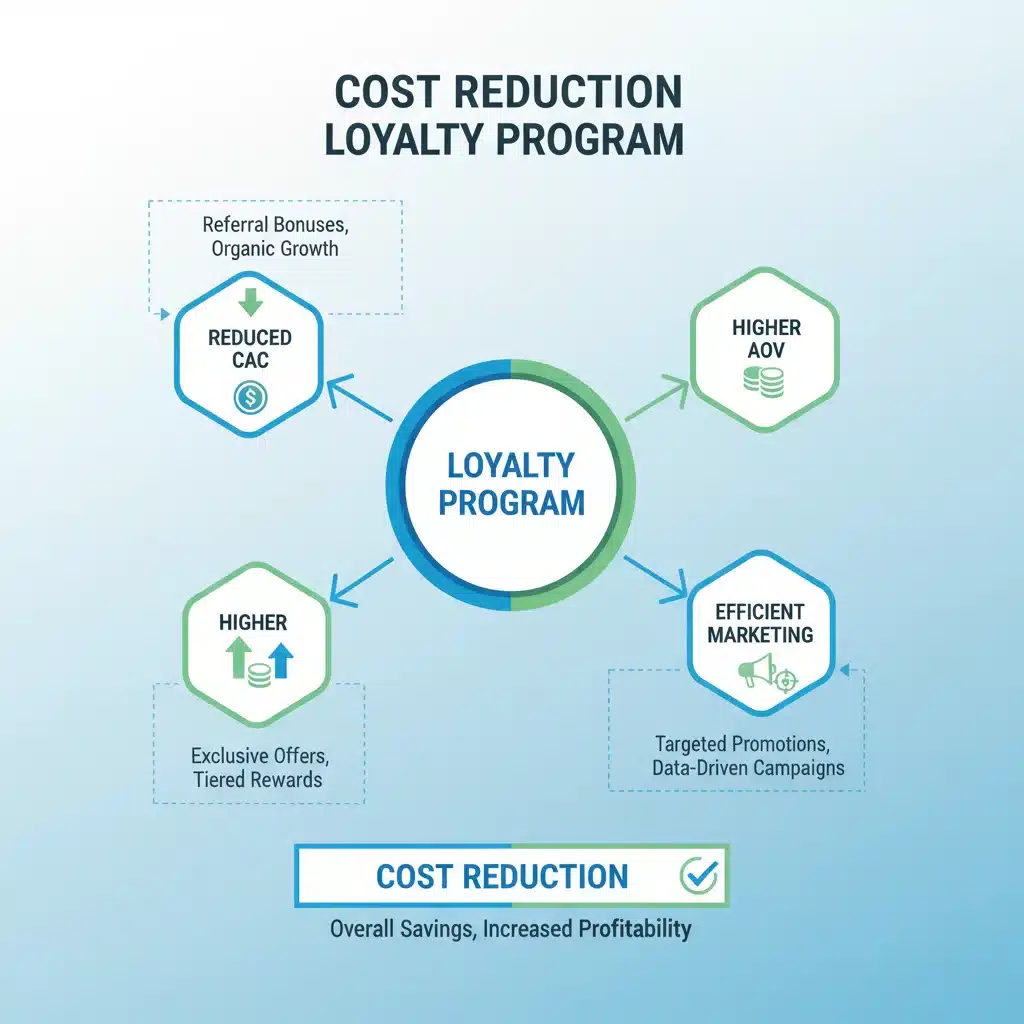
One of the most significant ways loyalty programs contribute to small business savings is by dramatically lowering Customer Acquisition Costs (CAC). Acquiring a new customer can be five to 25 times more expensive than retaining an existing one, depending on the industry. Loyalty programs incentivize repeat business, shifting focus from costly new customer outreach to nurturing existing relationships. This means less money spent on advertising, promotions, and sales efforts aimed at unfamiliar prospects. By converting a one-time buyer into a loyal customer, businesses essentially ‘pre-pay’ for future sales at a much lower cost.
Increased Customer Lifetime Value (CLTV)
Loyal customers tend to spend more over their lifetime with a business. They are more likely to try new products or services, respond positively to upselling and cross-selling efforts, and are less price-sensitive. A well-designed loyalty program encourages this behavior by offering tiered rewards, exclusive access, or personalized offers that deepen their engagement and increase their overall spending. This boost in Customer Lifetime Value (CLTV) directly translates into higher revenue per customer without proportional increases in marketing spend, thereby enhancing small business savings.
Enhanced Brand Advocacy and Word-of-Mouth Marketing
Loyal customers are often your best brand ambassadors. They are more likely to recommend your business to friends, family, and colleagues, generating invaluable word-of-mouth marketing. This organic promotion is incredibly powerful and virtually free. Loyalty programs can supercharge this effect by rewarding referrals or providing exclusive content that customers are eager to share. This reduces the need for paid advertising, further contributing to significant small business savings.
Improved Data Collection and Personalization
Modern loyalty programs are often powered by robust data analytics. Every interaction, purchase, and redemption provides valuable insights into customer preferences, behaviors, and spending patterns. This data allows small businesses to personalize offers, tailor communications, and develop products or services that genuinely resonate with their audience. By offering customers exactly what they want, businesses can reduce waste from ineffective marketing campaigns and inventory mismatches, leading to more efficient operations and greater small business savings.
Designing an Effective Loyalty Program for Maximum Savings
The effectiveness of a loyalty program in generating small business savings hinges on its design. It needs to be attractive to customers while also being economically viable for the business. Here’s a blueprint for US small businesses:
1. Define Clear Objectives and Metrics
Before launching any program, clearly define what you aim to achieve. Is it a 10% reduction in marketing spend? A 15% increase in repeat purchases? A 5% boost in average order value? Specific, measurable, achievable, relevant, and time-bound (SMART) goals will guide your program’s design and allow you to track its success in generating small business savings.
2. Choose the Right Program Structure
Several loyalty program structures exist, each with its own advantages:
- Points Programs: Customers earn points for purchases, which can be redeemed for rewards. Simple and widely understood.
- Tiered Programs: Customers unlock higher levels of benefits as they spend more, creating a sense of exclusivity and aspiration.
- Paid Programs (Premium Memberships): Customers pay a fee for exclusive benefits (e.g., Amazon Prime). This can generate upfront revenue and foster deep loyalty among committed customers.
- Value-Based Programs: Focus on shared values or charitable donations, appealing to socially conscious consumers.
- Gamification: Incorporating game-like elements (badges, challenges) to make engagement fun and rewarding.
The best choice depends on your business model, target audience, and desired level of small business savings.
3. Offer Desirable and Cost-Effective Rewards
The rewards must be genuinely appealing to your customers. However, they also need to be cost-effective for your business. Consider:
- Discounts on future purchases: A classic for a reason, but ensure the discount percentage aligns with your profit margins.
- Exclusive access: Early access to new products, members-only events, or priority service can be highly valued and low-cost.
- Free products/services: Offer a popular, low-cost item as a reward.
- Partnerships: Collaborate with complementary local businesses to offer joint rewards, expanding value without direct cost.
- Experiential rewards: Think workshops, behind-the-scenes tours, or personalized consultations.
The goal is to provide perceived high value to the customer while minimizing the actual cost to your business, thereby maximizing small business savings.
4. Seamless Integration and User Experience
A clunky, difficult-to-use loyalty program will fail. It must be easy for customers to join, earn points, track their progress, and redeem rewards. Integrate the program with your existing POS system, e-commerce platform, and CRM software. Mobile accessibility is crucial, as many customers manage their loyalty accounts via smartphones. A smooth user experience encourages participation and ensures the program contributes to small business savings rather than becoming an administrative burden.
Tactical Implementation for US Small Businesses: A 2026 Roadmap
Achieving a 10% reduction in costs by 2026 through loyalty programs requires a strategic, phased approach tailored to the US market.
Phase 1: Foundation and Launch (2024)
- Market Research and Competitor Analysis: Understand what similar businesses in your US region are offering. Identify gaps and opportunities. What resonates with your local customer base?
- Platform Selection: Choose a loyalty program software or platform that scales with your business and integrates with your existing systems. Options range from simple punch-card apps to comprehensive CRM-integrated solutions. Look for US-based providers for better support and compliance.
- Pilot Program: Launch a small-scale pilot with a segment of your most loyal customers to gather feedback and fine-tune the program before a full rollout.
- Initial Marketing: Announce your loyalty program through in-store signage, email newsletters, social media, and your website. Emphasize the benefits for customers and how it contributes to their small business savings.
Phase 2: Optimization and Expansion (2025)
- Data Analysis and Personalization: Continuously analyze the data collected from your loyalty program. Identify top spenders, frequently purchased items, and redemption patterns. Use this insight to create personalized offers and communications. For example, if a customer frequently buys coffee, send them a personalized offer for a free pastry with their next coffee purchase. This targeted approach reduces wasted marketing efforts, enhancing small business savings.
- A/B Testing Rewards: Experiment with different types of rewards and redemption thresholds to see what drives the most engagement and spending. Track which rewards offer the best return on investment for your business.
- Referral Incentives: Introduce a referral component to your loyalty program. Reward existing loyal customers for bringing in new ones. This leverages word-of-mouth marketing, significantly reducing CAC.
- Partnerships: Explore collaborations with non-competing local businesses. Offer joint rewards or cross-promotions. This expands your reach and offers more value to your customers without direct cost, contributing to small business savings.
Phase 3: Advanced Strategies and Cost Reduction Tracking (2026)
- Predictive Analytics: As your data set grows, consider using predictive analytics to anticipate customer needs and churn. Proactively engage at-risk customers with tailored offers to prevent them from leaving, which is far cheaper than re-acquiring them.
- Inventory Optimization: Use loyalty program data to better forecast demand for popular products, reducing overstocking and waste. This directly impacts inventory holding costs, a significant area for small business savings.
- Supplier Negotiations: Increased and predictable customer demand (fueled by loyalty programs) can give you leverage in negotiating better terms with suppliers due to higher volume orders.
- Quantifying Savings: Regularly audit and report on the specific cost reductions achieved through your loyalty program. Track metrics like reduced marketing spend, increased average transaction value, lower churn rates, and improved customer lifetime value. Compare these figures against your baseline from 2023/2024 to demonstrate the 10% cost reduction.
Measuring the Impact on Small Business Savings
To ensure your loyalty program is truly delivering on its promise of small business savings, rigorous measurement is essential. Here are key metrics to track:
- Customer Retention Rate: The percentage of customers who continue to do business with you over a given period. An increase indicates a successful loyalty program.
- Repeat Purchase Rate: The percentage of customers who have made more than one purchase.
- Average Order Value (AOV) for Loyal Customers vs. Non-Loyal Customers: A higher AOV among loyal customers signifies the program’s effectiveness.
- Customer Lifetime Value (CLTV): The total revenue a business can reasonably expect from a single customer account throughout their relationship with the business.
- Customer Acquisition Cost (CAC): Monitor how your CAC changes for new customers acquired through referrals from loyal customers compared to traditional marketing channels.
- Marketing Spend Reduction: Track the decrease in your overall marketing budget as your loyalty program gains traction.
- Churn Rate: The percentage of customers who stop doing business with you. A lower churn rate directly contributes to small business savings.
- Redemption Rate: How many rewards are being redeemed. A healthy redemption rate indicates that rewards are desirable and the program is engaging.
By consistently monitoring these metrics, you can make data-driven adjustments to optimize your loyalty program for maximum small business savings.

Common Pitfalls to Avoid
While loyalty programs offer immense potential for small business savings, they are not without their challenges. Be mindful of these common pitfalls:
- Over-Complication: If the program is too complex for customers to understand or for staff to manage, it will fail. Keep it simple and intuitive.
- Undesirable Rewards: Offering rewards that customers don’t value will lead to low engagement and wasted effort. Conduct surveys or review purchase history to identify truly desirable incentives.
- Lack of Promotion: Even the best program won’t succeed if customers don’t know about it. Promote it consistently across all touchpoints.
- Ignoring Data: Launching a program and not analyzing its performance is a missed opportunity. Use the data to iterate and improve.
- Inconsistent Experience: Ensure the loyalty program experience is consistent across all channels – in-store, online, and via mobile.
- High Costs of Rewards: If the cost of your rewards outweighs the increase in revenue or reduction in other costs, the program becomes a liability rather than a source of small business savings. Regularly evaluate the ROI of your rewards.
- Legal and Privacy Concerns: Especially in the US, be aware of data privacy regulations (e.g., CCPA if applicable) when collecting customer information. Ensure transparency and secure data handling.
The Future of Loyalty Programs and Small Business Savings in the US
Looking ahead to 2026 and beyond, loyalty programs will continue to evolve, offering even greater potential for small business savings. The integration of AI and machine learning will enable hyper-personalization, predicting customer needs and offering rewards before customers even realize they want them. Blockchain technology could also play a role in creating more secure and interoperable loyalty ecosystems.
For US small businesses, staying agile and adapting to these technological advancements will be key. The businesses that embrace data-driven decision-making, focus on delivering exceptional customer experiences, and strategically utilize loyalty programs will be the ones that not only survive but thrive, achieving their ambitious cost reduction goals.
Conclusion: A Path to 10% Cost Reduction by 2026
The journey to achieving a 10% reduction in operational costs by 2026 for US small businesses is ambitious but entirely achievable through the strategic deployment of loyalty programs. By focusing on customer retention, increasing lifetime value, leveraging word-of-mouth marketing, and making data-driven decisions, businesses can significantly reduce their reliance on expensive customer acquisition tactics and optimize their overall spending.
Implementing a successful loyalty program is an investment, not an expense. It’s an investment in your customer relationships, which, in turn, yields substantial returns in the form of enhanced revenue and crucial small business savings. Start today by assessing your current customer base, defining your objectives, and choosing a program that aligns with your brand and financial goals. The path to a more profitable and sustainable future for your small business begins with nurturing the customers you already have.