Achieve a $1,000 Emergency Fund in 90 Days: Your Step-by-Step Budgeting Roadmap
Achieve a $1,000 Emergency Fund in 90 Days: Your Step-by-Step Budgeting Roadmap
In an unpredictable world, financial security is not a luxury; it’s a necessity. One of the most fundamental pillars of a stable financial life is a robust emergency fund. This isn’t just about having extra cash; it’s about creating a safety net that protects you from life’s inevitable curveballs – a sudden job loss, an unexpected medical bill, or a car repair. Without an emergency fund, these events can quickly spiral into debt and prolonged financial stress. The good news? Building an emergency fund doesn’t have to be an overwhelming, years-long endeavor. With a focused approach and a clear strategy, you can achieve a significant milestone: a $1,000 emergency fund in just 90 days. This article will serve as your comprehensive emergency fund roadmap, guiding you through each step of the process, from assessing your current financial situation to implementing smart saving strategies and maintaining your fund for the long haul.
A $1,000 emergency fund is often considered the first critical step in financial preparedness. While many financial experts recommend three to six months’ worth of living expenses, $1,000 provides immediate relief for most minor emergencies and builds crucial momentum. It proves to yourself that you can set and achieve significant financial goals, paving the way for even greater financial stability. This 90-day challenge is designed to be actionable and realistic, breaking down a seemingly daunting task into manageable weekly and monthly objectives. By the end of this roadmap, you’ll not only have a $1,000 buffer but also a stronger understanding of your finances and sustainable habits that will serve you for years to come.
Phase 1: The First 30 Days – Laying the Foundation
Week 1: Financial Assessment and Goal Setting
The journey to building your emergency fund roadmap begins with a clear understanding of where you stand. This week is all about honest self-assessment and setting concrete goals.
- Calculate Your Net Worth: Don’t let this term intimidate you. Simply list all your assets (what you own: cash, savings, investments, property) and all your liabilities (what you owe: credit card debt, loans, mortgage). Your net worth is assets minus liabilities. This gives you a snapshot of your financial health.
- Track Your Spending: This is arguably the most crucial step. For one week, meticulously track every single dollar you spend. Use an app (Mint, YNAB), a spreadsheet, or even a small notebook. Categorize your spending (food, transport, entertainment, housing, etc.). The goal is not to judge, but to observe. You’ll be surprised where your money actually goes.
- Set Your $1,000 Goal: Reaffirm your commitment to saving $1,000 in 90 days. This breaks down to approximately $111 per week, or about $333 per month. While this might seem challenging, remember that you’re aiming for a short-term, impactful goal.
- Identify Your ‘Why’: Why is an emergency fund important to you? Is it peace of mind? To avoid debt? To feel more secure? Write it down and keep it visible. This ‘why’ will be your motivation when things get tough.
Week 2: Crafting Your Budget (The Zero-Based Approach)
Now that you know where your money is going, it’s time to tell it where to go. A zero-based budget is highly effective for this emergency fund roadmap because it assigns every dollar a job.
- List All Income: Accurately list all your sources of income for the month.
- List All Fixed Expenses: These are bills that are the same every month (rent/mortgage, loan payments, insurance premiums, subscriptions).
- List All Variable Expenses: These fluctuate (groceries, utilities, gas, dining out, entertainment). Based on your tracking from Week 1, assign realistic but conservative amounts to each category.
- Allocate Every Dollar: The core of a zero-based budget is that your income minus your expenses (including savings) should equal zero. This means you’re intentionally deciding what every dollar does. If you have money left over after essential expenses, that money goes directly to your emergency fund.
- Find Immediate Cuts: Look for categories where you can make immediate, even if temporary, cuts. Can you reduce dining out by half? Cancel an unused subscription? Delay a non-essential purchase? Every dollar saved here goes straight to your emergency fund.
Week 3: Income Boosters and Quick Wins
Sometimes, cutting expenses isn’t enough, or you’ve already cut to the bone. This week focuses on increasing your income – even temporarily – to accelerate your emergency fund roadmap progress.
- Sell Unused Items: Declutter your home and sell items you no longer need. Clothes, electronics, furniture, books – platforms like eBay, Facebook Marketplace, and local consignment shops can turn these into cash.
- Pick Up a Side Gig: Can you drive for a ride-sharing service, deliver food, freelance your skills (writing, graphic design, web development), or offer pet-sitting/babysitting services? Even a few extra hours a week can make a significant difference.
- Leverage Your Skills: Think about any unique skills you have. Can you tutor, teach an instrument, or offer handyman services?
- Review Your Bank Statements: Look for any recurring charges you might have forgotten about or don’t need. These small leaks can add up.
Week 4: Automate Your Savings and Build Momentum
Consistency is key. This week is about making your savings automatic, so you don’t have to rely on willpower alone.
- Set Up Automatic Transfers: Schedule an automatic transfer from your checking account to a separate savings account specifically for your emergency fund. Aim for weekly or bi-weekly transfers that align with your pay schedule. Even if it’s a small amount to start, consistency is paramount.
- Open a Separate Savings Account: If you don’t already have one, open a dedicated savings account for your emergency fund. Ideally, this account should be at a different bank than your primary checking account to reduce the temptation to dip into it. Look for high-yield savings accounts to earn a little extra interest, though the primary goal is accessibility and separation.
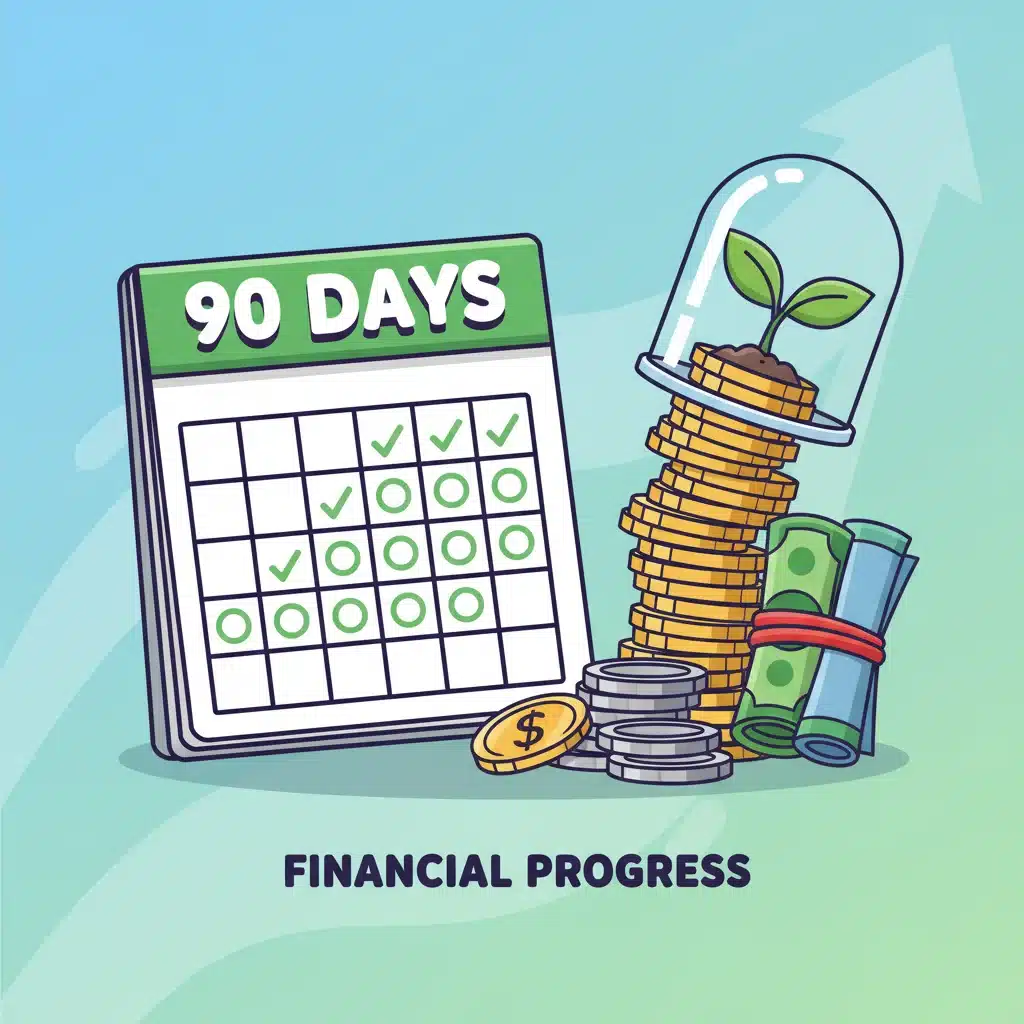
- Visualize Your Progress: Create a visual tracker. A thermometer, a bar graph, or even marking off days on a calendar can provide a powerful psychological boost as you see your fund grow.
- Celebrate Small Wins: Acknowledge your progress at the end of the first month. You’ve laid a strong foundation! This positive reinforcement will fuel your motivation for the next phase of your emergency fund roadmap.
Phase 2: The Next 30 Days – Accelerating Your Savings
Week 5: Deep Dive into Expense Reduction
With the initial cuts made, it’s time to dig deeper. This week focuses on more significant, but still temporary, adjustments to your spending habits.
- Meal Planning & Grocery Hacks: Plan all your meals for the week, create a strict grocery list, and stick to it. Cook at home more often. Look for sales, use coupons, and buy generic brands. Avoid impulse buys.
- Transportation Alternatives: Can you walk, bike, carpool, or use public transport more often? Even reducing one or two car trips a week can save on gas.
- Entertainment on a Budget: Instead of paid entertainment, explore free options: parks, libraries, free community events, hiking, or hosting potlucks instead of dining out.
- Negotiate Bills: Call your internet, cable, and even insurance providers. Ask if there are any promotional rates or ways to lower your monthly bill. You might be surprised at what they offer to keep your business.
Week 6: Boosting Income Further & Found Money
Continue exploring ways to bring in extra cash. This week also focuses on finding money you might not realize you have.
- Overtime or Extra Shifts: If your job offers overtime or extra shifts, consider taking them for the next few weeks. Every extra dollar earned goes directly to your emergency fund roadmap.
- Refunds and Rebates: Did you recently return an item? Are there any rebates you’re eligible for? Make sure you claim all money owed to you.
- Tax Refund Strategy: If you’re expecting a tax refund, earmark a significant portion, if not all, of it for your emergency fund. Adjust your withholdings for the future to avoid large refunds, which means you’re giving the government an interest-free loan.
- Gift Money: If you receive any gifts of money, consider dedicating a portion or all of it to your fund.

Week 7: The ‘No-Spend’ Challenge
This is a powerful technique to rapidly accelerate your savings. Commit to a ‘no-spend’ week (or even a weekend) where you only spend money on absolute necessities (fixed bills, essential groceries).
- Define Your Rules: Clearly outline what is and isn’t allowed. For example, essential groceries are okay, but coffee shop runs are out.
- Plan Ahead: Stock up on essentials, prepare meals, and plan free activities to avoid temptation.
- Track Your Savings: At the end of the challenge, calculate how much you saved. This tangible result is incredibly motivating for your emergency fund roadmap.
- Identify Long-Term Changes: What did you learn during your no-spend period? Were there spending habits you realized you could easily cut back on permanently?
Week 8: Review and Adjust Your Budget
By now, you’ve been budgeting for over a month. It’s time to review your progress and make any necessary adjustments.
- Compare Actual vs. Budgeted: How did your actual spending compare to your budgeted amounts? Where were you over or under?
- Refine Categories: Adjust your budget categories based on real-world spending. Are some categories too restrictive? Are others too generous?
- Increase Automatic Transfers: If you’ve found more room in your budget or boosted your income, increase your automatic transfers to your emergency fund. Push yourself a little further.
- Address Setbacks: Did you overspend in a particular area? Don’t get discouraged. Acknowledge it, learn from it, and adjust your plan for the next month. This is part of the learning curve of your emergency fund roadmap.
Phase 3: The Final 30 Days – Reaching Your Goal and Beyond
Week 9: Eliminating Financial Distractions
As you near your goal, it’s crucial to stay focused and eliminate anything that might derail your progress.
- Avoid Temptation: Unsubscribe from marketing emails, unfollow tempting brands on social media, and avoid browsing online stores. Out of sight, out of mind.
- Delay Gratification: Postpone any non-essential purchases until after you’ve reached your $1,000 goal. Remind yourself of your ‘why.’
- Lean on Your Support System: Talk to family or friends about your goal. Having someone to hold you accountable can be incredibly helpful.
- Review Progress: Look at your emergency fund balance. Seeing how far you’ve come will reinforce your commitment to completing this emergency fund roadmap.
Week 10: The Power of Small Amounts
Every little bit truly adds up. This week focuses on capturing those small, often overlooked, amounts of money.
- Coin Jar: Start a physical coin jar for all your loose change. At the end of the week, deposit it into your emergency fund.
- Round-Up Apps: Use apps that round up your purchases to the nearest dollar and transfer the difference to savings (e.g., Acorns, Chime’s ‘Save When I Spend’). While these might be small individually, they accumulate quickly.
- Found Money: Any unexpected cash – a refund, a small bonus, a gift – immediately direct it to your emergency fund. Don’t let it get absorbed into your general spending.
- One Less Thing: Identify one small, recurring expense you can cut this week. A daily coffee, a snack from a vending machine – redirect that money.

Week 11: Final Push and Contingency Planning
You’re almost there! This week is about maximizing your final efforts and thinking about how to sustain your progress.
- Intensify Side Gigs: If possible, take on a few extra hours or gigs this week to give your fund a final boost.
- Extreme Frugality: For these last few days, practice extreme frugality. Cook every meal, avoid all non-essential outings, and focus solely on your goal.
- Plan for Maintenance: Once you hit $1,000, how will you maintain it? Will you continue your automatic transfers at a reduced rate? Will you commit to replacing any funds you use? This foresight is crucial for the long-term success of your emergency fund roadmap.
- Review Your ‘Why’ Again: Revisit your initial motivation. How will having this $1,000 change your sense of security and peace of mind?
Week 12: Celebrate and Plan for the Future
Congratulations! You’ve reached your $1,000 emergency fund goal in 90 days. This is a significant accomplishment that deserves recognition.
- Celebrate Responsibly: Acknowledge your hard work! Treat yourself to something small and inexpensive, but don’t spend a large portion of your newly saved fund. Perhaps a nice meal at home or a small item you’ve been wanting, budgeted for separately.
- Reinforce Positive Habits: Reflect on the habits you’ve built over the last 90 days. Which ones will you keep? The discipline of budgeting, tracking expenses, and looking for extra income sources are invaluable.
- Plan for the Next Goal: $1,000 is a fantastic start, but it’s often just the beginning. Your next goal should be to build your emergency fund to cover 3 to 6 months of essential living expenses. Your current emergency fund roadmap can be adapted and expanded for this next phase.
- Share Your Success: Tell a trusted friend or family member about your achievement. Sharing your journey can inspire others and reinforce your own commitment.
Maintaining Your Emergency Fund for the Long Term
Achieving your initial $1,000 goal is a monumental step, but the work doesn’t end there. An emergency fund is a dynamic tool that requires ongoing attention and discipline. Here’s how to ensure your emergency fund roadmap continues to serve you effectively:
Replenish Used Funds Promptly
Emergencies, by definition, happen. If you have to dip into your emergency fund, make it your absolute priority to replenish it as quickly as possible. Treat it like a debt you owe yourself. Immediately adjust your budget to redirect extra income or make temporary cuts until the fund is back to its target level. This discipline ensures that your safety net remains intact when you need it most.
Regularly Review and Adjust
Your financial life isn’t static, and neither should your emergency fund strategy be. At least once a year, or whenever there’s a significant life change (new job, marriage, children, moving), review your living expenses. Do you still need $1,000, or should your target be higher? As your income grows, or your expenses change, your emergency fund goal should evolve accordingly. This proactive approach keeps your emergency fund roadmap relevant and robust.
Keep it Separate and Accessible
The dedicated savings account you opened is key. Keep your emergency fund separate from your everyday checking account and other savings goals (like a down payment or vacation). This reduces the temptation to spend it on non-emergencies. However, ensure it’s accessible. While a high-yield savings account is ideal, avoid investments that lock up your money or expose it to market volatility, as you need these funds to be readily available.
Resist the Urge to Spend on Non-Emergencies
It can be tempting to see a healthy balance in your emergency fund and think about using it for a new gadget or a spontaneous trip. Resist this urge fiercely. Remind yourself of the purpose of this fund: to protect you from financial disaster. Every time you consider using it for something non-essential, revisit your ‘why.’ Your peace of mind is worth more than any impulse purchase.
Educate Yourself Continuously
Financial literacy is an ongoing journey. Continue reading articles, listening to podcasts, and taking courses on personal finance. The more you understand about budgeting, saving, and investing, the better equipped you’ll be to manage your money and grow your wealth. This continuous learning will enhance your understanding of your overall emergency fund roadmap and its importance.
Conclusion: Your Path to Financial Peace of Mind
Building a $1,000 emergency fund in 90 days is an achievable and transformative goal. This emergency fund roadmap has provided you with a clear, step-by-step guide to assess your finances, create a working budget, boost your income, and implement smart saving strategies. It requires discipline, consistency, and a willingness to make temporary sacrifices, but the rewards – peace of mind, reduced financial stress, and a stronger foundation for your future – are immeasurable.
Remember, this $1,000 is just the beginning. It’s a powerful first step on a lifelong journey of financial responsibility and wealth building. By consistently applying the principles outlined here, you’ll not only maintain your emergency fund but also be well on your way to achieving even larger financial aspirations. Start today, commit to the 90-day challenge, and take control of your financial destiny. Your future self will thank you.