Budgeting Beyond Basics: 5 Advanced Techniques for 2026 to Save an Extra $75 Monthly

In the evolving landscape of personal finance, simply tracking your expenses is no longer enough to truly optimize your financial health. As we look towards 2026, the need for more sophisticated, proactive financial strategies becomes increasingly apparent. While foundational budgeting principles are crucial, mastering advanced budgeting techniques can unlock significant savings and accelerate your journey towards financial freedom. This comprehensive guide will delve into five cutting-edge approaches designed to help you save an additional $75 or more each month, transforming your financial outlook.
Many individuals find themselves stuck in a cycle of basic budgeting, diligently recording income and outgoings, yet never quite reaching their ambitious savings goals. The truth is, effective budgeting is not just about constraint; it’s about strategic allocation, mindful spending, and leveraging tools and insights that go beyond the ordinary. If you’re ready to move past the rudimentary and embrace a more dynamic approach to your money, then these advanced budgeting techniques are precisely what you need.
The goal isn’t just to save money, but to save smarter, more efficiently, and with greater purpose. Each technique discussed here offers a unique perspective on managing your finances, from automating your savings to optimizing your spending categories with a critical eye. By integrating these methods into your financial routine, you’ll not only find that extra $75 a month but also gain a deeper understanding and control over your financial destiny. Let’s embark on this journey to advanced financial mastery for 2026.
Understanding the Shift: Why Basic Budgeting Isn’t Always Enough
For years, the conventional wisdom of budgeting revolved around simple spreadsheets or pen-and-paper tracking. While these methods served as excellent starting points, the complexity of modern financial lives, coupled with fluctuating economic conditions, demands a more nuanced approach. Basic budgeting often focuses on reactive measures – seeing where your money went after it’s gone. Advanced budgeting techniques, however, champion a proactive stance, allowing you to anticipate, plan, and optimize before the spending occurs.
The limitations of basic budgeting become apparent when you consider dynamic financial goals, unexpected expenses, and the desire for accelerated wealth building. Simply knowing your income and expenses provides a snapshot, but it rarely offers the granular detail or predictive power needed to make significant financial strides. For instance, a basic budget might tell you that you spent $300 on dining out, but it won’t necessarily tell you how to reduce that without feeling deprived, or how to reallocate those funds for maximum impact.
Moreover, basic budgeting can often feel restrictive and tedious, leading to budget fatigue. This is where advanced methods shine. They introduce elements of automation, psychological hacks, and strategic optimization that make the process more engaging, less burdensome, and ultimately, more effective. By understanding these limitations, we can better appreciate the value and necessity of adopting more sophisticated strategies.
The shift towards advanced budgeting techniques is not merely about adopting new tools; it’s about cultivating a new mindset. It’s about viewing your money as a powerful resource that can be strategically deployed to achieve your aspirations, rather than just a means to cover monthly bills. This philosophy underpins all the techniques we will explore, setting the stage for substantial financial improvements in 2026 and beyond.
Technique 1: The Zero-Based Budgeting Power-Up
Zero-based budgeting (ZBB) is not a new concept in the corporate world, but its application in personal finance is an incredibly powerful advanced budgeting technique. At its core, ZBB means every dollar of your income is assigned a job – whether it’s for expenses, savings, or debt repayment – until your income minus your expenses equals zero. Unlike traditional budgeting where you might have leftover money at the end of the month, ZBB ensures that every single dollar has a purpose from the outset.
The power-up aspect comes from its meticulous nature. Instead of just allocating broad categories, you dig deep into every potential outflow. For example, instead of a generic ‘entertainment’ category, you might have ‘movie nights,’ ‘dinner with friends,’ and ‘streaming subscriptions,’ each with a specific allocation. This level of detail forces you to be incredibly intentional with your money, revealing areas where you might be unconsciously overspending or where funds could be better utilized.
How to Implement Zero-Based Budgeting for Maximum Impact:
- List All Income: Start by totaling all income sources for the month. This is your foundation.
- Categorize Every Expense: Go through your bank statements and credit card bills from the past few months. List every single expense, no matter how small. Group them into logical categories, but be as specific as possible.
- Assign Every Dollar a Job: This is the crucial step. Allocate a specific amount to each expense category. Then, allocate funds to savings goals (emergency fund, down payment, retirement), debt repayment beyond the minimum, and even a ‘fun money’ category. The goal is for your total income minus your total allocated expenses and savings to equal zero.
- Adjust and Optimize: If you find you have money left over, assign it to a savings goal or debt. If you’re in the negative, you’ll need to make conscious decisions about where to cut back. This iterative process is where the real savings happen.
- Review Monthly: ZBB isn’t a one-and-done process. Your income and expenses can change, so review and adjust your zero-based budget at the beginning of each month.
By forcing this level of scrutiny, ZBB eliminates ‘phantom’ spending – money that disappears without you truly realizing its impact. It fosters a proactive mindset, giving every dollar a mission. For many, this technique alone can easily uncover an extra $75 (or much more) that was previously floating unassigned, ready to be channeled towards your financial goals.
Technique 2: The Reverse Budgeting Strategy (Pay Yourself First, Automatically)
While zero-based budgeting is about meticulous planning, reverse budgeting is about effortless execution, making it another potent advanced budgeting technique. This strategy flips the traditional budgeting model on its head. Instead of budgeting for expenses first and saving what’s left, reverse budgeting prioritizes savings and debt repayment by automating them at the very beginning of your pay cycle. You ‘pay yourself first,’ and then you live off what remains.
This approach leverages human psychology: out of sight, out of mind. When your savings are automatically transferred to a separate, often harder-to-access account immediately after you get paid, you’re less likely to miss that money. The remaining balance in your checking account naturally becomes your new ‘budget’ for discretionary spending and fixed expenses.
Implementing Reverse Budgeting Effectively:
- Determine Your Savings/Debt Repayment Goals: Decide how much you want to save or pay towards debt each month. For instance, if your goal is to save an extra $75, make that a non-negotiable transfer.
- Automate Transfers: Set up automatic transfers from your checking account to your savings accounts (emergency fund, investment accounts, specific goals) and/or directly to your debt principal payments. Schedule these transfers to occur on your payday or the day after.
- Review Remaining Funds: Once the automated transfers are complete, look at the money left in your checking account. This is your spending money for the rest of the month.
- Adjust Spending Habits: You’ll naturally adjust your spending to fit within the available funds. This might mean being more mindful of impulse purchases or seeking out more cost-effective alternatives for certain categories.
- Monitor and Optimize: While less restrictive than ZBB, it’s still wise to periodically review your spending to ensure you’re not consistently running out of money or struggling to cover essentials. You might find you can increase your automated savings even further over time.
Reverse budgeting is incredibly effective because it removes the willpower factor from saving. It makes saving the default, rather than an afterthought. By consistently paying yourself first, you build wealth automatically and painlessly, often discovering that you can comfortably live on less than you thought, thereby freeing up that extra $75 (or more) for financial growth.
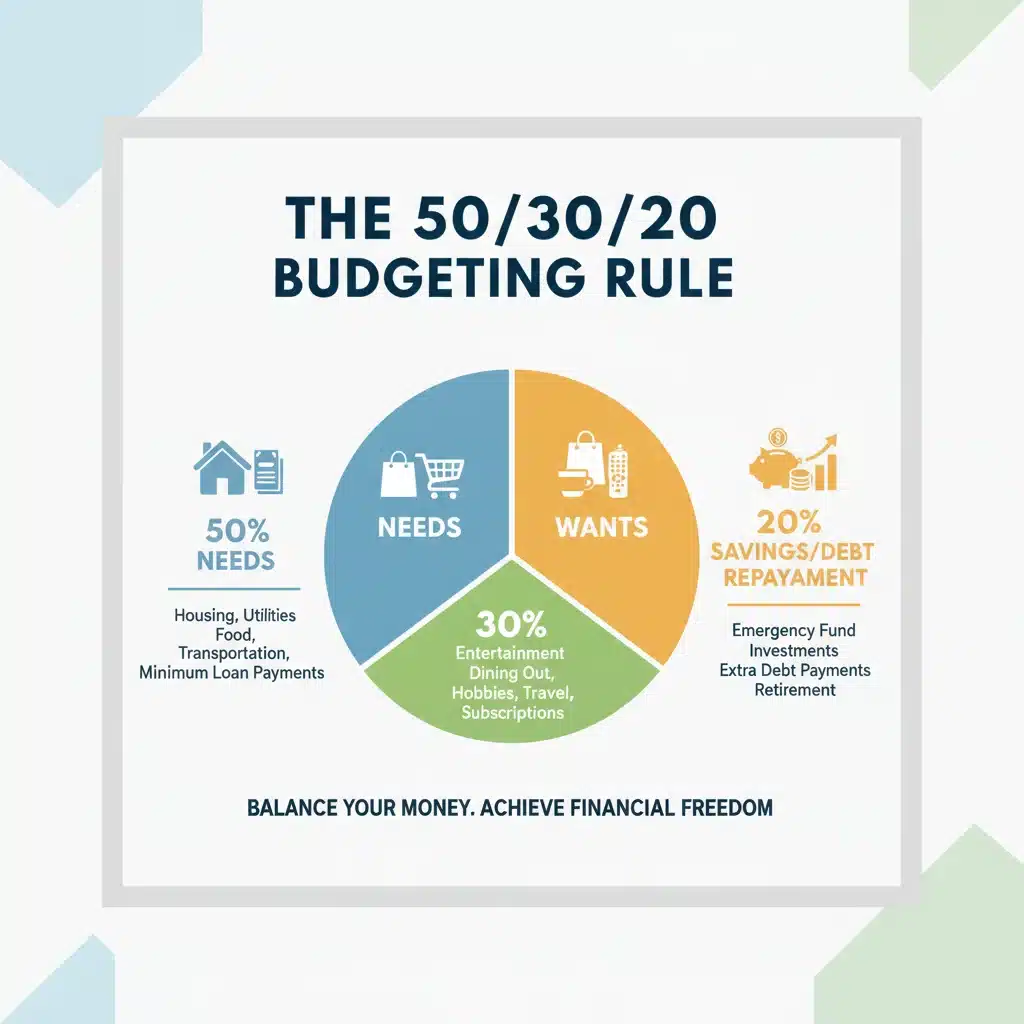
Technique 3: The 50/30/20 Rule with a 2026 Twist – Optimizing Percentages
The 50/30/20 rule is a popular guideline for budgeting: 50% of your after-tax income for Needs, 30% for Wants, and 20% for Savings & Debt Repayment. This is a fantastic starting point, but to make it an advanced budgeting technique for 2026, we need to add a twist: dynamic optimization of these percentages based on your current financial goals and life stage.
The ‘twist’ involves critically evaluating each category and consciously adjusting the percentages to align with your most pressing financial objectives. For someone aggressively saving for a down payment, the 20% for savings might become 30% or even 40%, achieved by shrinking the ‘Wants’ category. For someone focusing on early retirement, the ‘Savings’ percentage could be even higher, cutting into both ‘Needs’ (by finding cheaper alternatives) and ‘Wants’.
How to Apply the 50/30/20 Rule with Advanced Optimization:
- Calculate Your Current Ratios: Use your recent spending data to figure out your current percentages for Needs, Wants, and Savings/Debt. Be honest and thorough.
- Define Your 2026 Financial Priorities: Are you aiming for early retirement, a significant down payment, aggressive debt reduction, or building a substantial emergency fund? Your primary goal will dictate your percentage adjustments.
- Adjust Percentages Strategically:
- Needs (50% baseline): Can you reduce this? Refinance a mortgage, find cheaper insurance, reduce utility consumption, or cut back on groceries? Even small reductions here free up significant funds.
- Wants (30% baseline): This is often the easiest category to trim. Evaluate discretionary spending like dining out, entertainment, subscriptions, and non-essential shopping. A conscious reduction here is a direct path to finding that extra $75.
- Savings & Debt (20% baseline): Your goal is likely to increase this. Channel any savings from ‘Needs’ and ‘Wants’ directly into this category.
- Implement and Monitor: Once you’ve set your new target percentages (e.g., 45/25/30 or 40/20/40), actively track your spending to ensure you adhere to them. Use budgeting apps or spreadsheets to keep a close eye on your progress.
- Re-evaluate Periodically: Life changes, and so should your budget. Revisit your percentages every 6-12 months or whenever a major life event occurs (new job, marriage, children) to ensure they still align with your goals for 2026 and beyond.
This dynamic application of the 50/30/20 rule transforms it from a static guideline into a powerful, customizable tool. By intentionally shifting percentages, you gain immense control over your financial trajectory, making it much easier to carve out an additional $75 (or far more) for your savings and investments.
Technique 4: Value-Based Spending – Aligning Money with Meaning
Many traditional budgeting methods focus on numerical limits, which can feel restrictive. Value-based spending, however, is an advanced budgeting technique that shifts the focus from mere numbers to meaning. It’s about aligning your spending with your core values and priorities, ensuring that every dollar you spend brings you genuine satisfaction or moves you closer to your most important goals. This approach often leads to natural savings because you eliminate spending on things that don’t truly matter to you.
For example, if health and fitness are paramount, you might happily allocate more to a gym membership, quality groceries, or running shoes. Conversely, if dining out isn’t a high priority, you’ll naturally reduce spending in that area without feeling deprived, because you’re consciously choosing to put those funds towards something you value more. This technique fosters a sense of empowerment and intentionality, rather than deprivation.
Steps to Implement Value-Based Spending:
- Identify Your Core Values: Take time to reflect on what truly matters to you. Is it financial independence, travel, family experiences, education, health, environmental sustainability, personal growth? List your top 3-5 values.
- Categorize Your Spending by Value Alignment: Go through your current expenses and categorize each one based on whether it aligns with your core values. For example, a subscription to a learning platform aligns with ‘education’ or ‘personal growth.’ A daily coffee run might not align with any core value, or perhaps it aligns with ‘personal enjoyment’ if that’s a value.
- Evaluate and Optimize:
- Boost Value-Aligned Spending: For expenses that strongly align with your values, consider if you can allocate more. For example, if ‘experiences’ is a value, you might save for a significant trip.
- Reduce or Eliminate Non-Aligned Spending: This is where you find your extra $75. Be ruthless with expenses that don’t resonate with your values. That extra streaming service you rarely watch, the impulse buys, or even social activities that drain your energy and wallet without much return – these are prime targets.
- Reallocate: Take the money saved from non-aligned spending and reallocate it to your savings goals or to areas that *do* align with your values.
- Conscious Consumption: Before making any purchase, pause and ask yourself: “Does this align with my values? Does this truly bring me joy or move me closer to my goals?” This simple question can prevent countless unnecessary expenditures.
Value-based spending transforms budgeting from a chore into a tool for self-discovery and intentional living. By putting your money where your values are, you not only save more but also live a more fulfilling life, effortlessly finding that extra $75 by cutting out what doesn’t truly matter.
Technique 5: The Expense Audit & Negotiation Loop – Continuous Optimization
This final advanced budgeting technique is less about a fixed system and more about a continuous process of optimization. The Expense Audit & Negotiation Loop involves regularly scrutinizing all your recurring expenses and actively seeking opportunities to reduce them through negotiation or smarter choices. This isn’t a one-time task; it’s a quarterly or bi-annual ritual that can yield significant and sustained savings, well beyond the target $75 per month.
Many people set up bills and subscriptions and then forget about them, allowing costs to creep up or failing to switch to more competitive providers. This technique ensures you remain proactive, always on the lookout for better deals and lower rates. It’s about being an active participant in managing your outgoing cash flow, rather than a passive recipient of bills.
Executing the Expense Audit & Negotiation Loop:
- List All Recurring Expenses: Compile a comprehensive list of every recurring bill: internet, cable, phone, insurance (car, home, health), gym memberships, streaming services, software subscriptions, alarm systems, etc.
- Audit Each Expense Critically: For each item, ask:
- Do I still need this service? Am I getting full value from it?
- Is there a cheaper alternative available with similar quality?
- Could I downgrade my plan without significant impact?
- When was the last time I reviewed this expense?
- Initiate Negotiation (The ‘Loop’ Part):
- Call Providers: For services like internet, cable, and insurance, call your current providers. Tell them you’re reviewing your options and ask if they have any promotional rates or loyalty discounts they can offer. Mention competitor prices if you’ve found better deals. Often, they will match or beat offers to retain your business.
- Bundle Services: Explore bundling options for services like internet, TV, and phone. Sometimes, getting them from a single provider can reduce overall costs.
- Review Subscriptions: Cancel any unused streaming services, apps, or gym memberships. Even $10-$20 subscriptions add up quickly.
- Shop Around: For insurance, don’t just negotiate with your current provider. Get quotes from several other companies annually. You might be surprised by the savings.
- Automate Savings: Once you’ve successfully reduced an expense, immediately set up an automatic transfer of the saved amount to your savings or investment account. This ensures the savings are captured and contribute towards your goals, rather than being absorbed into general spending.
- Schedule Regular Audits: Put a reminder in your calendar for every 3-6 months to repeat this entire process. Prices change, new deals emerge, and your needs evolve. This continuous loop prevents complacency and ensures ongoing optimization.
This systematic approach to auditing and negotiating your expenses is a marathon, not a sprint. However, the cumulative effect of small reductions across multiple categories can easily surpass your $75 monthly savings goal. It’s an empowering advanced budgeting technique that puts you in the driver’s seat of your financial outflows.

Integrating Advanced Budgeting Techniques for Holistic Financial Health
While each of these advanced budgeting techniques is powerful on its own, their true strength lies in their integration. You don’t have to adopt all five simultaneously, but understanding how they complement each other can lead to a more robust and sustainable financial system. For instance, you might use Zero-Based Budgeting to meticulously plan your initial allocations, then employ Reverse Budgeting to automate your savings, ensuring you ‘pay yourself first’ from those allocations.
The 50/30/20 Rule with optimized percentages can serve as your guiding framework, helping you visualize your ideal spending ratios, while Value-Based Spending ensures your allocations truly reflect what matters most to you. Finally, the Expense Audit & Negotiation Loop acts as a continuous quality control mechanism, ensuring that your carefully crafted budget remains efficient and cost-effective over time.
Practical Steps for Integration:
- Start with One or Two: Don’t get overwhelmed. Pick one or two techniques that resonate most with you and implement them thoroughly. For instance, begin with Reverse Budgeting to establish automated savings, then layer in Zero-Based Budgeting for more detailed control.
- Utilize Technology: Modern budgeting apps and financial software can significantly simplify the implementation of these advanced techniques. They offer features like automatic categorization, spending insights, and goal tracking that can make the process less manual and more intuitive. Look for apps that support custom categories for ZBB or allow easy adjustment of percentage rules.
- Regular Review and Adjustment: Your financial life is dynamic. Commit to reviewing your budget and your chosen techniques regularly – monthly, quarterly, or annually. This ensures your budget remains relevant to your current income, expenses, and goals.
- Be Patient and Persistent: Mastering advanced budgeting techniques takes time and practice. There will be months where you miss your targets, or where unexpected expenses throw you off. The key is to learn from these instances, adjust your approach, and keep moving forward.
The journey to saving an extra $75 (or much more) monthly in 2026 is not just about cutting costs; it’s about building a more intentional, resilient, and optimized financial life. By embracing these advanced strategies, you’re not just managing money; you’re mastering it, setting yourself up for unprecedented financial success.
Beyond the $75: Long-Term Benefits of Advanced Budgeting
While the immediate goal of saving an extra $75 per month is certainly appealing, the long-term benefits of implementing advanced budgeting techniques extend far beyond this initial target. These strategies foster a profound transformation in your relationship with money, leading to a host of positive financial outcomes that compound over time.
Firstly, the increased awareness and control you gain over your finances significantly reduce financial stress. When you know exactly where your money is going and that every dollar has a purpose, you replace anxiety with confidence. This peace of mind is invaluable and contributes directly to overall well-being.
Secondly, these techniques accelerate your progress towards larger financial goals. Whether it’s building a robust emergency fund, saving for a down payment on a home, funding your children’s education, or achieving early retirement, consistently finding and allocating extra funds makes these aspirations tangible realities much sooner. An extra $75 per month might seem small, but over a year, that’s $900. Over five years, compounded with even modest returns, it becomes a substantial sum, providing a powerful boost to your financial trajectory.
Thirdly, by engaging in practices like the Expense Audit & Negotiation Loop, you cultivate financial literacy and negotiation skills that serve you throughout your life. You become a more discerning consumer, less susceptible to financial pitfalls and more adept at making informed decisions that benefit your bottom line.
Moreover, value-based spending encourages a more mindful and fulfilling consumption pattern. You learn to differentiate between what you truly need and what brings you genuine happiness, versus what is merely an impulse or societal expectation. This often leads to a simpler, yet richer life, where your spending aligns with your deepest desires.
Finally, the discipline and foresight developed through these advanced budgeting techniques build a strong foundation for financial resilience. You’re better prepared for unexpected economic shifts, job changes, or emergencies, knowing that your financial system is robust and adaptable. This preparedness is not just about money; it’s about security and the freedom to pursue opportunities without being held back by financial constraints.
In conclusion, adopting these advanced strategies for 2026 is not just about hitting a monthly savings target; it’s about embarking on a journey of continuous financial empowerment and creating a future where your money works harder for you, supporting your dreams and providing lasting peace of mind.