Mastering Retailer Price Match Policies 2026: Your Ultimate Guide to Savings

Mastering Retailer Price Match Policies 2026: Your Ultimate Guide to Savings
In an increasingly competitive retail landscape, saving money has become a sport for many consumers. One of the most effective, yet often underutilized, strategies in this pursuit is leveraging retailer price match policies. As we navigate 2026, these policies continue to evolve, offering savvy shoppers incredible opportunities to reduce their spending by 10% to 20% or even more on everyday purchases and big-ticket items alike. This comprehensive guide will demystify the world of price matching, providing you with the knowledge and practical steps needed to become a master of savings.
Why is understanding retailer price match policies so crucial now? The digital age has empowered consumers with instant access to price comparisons across countless stores, both online and brick-and-mortar. Retailers, in turn, have adapted by implementing or refining their price match guarantees to retain customers and compete effectively. However, these policies are not one-size-all. They come with specific terms, conditions, and exclusions that can make or break your attempt to secure a lower price. Our goal is to equip you with the insights to navigate these complexities effortlessly, ensuring you maximize every saving opportunity.
The Evolution of Retailer Price Match in 2026
The concept of price matching isn’t new, but its application and scope have significantly changed over the years. In 2026, we see a more sophisticated approach from retailers, often integrating advanced technology to verify competitor prices. While some policies have become stricter, others have broadened their reach to include more online competitors or a wider range of products. Understanding these contemporary nuances is key to successful price matching.
What Constitutes a Price Match?
At its core, a retailer price match is a guarantee from a store that they will sell you an item at the same price as a competitor if you find it cheaper elsewhere. This might sound straightforward, but the devil is in the details. Factors such as the competitor’s legitimacy, the item’s identical nature, and the timing of the price difference all play a role.
Key Trends in 2026 Price Match Policies:
- Digital Verification: Many retailers now require digital proof of a lower price, often through a competitor’s active website or app. Screenshots or printed ads might still be accepted, but real-time online verification is becoming standard.
- Expanded Online Competitors: While historically limited to local brick-and-mortar stores, more retailers are now matching prices from major online-only retailers like Amazon, Walmart.com, Target.com, and BestBuy.com, provided the item is sold and shipped directly by the competitor, not a third-party seller.
- Exclusions and Limitations: Expect to encounter more specific exclusions, particularly around clearance items, limited-quantity sales, doorbuster deals, refurbished products, and pricing errors. Some retailers also have blackout periods, such as during major holiday sales events.
- Post-Purchase Price Adjustments: A valuable aspect of some policies is the ability to get a price adjustment if an item you recently purchased goes on sale at the same store or a competitor within a specific timeframe (e.g., 7-14 days).
- Membership Requirements: A growing trend is for certain price match benefits to be exclusive to loyalty program members or credit card holders of the specific retailer.
Identifying Eligible Items and Competitors
The first step in any successful retailer price match attempt is knowing what you can match and where. Not all items are eligible, and not all competitors are recognized.
The ‘Identical Item’ Rule:
This is perhaps the most critical rule. For a price match to be valid, the item must be absolutely identical. This means:
- Brand and Model Number: Must be exactly the same.
- Color and Size: Should match, especially for apparel or specific electronics.
- Condition: New, unopened, and in the original packaging. Refurbished, open-box, or used items are almost always excluded.
- SKU/UPC: While not always explicitly stated, having the same SKU (Stock Keeping Unit) or UPC (Universal Product Code) is a strong indicator of identical products.
- Included Accessories/Bundles: If the competitor’s item comes with extra accessories or is part of a bundle, it might not be considered identical to a standalone item at your preferred store.
Recognized Competitors:
Each retailer has a defined list of competitors they will price match against. This list is usually available on their website or by asking a store associate. Common categories include:
- Local Brick-and-Mortar Stores: Competitors within a specific radius (e.g., 25 miles) of the store where you’re requesting the match.
- Major Online Retailers: As mentioned, Amazon, Walmart.com, Target.com, BestBuy.com, etc., are frequently included. Crucially, the item must be sold and fulfilled directly by the competitor, not a third-party marketplace seller. This is a common pitfall!
- Specific Regional or National Chains: Some retailers might only match prices from direct category competitors (e.g., a home improvement store matching another home improvement store).
Pro Tip: Always check the competitor’s stock availability. Most policies require the competitor to have the item in stock and available for immediate purchase for the price match to be valid. An out-of-stock item, even with a lower price, will likely be rejected.
Step-by-Step Guide to a Successful Price Match
Now that you understand the groundwork, let’s walk through the practical steps to execute a successful retailer price match.
Step 1: Research and Compare Prices Diligently
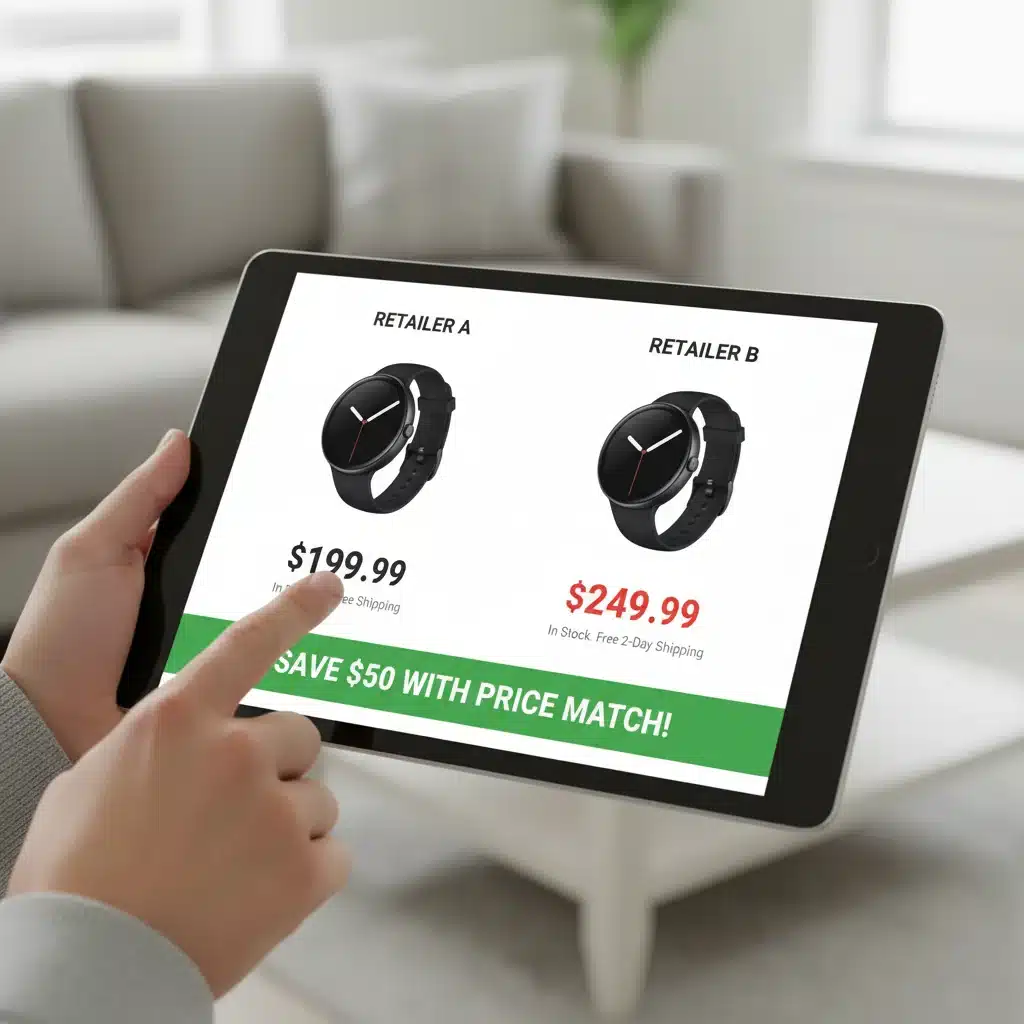
This is where the real work begins. Before heading to the store or making an online purchase, dedicate time to researching prices. Use price comparison websites, browser extensions, and directly check competitor websites. Look for the lowest current advertised price for the identical item.
- Tools for Price Comparison: Google Shopping, Honey, CamelCamelCamel (for Amazon price history), and individual retailer apps are your best friends.
- Gather Evidence: Once you find a lower price, capture it. A screenshot on your phone, a printout of the competitor’s webpage, or having the competitor’s website open on your mobile device are generally accepted. Ensure the evidence clearly shows the item, the price, the competitor’s name, and the date/time.
Step 2: Understand the Retailer’s Specific Policy
Do not skip this step! Every retailer’s retailer price match policy is unique. Before you even approach a customer service desk, know the rules. Look for the ‘Price Match Guarantee’ or ‘Low Price Guarantee’ section on their website. Pay close attention to:
- Eligible Competitors: Who do they match?
- Exclusions: What items or types of sales are explicitly excluded?
- Proof Required: What kind of evidence do they need?
- Timeframe: Is it before purchase, at the time of purchase, or within a certain number of days after purchase?
- Channel: Can you price match online, in-store, or both?
Step 3: Initiate the Price Match Request
How you initiate the request depends on whether you’re shopping online or in-store.
In-Store Price Match:
- Locate the Item: Find the identical item on the store’s shelf.
- Approach Customer Service: Head to the customer service desk or a sales associate in the relevant department.
- Present Your Evidence: Clearly show them the competitor’s lower price. Be polite, confident, and concise.
- Be Prepared for Questions: They might ask to verify the competitor’s website or check stock.
- Complete the Purchase: Once approved, the price will be adjusted at the register.
Online Price Match:
Online price matching can be trickier, as not all retailers offer it. If they do, it typically involves:
- Live Chat: Many retailers have a live chat feature where you can provide the competitor’s link and request a price match.
- Phone Call: Call their customer service line and explain your request.
- Email Form: Some might have a dedicated email form for price match requests.
- Pre-Purchase vs. Post-Purchase: Some online retailers allow you to request a price match before completing the order, while others require you to purchase the item first and then request an adjustment.
Step 4: Handle Potential Denials Gracefully
Not every price match attempt will be successful. Denials can happen for various reasons:
- Policy Misunderstanding: You might have overlooked an exclusion.
- Competitor Not Recognized: The store doesn’t match that particular retailer.
- Item Not Identical: A slight difference in model number, color, or bundle.
- Out of Stock: The competitor no longer has the item in stock.
- Third-Party Seller: The competitor’s lower price is from a marketplace seller, not the retailer directly.
If denied, politely ask for clarification on why. Sometimes, a different associate might interpret the policy differently. However, if the denial is clearly within the retailer’s stated policy, accept it and move on. Remember, persistence is good, but being argumentative is counterproductive.
Maximizing Your Savings: Advanced Strategies for 2026
Beyond the basics, there are several advanced tactics to ensure you’re getting the absolute best deals using retailer price match policies.
Timing is Everything:
Keep an eye on sales cycles. Many electronics and appliances see price drops around major holidays or new model releases. Matching during these periods can lead to substantial savings. Also, be aware of post-purchase price adjustment windows. If a price drops a few days after you buy, you can often get the difference back.
Stacking Discounts (When Possible):
This is the holy grail of saving. Some retailers allow you to combine a price match with other discounts, such as:
- Coupons: A percentage-off coupon on top of a matched price.
- Loyalty Rewards: Earning points or using store credit on a price-matched item.
- Credit Card Benefits: Certain credit cards offer their own price protection benefits, which can act as a secondary layer of savings if a retailer denies your price match or if the price drops further after the store’s adjustment window.
Always check the retailer’s policy regarding discount stacking. Most policies state that price matches cannot be combined with other offers, but it’s worth knowing the exceptions.
Leveraging Price Adjustment Policies:
Don’t just think about price matching before or during a purchase. Many retailers offer a price adjustment if an item you bought goes on sale at their store or a competitor within a specified period (e.g., 7, 14, or even 30 days). Keep your receipts and monitor prices post-purchase. This can save you money on items you’ve already committed to buying.
Understanding ‘Online Only’ vs. ‘In-Store Only’ Deals:
Retailers often have different pricing strategies for their online and physical stores. An ‘online only’ deal at a competitor might not be matched by a brick-and-mortar store, and vice-versa. Be clear about the nature of the competitor’s offer when requesting a match.
Major Retailers and Their 2026 Price Match Landscape (Examples)
While policies are subject to change, here’s a general overview of how some major retailers typically approach retailer price match policies in 2026. Always verify the current policy on their official website.
- Best Buy: Known for a relatively robust price match policy, often matching major online retailers and local competitors for identical items. Specific exclusions apply to holiday sales, clearance, and third-party sellers.
- Target: Matches select online competitors and local print ads. Their policy is generally comprehensive but has specific rules for items shipped by third parties and certain deal types.
- Walmart: Historically has a strong price match policy, often matching online prices from major retailers. However, their policy can vary by store and region, with some stores being more lenient than others. Online price matching is typically handled through their customer service.
- Home Depot / Lowe’s: These home improvement giants usually match local competitor prices and sometimes online prices for identical items, often offering an additional percentage off (e.g., 10%) on top of the matched price, depending on the specific policy and item.
- Amazon: Generally does not price match other retailers, as they aim to be the price leader. However, their prices fluctuate constantly, so using price tracking tools is essential when shopping on Amazon.
Note: Always double-check the specific policy for the current year, as retailers frequently update them. A quick search on their website for ‘price match policy’ will yield the most up-to-date information.
The Financial Impact: Saving 10-20% (or More!)
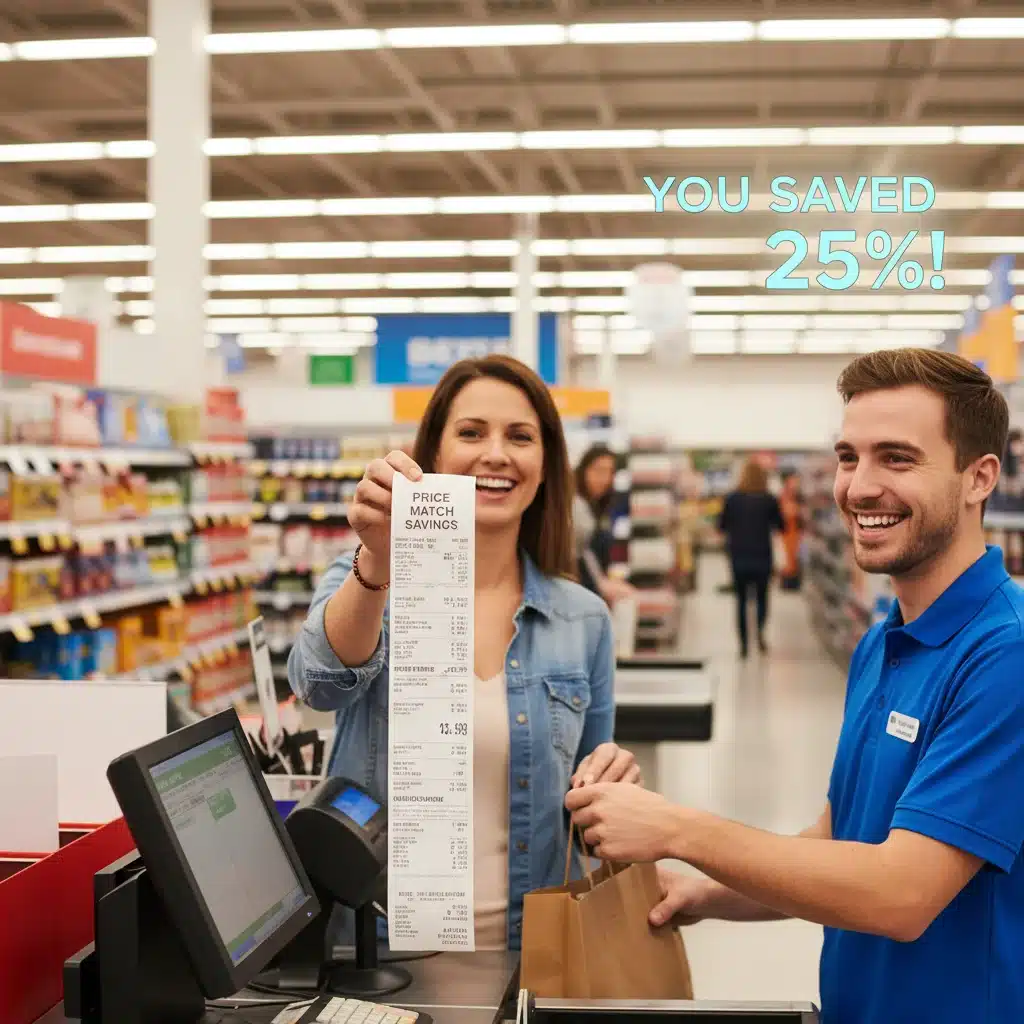
Imagine consistently saving 10% to 20% on your major purchases. Over a year, this can translate into hundreds, if not thousands, of dollars. For example:
- A new laptop: If you save 15% on a $1,000 laptop, that’s $150 back in your pocket.
- A home appliance: Saving 20% on a $500 washing machine means a $100 saving.
- Weekly groceries: Even small savings add up. If you save an average of 10% on a $150 weekly grocery bill, that’s $15 per week, or $780 per year!
These savings aren’t just theoretical; they’re achievable with a consistent and informed approach to retailer price match. This extra cash can be used for investments, paying down debt, building an emergency fund, or simply enjoying more discretionary spending. It’s about being a smarter, more empowered consumer.
Common Pitfalls to Avoid
Even with a solid understanding, mistakes can happen. Here are common pitfalls to steer clear of:
- Assuming All Stores Price Match: Not every retailer offers a price match guarantee. Always confirm before you shop.
- Not Reading the Fine Print: Exclusions are crucial. Don’t assume a policy covers everything.
- Poor Proof of Price: Blurry screenshots, expired ads, or unverified online prices will likely be rejected.
- Ignoring Third-Party Sellers: A common mistake is trying to match a price from a third-party seller on a major platform (e.g., a seller on Amazon Marketplace) when the retailer only matches Amazon.com directly.
- Being Impatient or Rude: Retail associates are more likely to help a polite and patient customer.
- Not Checking Stock: If the competitor is out of stock, the price match will almost certainly be denied.
Conclusion: Empowering Your Shopping Experience
In 2026, navigating the world of retailer price match policies is more than just a money-saving tactic; it’s an essential skill for the savvy consumer. By understanding the nuances, diligently researching, and confidently applying the policies, you empower yourself to make smarter purchasing decisions and keep more of your hard-earned money.
Remember, the goal isn’t just to find the lowest price, but to get the lowest price at the retailer you prefer, with the service and convenience you expect. This guide provides the framework; your consistent effort and attention to detail will unlock the significant savings that price matching offers. Start incorporating these strategies into your shopping routine today, and watch your savings grow!
Happy shopping, and happy saving!