Maximize Your Rewards: Q1 2026 Limited-Time Transfer Bonuses for US Travelers

Maximize Your Rewards: Don’t Miss Out on Q1 2026 Limited-Time Transfer Bonuses
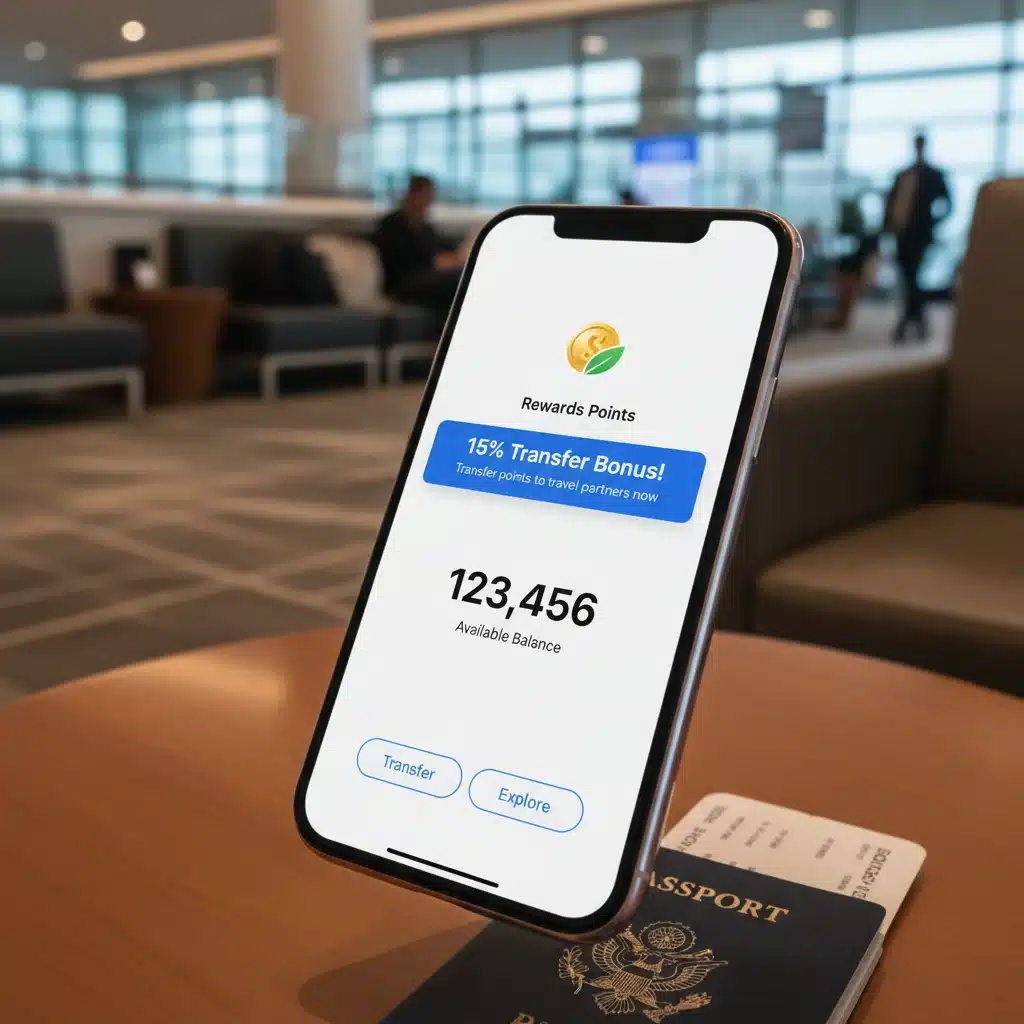
For savvy United States travelers, the first quarter of 2026 is shaping up to be an exceptionally rewarding period. A wave of limited-time points transfer bonuses is set to offer an incredible 15% extra points when transferring from major credit card reward programs to various airline and hotel loyalty programs. This is a golden opportunity to significantly boost your travel currency, allowing you to book those dream trips for less. Understanding how these bonuses work and strategizing your transfers can unlock unparalleled value from your existing points.
Credit card reward points are a fantastic way to offset travel costs, but their true power often lies in strategic transfers to partner loyalty programs. While direct redemption for flights or hotels through your credit card portal might offer a fixed value, transferring to an airline or hotel program during a bonus promotion can dramatically increase the value of your points, often yielding 1.5 cents, 2 cents, or even more per point. A 15% bonus, as anticipated for Q1 2026, means every 10,000 points you transfer could become 11,500 points, effectively giving you a significant head start on your next redemption.
This comprehensive guide will delve into the specifics of these upcoming points transfer bonuses, explain which programs are likely to participate, and provide actionable strategies to ensure you make the most of these limited-time offers. Whether you’re planning a luxurious international getaway, a domestic family vacation, or simply looking to stretch your points further, mastering the art of the transfer bonus is essential for any serious points enthusiast.
Understanding Points Transfer Bonuses: The Basics
At its core, a points transfer bonus is an incentive offered by credit card reward programs (like Chase Ultimate Rewards, American Express Membership Rewards, Citi ThankYou Points, or Capital One Miles) to encourage you to move your points to a specific airline or hotel loyalty program. These bonuses are typically for a limited duration, often a few weeks, and can range from 10% to 50% or even higher, with 15% being a very common and attractive offer.
When you initiate a transfer during a bonus period, the credit card program adds an additional percentage of points to your transfer. For example, if you transfer 10,000 Chase Ultimate Rewards points to an airline program offering a 15% bonus, you won’t receive 10,000 airline miles; instead, you’ll receive 11,500 airline miles. This effectively reduces the ‘cost’ of your redemption in terms of your original points, making your travel goals more attainable.
It’s crucial to understand that once points are transferred to a partner loyalty program, they generally cannot be transferred back. Therefore, careful planning and a clear redemption strategy are paramount before executing any transfer. These bonuses are usually announced a few weeks in advance, giving savvy travelers time to assess their options and prepare.
The beauty of these points transfer bonuses lies in their ability to unlock outsized value. While a credit card’s redemption portal might value your points at a standard 1 cent per point for travel, a strategic transfer to an airline with a bonus, followed by a redemption for a business or first-class flight, could yield 3, 4, or even 5 cents per point in value. This is where the true ‘travel hacking’ comes into play.
Anticipated Programs and Partners for Q1 2026
While specific Q1 2026 transfer bonus details are yet to be officially announced, historical patterns provide strong indicators of which programs and partners are likely to participate. Major credit card issuers consistently offer these promotions, often rotating through their airline and hotel partners.
Credit Card Reward Programs Likely to Offer Bonuses:
- Chase Ultimate Rewards: Known for their robust travel partners including United Airlines, Southwest Airlines, Hyatt, and Marriott. They frequently offer bonuses to airlines like British Airways, Virgin Atlantic, and Air France/KLM Flying Blue.
- American Express Membership Rewards: A vast network of airline and hotel partners, including Delta, Emirates, ANA, Singapore Airlines, Hilton, and Marriott. Amex often has competitive bonuses, especially with international carriers.
- Citi ThankYou Points: Partners include Turkish Airlines, EVA Air, Cathay Pacific, and Wyndham. Citi occasionally offers unique bonuses that can be very valuable for specific routes or hotels.
- Capital One Miles: With a growing list of airline partners like Air Canada Aeroplan, Avianca LifeMiles, and Emirates, Capital One has become a strong contender in the transfer bonus game.
Common Airline and Hotel Partners for Bonuses:
Expect to see bonuses to popular programs like:
- Airlines: British Airways Executive Club, Virgin Atlantic Flying Club, Air France/KLM Flying Blue, Avianca LifeMiles, United MileagePlus (less common for direct bonuses but possible via Chase), and various other Star Alliance, SkyTeam, and Oneworld partners.
- Hotels: Marriott Bonvoy and Hilton Honors are frequent participants, though hotel transfer bonuses tend to be less frequent or offer lower percentages compared to airline partners.
Keeping an eye on official announcements from these credit card issuers and loyalty programs as Q1 2026 approaches will be key. Travel blogs and points-and-miles communities are excellent resources for real-time updates on these limited-time offers.
Why a 15% Bonus Matters for United States Travelers
A 15% bonus might seem modest, but its impact on your travel budget can be substantial, especially for United States travelers who often face high cash prices for both domestic and international flights. Here’s why it’s so significant:
- Reduced Points Cost for Redemptions: Simply put, you need fewer of your original credit card points for the same flight or hotel stay. A 15% bonus on 100,000 points means you get 115,000 miles/points in the partner program. If a flight costs 100,000 miles, you’ve effectively saved 15,000 of your credit card points.
- Unlocking Premium Travel: Business and first-class cabins often represent the best value for points redemptions. A 15% bonus can be the difference between affording a premium seat and having to settle for economy. For example, if a business class flight requires 80,000 miles, a 15% bonus means you only need to transfer approximately 69,566 credit card points (80,000 / 1.15).
- Reaching Redemption Thresholds Faster: If you’re just short of enough miles for a specific redemption, a bonus can push you over the edge. Instead of waiting to earn more points or paying cash for the difference, the bonus provides an instant boost.
- Maximizing Earning Potential: By using bonuses, you effectively increase the value of every point you earn from your credit card spending. This makes your everyday purchases even more rewarding.
- Flexibility for Future Travel: While it’s generally advised to transfer points with a specific redemption in mind, a 15% bonus can also provide a buffer for future travel plans, giving you more options when you’re ready to book.
Consider a round-trip business class flight to Europe that costs 120,000 miles with an airline partner. Without a bonus, you’d need to transfer 120,000 credit card points. With a 15% bonus, you’d only need to transfer approximately 104,348 credit card points (120,000 / 1.15). That’s a saving of over 15,000 points – enough for a domestic economy flight or a significant portion of a hotel stay!
Strategic Planning for Q1 2026 Transfer Bonuses
To truly capitalize on these points transfer bonuses, a well-thought-out strategy is essential. Haphazard transfers can lead to points being trapped in a less-than-ideal loyalty program or expiring before you can use them.
1. Define Your Travel Goals:
Before even thinking about transferring, identify where and when you want to travel. Are you aiming for a specific destination, a particular airline’s premium cabin, or a luxurious hotel stay? Having a clear goal helps you determine which loyalty program you need miles or points in.
2. Research Award Availability:
This is arguably the most critical step. Even with a bonus, if there’s no award availability for your desired dates and route, the miles are useless. Use tools like AwardHacker, ExpertFlyer, or directly search on airline websites (e.g., United.com for Star Alliance, British Airways for Oneworld, Air France/KLM for SkyTeam) to confirm availability before transferring. Remember that award availability is dynamic and can change rapidly.
3. Understand Transfer Ratios and Minimums:
Most credit card programs transfer at a 1:1 ratio to airline partners, but some hotel partners might have different ratios (e.g., 2:1 or 3:1). Always check the specific transfer ratio for your desired program. Also, be aware of minimum transfer amounts, which are usually 1,000 points or more.
4. Compare Redemption Values:
Don’t just transfer because there’s a bonus. Calculate the effective value you’re getting. For example, if a flight costs $500 cash or 50,000 miles, that’s 1 cent per mile. With a 15% bonus, you’d transfer ~43,478 credit card points to get 50,000 miles, making your points worth ~1.15 cents each. Compare this to other redemption options you might have, such as redeeming directly through your credit card portal.
5. Be Mindful of Transfer Times:
While some transfers are instant (e.g., Chase to United, Amex to Delta), others can take hours or even a few days to process. Always factor this into your planning, especially if award availability is scarce or you’re booking close to departure.
6. Avoid Speculative Transfers:
Unless you have a very specific and immediate use for the points, it’s generally not advisable to transfer points speculatively, even with a bonus. Once transferred, points are locked into that loyalty program and are subject to its expiration policies and award chart changes, which can devalue your hard-earned points.
7. Leverage Multiple Credit Card Programs:
If you hold cards from different issuers (e.g., Chase Sapphire Reserve and American Express Platinum), you might have access to a wider array of transfer partners and bonus opportunities. This diversification can be incredibly powerful in maximizing your overall rewards strategy.
Case Studies: Maximizing 15% Points Transfer Bonuses
Let’s look at a few hypothetical scenarios to illustrate the power of a 15% points transfer bonus:
Scenario 1: Business Class to Europe
You want to fly business class from New York to Paris. A common redemption is with Air France/KLM Flying Blue, which might cost around 60,000 miles one-way during a promotional period. Both Chase Ultimate Rewards and American Express Membership Rewards often partner with Flying Blue.
- Without Bonus: You’d transfer 60,000 credit card points.
- With 15% Bonus: You’d only need to transfer approximately 52,174 credit card points (60,000 / 1.15) to get 60,000 Flying Blue miles. That’s a saving of nearly 8,000 points!
Scenario 2: Domestic Flight on United
You need a domestic economy flight on United, costing 25,000 United MileagePlus miles round-trip. While Chase Ultimate Rewards transfers 1:1 to United, if there was a rare 15% bonus (perhaps from a different partner that then transfers to United, or a direct bonus from Chase), the impact would be:
- Without Bonus: You’d transfer 25,000 credit card points.
- With 15% Bonus: You’d transfer approximately 21,739 credit card points (25,000 / 1.15) to get 25,000 United miles. A saving of over 3,000 points for a domestic flight!
Scenario 3: Luxury Hotel Stay with Marriott Bonvoy
You’re eyeing a night at a high-end Marriott Bonvoy property costing 50,000 points. Both Chase and Amex transfer to Marriott, typically at a 1:1 ratio (though Amex sometimes has different ratios or bonuses). Assuming a direct 15% bonus from your credit card program to Marriott:
- Without Bonus: You’d transfer 50,000 credit card points.
- With 15% Bonus: You’d transfer approximately 43,478 credit card points (50,000 / 1.15) to get 50,000 Marriott Bonvoy points. This is a significant saving for a single night at a premium hotel.
These examples highlight how a 15% bonus, while not the highest ever seen, consistently provides tangible savings and opens up more valuable redemption opportunities.
Beyond the 15% Bonus: Other Considerations
While the 15% points transfer bonuses in Q1 2026 are a fantastic opportunity, remember to keep these broader points-and-miles principles in mind:
- Expiration Dates: Both your credit card points and the transferred airline/hotel points can have expiration dates. Ensure you’re aware of these to avoid losing your valuable rewards.
- Fees and Taxes: Award tickets often come with taxes and fees, which can sometimes be substantial, especially on international flights with certain airlines (e.g., British Airways). Always factor these into your overall cost.
- Award Chart Changes: Loyalty programs can devalue their points or change their award charts without much notice. This is another reason to avoid speculative transfers and to use your points relatively quickly once transferred.
- Elite Status Benefits: When booking award travel, you generally still receive elite status benefits (e.g., lounge access, upgrades, complimentary breakfast) if you have them with the airline or hotel.
- Pooling Points: Some programs allow you to pool points with family members, which can help you reach redemption goals faster. Check the specific rules for your chosen loyalty program.
Staying informed about the dynamic world of travel rewards is a continuous process. Subscribing to newsletters from points-and-miles blogs, participating in online forums, and regularly checking your credit card’s rewards portal are excellent ways to stay ahead of the curve and catch these limited-time offers.

Preparing for Q1 2026: Actionable Steps Now
Even though Q1 2026 is still some time away, there are immediate steps United States travelers can take to prepare for these lucrative points transfer bonuses:
- Audit Your Current Points Balances: Know exactly how many points you have with Chase, Amex, Citi, Capital One, and any other transferable currency programs.
- Identify Potential Travel Dates and Destinations: Start brainstorming where you want to go and when. This will help you narrow down which loyalty programs you need points in.
- Research Award Charts: Familiarize yourself with the award charts of various airline and hotel partners. Understand how many miles/points are typically required for your desired redemptions.
- Monitor Travel News: Keep an eye on travel blogs and news outlets for early announcements or rumors about upcoming transfer bonuses.
- Consider Opening a New Card (If Strategic): If you’re short on transferable points, and a new credit card with a generous sign-up bonus aligns with your financial goals, now might be a good time to consider it. Ensure you can meet the minimum spending requirements responsibly.
- Don’t Transfer Prematurely: Resist the urge to transfer points before a bonus is announced and you have a solid redemption plan. Patience is a virtue in the world of points and miles.
By taking these proactive steps, you’ll be well-positioned to act swiftly and strategically when the Q1 2026 limited-time transfer bonuses are officially released. The goal is to be prepared, not rushed, ensuring you extract maximum value from every point.
Conclusion: Don’t Let These Bonuses Slip Away!
The anticipation of 15% extra points through limited-time points transfer bonuses in Q1 2026 presents a fantastic opportunity for United States travelers. These promotions are a cornerstone of maximizing credit card rewards, enabling aspirational travel experiences that might otherwise be out of reach. By understanding the mechanics of these bonuses, strategically planning your redemptions, and staying informed, you can significantly amplify the value of your points.
Remember, the key to success is research, patience, and a clear travel goal. Don’t let your hard-earned points sit idle when they could be unlocking incredible adventures. Keep an eye out for official announcements as Q1 2026 approaches, and be ready to make your move. Happy travels!