Expert Analysis: Are Subscription Boxes Still Worth It in 2026? A Cost-Benefit Breakdown for Up to 15% Savings
The dawn of 2026 brings with it a fascinating question for the modern consumer: In an era defined by personalization and conscious spending, do subscription boxes still hold their allure? What began as a novel concept – curated goods delivered to your doorstep – has blossomed into a multi-billion dollar industry, touching everything from gourmet foods and artisanal crafts to high-tech gadgets and sustainable lifestyle products. But as the market matures and consumer expectations evolve, a critical re-evaluation of the subscription box value proposition is not just timely, it’s essential.
For years, the promise was irresistible: convenience, discovery, and often, a perceived discount on products you’d love. Yet, as the novelty wears off, many consumers find themselves asking: Am I truly saving money? Am I receiving items I genuinely need and use, or am I merely accumulating clutter? This comprehensive analysis delves deep into the current landscape of subscription boxes, providing an expert perspective on their enduring relevance in 2026. We will dissect the true cost-benefit equation, explore the factors that determine genuine value, and equip you with the insights to potentially save up to 15% on your recurring purchases. Whether you’re a long-time subscriber or considering your first box, understanding the nuances of the subscription box value is crucial for making informed financial decisions.
The Evolution of Subscription Boxes: From Novelty to Mainstream
To understand the present and future of subscription box value, we must first reflect on its past. The concept isn’t entirely new; magazine subscriptions and milk deliveries were early precursors. However, the modern subscription box phenomenon, characterized by curated, themed collections, truly took off in the early 2010s. Birchbox, Ipsy, and Dollar Shave Club pioneered a model that promised convenience, discovery, and a touch of luxury or practical necessity delivered directly to the consumer’s home.
Initially, the market was flooded with generalist boxes, aiming to appeal to a broad audience. However, as competition intensified and consumer data became more sophisticated, a clear trend towards hyper-specialization emerged. Today, you can find boxes for almost any niche imaginable: ethically sourced coffee, rare exotic plants, STEM-focused toys for children, sustainable pet supplies, bespoke grooming products, and even boxes dedicated to specific cultural experiences or dietary restrictions. This evolution reflects a deeper understanding of consumer desires for personalization and curated experiences rather than just generic goods.
By 2026, the industry has become highly segmented. The ‘one-size-fits-all’ approach is largely obsolete. Success now hinges on understanding precise consumer demographics, leveraging advanced AI for personalization, and offering unparalleled convenience and perceived value. The initial excitement of receiving a surprise package has matured into an expectation of receiving exactly what you want, often before you even know you want it. This shift significantly impacts the perceived and actual subscription box value.
Deconstructing the Cost: What You’re Really Paying For
At first glance, a subscription box price might seem straightforward. You pay X dollars per month, and a box arrives. However, a deeper dive reveals a more complex cost structure that influences the overall subscription box value. Understanding these underlying costs is critical for any consumer looking to make a financially sound decision.
Product Sourcing and Curation
A significant portion of your subscription fee goes towards the products themselves. This includes the cost of acquiring items, often from various suppliers, and the labor involved in curating the perfect selection. For niche boxes, sourcing unique or artisanal products can be more expensive than mass-produced alternatives, justifying a higher price point. High-quality, ethically sourced, or rare items inherently carry a premium.
Packaging and Presentation
The unboxing experience is a cornerstone of the subscription box appeal. Elaborate, branded packaging, tissue paper, custom inserts, and even small gifts contribute to this. While delightful, these elements add to the overall cost. Companies invest heavily in aesthetic presentation to enhance perceived value and generate social media buzz. This ‘experience’ cost is often overlooked but is a tangible part of what you’re paying for.
Logistics and Shipping
The journey from the warehouse to your doorstep involves considerable logistical costs. Shipping fees, warehousing, order fulfillment, and last-mile delivery are all factored into the subscription price. For heavy or fragile items, these costs can be substantial. Many companies offer ‘free shipping,’ but this cost is invariably baked into the overall subscription fee.
Marketing and Customer Acquisition
The subscription box market is fiercely competitive. Companies spend significant amounts on marketing, advertising, and customer acquisition to attract new subscribers. Referral programs, influencer collaborations, and digital ad campaigns are all part of this. These operational overheads are ultimately passed on to the consumer, albeit indirectly.
Operational Overheads and Profit Margins
Like any business, subscription box companies have operational expenses beyond product and shipping, including staff salaries, technology infrastructure, customer service, and administrative costs. And, of course, they aim to make a profit. These elements collectively determine the base price of a subscription, and understanding them helps in assessing whether the price aligns with the perceived subscription box value.
Analyzing the Benefits: Beyond the Box
While the monetary cost is tangible, the benefits of subscription boxes are often more nuanced and psychological. Evaluating the true subscription box value requires looking beyond the immediate contents.
Convenience and Time-Saving
For many, the primary benefit is unparalleled convenience. No more remembering to reorder essentials, no more endless browsing for new products. Curated boxes save time and mental energy, especially for busy individuals or those who dislike shopping. This ‘time-saved’ has a real, albeit intangible, value.
Discovery and Curation
Subscription boxes excel at introducing consumers to new brands, products, or experiences they might not have otherwise encountered. The element of surprise and discovery can be genuinely exciting and enriching. Expert curation by industry specialists often means you’re receiving high-quality, relevant items tailored to your stated preferences, enhancing the subscription box value.
Personalization and Customization
Modern subscription services leverage sophisticated algorithms and detailed user profiles to offer highly personalized selections. This means a higher likelihood of receiving items you’ll genuinely love and use, reducing waste and increasing satisfaction. The feeling of being understood and catered to is a powerful draw.
Exclusivity and Access
Some boxes offer exclusive access to limited-edition products, early releases, or items not available in general retail. This exclusivity can significantly boost the perceived value, especially for enthusiasts or collectors. Membership perks, discounts on additional purchases, or access to a subscriber-only community also add to the overall benefit.
Treating Yourself & Self-Care
For many, a subscription box is a form of regular self-care or a small treat. The anticipation and excitement of receiving a package can provide a psychological boost, contributing to overall well-being. This emotional benefit, while not quantifiable in dollars, is a significant part of the perceived subscription box value.
The Worth It Equation: When Does Subscription Box Value Shine?
So, how do you determine if a subscription box is truly ‘worth it’ for you in 2026? It boils down to a personalized equation of cost versus benefit, with several key factors influencing the outcome.
1. The ‘Retail Value’ vs. ‘Actual Value’ Fallacy
Many subscription boxes boast a retail value significantly higher than the subscription price. While this can be enticing, it’s crucial to differentiate between advertised retail value and your actual personal value. If a box contains items with a combined retail value of $100, but you only use one $20 item, your actual value derived is far less. Focus on the utility and desirability of each item to you, not just its market price. The true subscription box value is what you would realistically buy and use.
2. Frequency of Use and Consumption Rate
Consider how often you use the products. For consumables (food, coffee, beauty products), a monthly box might be perfect. For items like books or craft supplies, a quarterly box might prevent accumulation. An excess of unused items rapidly diminishes the subscription box value.
3. Your Personal Preferences and Openness to Discovery
If you’re particular about brands or specific products, a highly curated box with extensive customization options will offer more value. If you love surprises and are open to trying new things, a discovery-focused box might be more appealing. Your adventurousness plays a role in how much you benefit from the ‘discovery’ aspect.
4. Budget and Financial Priorities
Can you comfortably afford the subscription without compromising other financial goals? Is it replacing existing purchases or adding an extra expense? A critical assessment of your budget is paramount. The goal is to enhance your life, not burden your finances.

Strategies to Maximize Your Subscription Box Value (and Save Up to 15%)
Even if a subscription box seems appealing, there are smart strategies you can employ in 2026 to ensure you’re getting the best possible subscription box value and potentially saving a significant percentage of your spending.
1. Scrutinize Your Preferences and Customization Options
Before subscribing, thoroughly explore the customization options. Many boxes allow you to fine-tune your profile, skip certain categories, or even preview upcoming items. The more control you have, the higher the likelihood of receiving items you desire, directly boosting your subscription box value. Regularly update your preferences as your tastes change.
2. Leverage Introductory Offers and Discount Codes
The subscription box market is highly competitive, and companies frequently offer attractive introductory discounts (e.g., 20% off your first box, a free gift). Always search for discount codes before signing up. Websites like RetailMeNot, Honey, or specific influencer codes can yield significant initial savings. However, be mindful of the renewal price after the introductory period.
3. Opt for Longer Subscription Terms for Savings
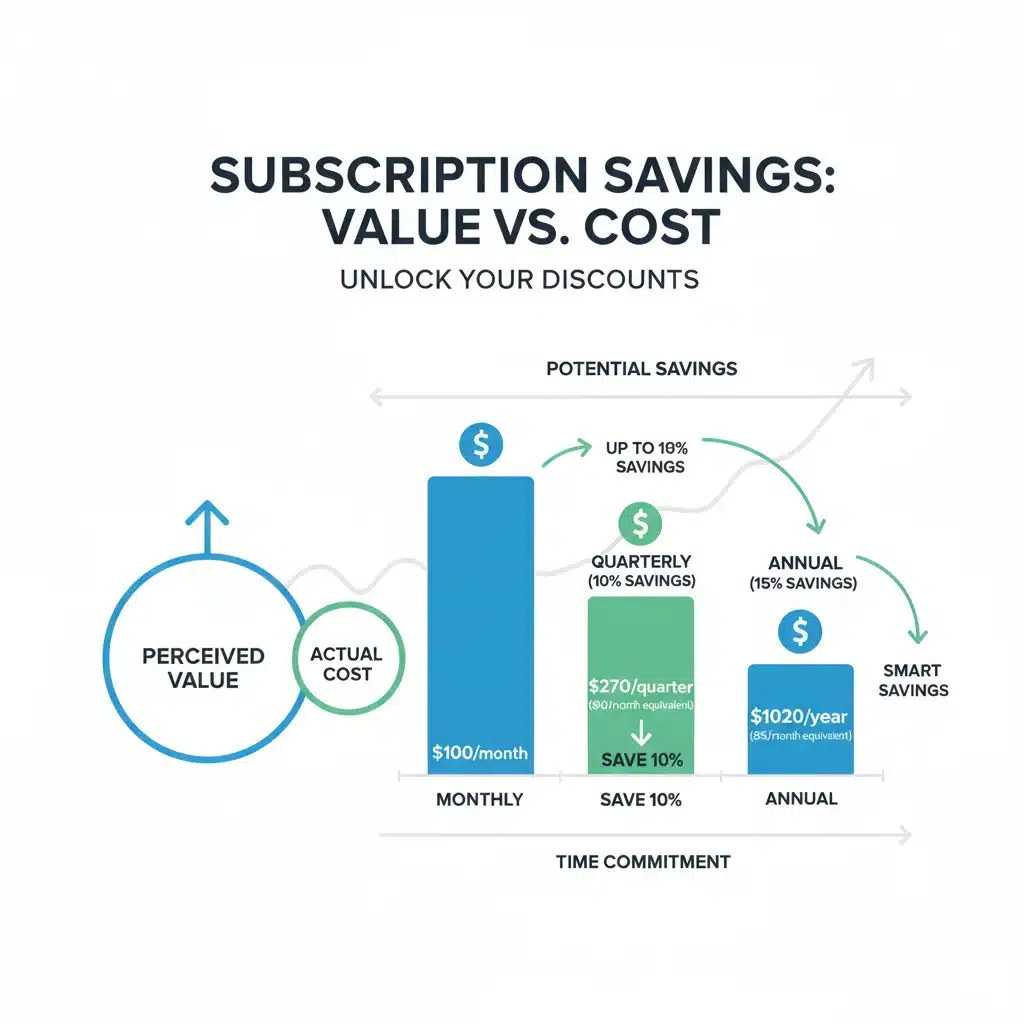
Most subscription services offer discounts for committing to longer terms (e.g., quarterly, bi-annual, or annual subscriptions vs. monthly). While this requires a larger upfront payment, the per-box cost can be considerably lower – often yielding savings of 10-15% or more. If you’re confident you’ll use the service long-term, this is a straightforward way to increase subscription box value.
4. Unsubscribe and Resubscribe Strategically
If you’ve been a long-time subscriber, consider canceling your subscription. Many companies will send you win-back offers with significant discounts (e.g., 25% off for the next three months) to entice you back. This strategy can be particularly effective if you cycle through different boxes or take breaks.
5. Re-evaluate Periodically and Declutter
Set a reminder to review all your subscriptions every 3-6 months. Assess what you’ve received, what you’ve used, and what’s gathering dust. If you’re consistently receiving items you don’t need, it’s time to adjust your preferences, pause, or cancel. Don’t let unused items diminish your perceived subscription box value.
6. Compare with Direct Purchase Costs
Periodically compare the cost of your subscription box with the cost of purchasing the items individually or similar products from retail. Sometimes, the convenience and curation justify a slight premium, but if the box consistently costs more than what you’d spend on items you actually want, its value is diminished. This comparison is key to understanding the real subscription box value.
7. Gift or Exchange Unwanted Items
If you receive an item you genuinely won’t use, don’t let it go to waste. Consider gifting it to a friend or family member, donating it, or even participating in online swap communities dedicated to subscription box items. This ensures that even ‘misses’ can find a good home, indirectly recouping some of the cost.
8. Read Reviews and Community Feedback
Before subscribing, delve into reviews from other users. Look for feedback on consistency, product quality, customer service, and how well the box lives up to its promises. Online communities and forums dedicated to subscription boxes can provide invaluable insights into the true subscription box value of various services.
The Future of Subscription Boxes: What to Expect in 2026 and Beyond
The subscription box industry is far from stagnant. Several trends are shaping its future, further influencing the subscription box value proposition for consumers.
Hyper-Personalization Driven by AI and Data
Expect even more sophisticated personalization. AI will move beyond basic preferences to predict needs and desires based on past purchases, browsing history, and even biometric data (with user consent). This will lead to boxes that feel uncannily tailored, minimizing unwanted items and maximizing perceived value.
Sustainability and Ethical Sourcing
Consumers in 2026 are increasingly conscious of environmental and social impact. Subscription boxes that prioritize sustainable packaging, ethically sourced products, and transparent supply chains will gain a significant competitive edge. This adds a new dimension to subscription box value beyond just the product.
Experiential and Service-Based Subscriptions
While physical products remain dominant, expect a rise in experiential or service-based subscriptions. This could include access to exclusive online classes, digital content libraries, virtual wellness programs, or even local service providers. The ‘box’ could become entirely digital, or a hybrid of physical and digital offerings.
Flexibility and Control
Consumers will demand more control over their subscriptions. Easy pausing, skipping months, swapping items, and flexible delivery schedules will become standard expectations. Companies that offer this level of adaptability will foster greater loyalty and enhance the perceived subscription box value.
Community and Engagement
Subscription boxes will increasingly foster communities around shared interests. Exclusive forums, live events, and opportunities to connect with fellow subscribers or brand creators will add a social dimension, turning a transactional relationship into a more engaging experience.
Case Studies: Real-World Examples of Evolving Subscription Box Value
To further illustrate the dynamics of subscription box value in 2026, let’s look at a couple of hypothetical, yet representative, case studies.
Case Study 1: The Gourmet Coffee Enthusiast
Maria, a remote worker, loves exploring unique coffee beans. She subscribed to ‘Bean Voyage,’ a monthly coffee box costing $35, promising two bags of ethically sourced, rare beans. Initially, she loved the discovery. However, after six months, she noticed she was accumulating too many bags, as her consumption didn’t match the delivery frequency. Her subscription box value started to decline.
Solution: Maria switched to a bi-monthly subscription, reducing her spend to $17.50/month on average, and allowing her to fully enjoy each delivery. She also updated her preferences to specify roast levels and origin regions she preferred, ensuring less waste. By adjusting frequency and personalization, she increased her actual value derived and saved over 15% annually compared to her initial monthly plan.
Case Study 2: The Eco-Conscious Beauty Lover
David, passionate about sustainable living, subscribed to ‘Green Glow,’ a quarterly beauty box for $60, focusing on eco-friendly, cruelty-free products. He appreciated the product quality and ethical stance but found himself receiving items he already had or didn’t need (e.g., too many facial cleansers). His initial excitement waned, impacting the perceived subscription box value.
Solution: David utilized Green Glow’s new ‘swap’ feature, allowing him to exchange one unwanted item for another from a curated list of alternatives before shipment. He also took advantage of their annual payment option, saving 10% on the yearly cost. Furthermore, he engaged with their online community, discovering how to repurpose some items, which enhanced his overall satisfaction and the holistic value of the subscription.
Final Verdict: Are Subscription Boxes Still Worth It in 2026?
The answer in 2026 is a resounding: it depends. The days of blindly subscribing and hoping for the best are over. The true subscription box value is no longer an inherent feature of the service itself, but rather a reflection of how well it aligns with your individual needs, preferences, and financial discipline.
For the discerning consumer who actively manages their subscriptions, leverages customization options, and critically assesses their actual usage, subscription boxes can still offer immense value. They provide convenience, exciting discovery, and access to personalized products, often at a competitive price, especially when strategic savings tips are applied. With careful planning, it’s absolutely possible to save up to 15% or more on your subscription box spending, ensuring you get maximum bang for your buck.
However, for those who subscribe and forget, or who don’t utilize the customization features, subscription boxes can quickly become a source of financial drain and unnecessary clutter. The key is active engagement and periodic re-evaluation. The market has matured, and so must the consumer.
In conclusion, in 2026, subscription boxes are not just about the contents of the box; they are about the experience, the convenience, the discovery, and most importantly, the personalized fit. By becoming an informed and proactive subscriber, you can navigate this dynamic landscape and continue to unlock genuine subscription box value for years to come.