Unlock Elite Status Faster: 2026 US Loyalty Programs Guide

Are you tired of endlessly accumulating points and miles, only to feel like elite status is perpetually out of reach? In the competitive world of travel and hospitality, achieving elite status can unlock a plethora of invaluable benefits, from complimentary upgrades and exclusive lounge access to dedicated customer service and enhanced earning rates. But the path to these coveted tiers often feels long and arduous. What if you could significantly reduce the time and effort required, perhaps by as much as 25%, to attain elite status in US loyalty programs by 2026?
This comprehensive guide is designed to be your definitive roadmap. We will delve into the intricacies of major US loyalty programs, analyze their evolving structures, and unveil cutting-edge strategies to fast-track your journey to elite status. Whether you’re a frequent flyer, a road warrior, or simply someone who appreciates premium travel experiences, understanding these tactics can transform your travel game. The landscape of loyalty programs is constantly shifting, with new rules, partnerships, and opportunities emerging regularly. Staying ahead of the curve is crucial, and this article will equip you with the knowledge to do just that.
We’ll explore how to leverage co-branded credit cards, strategic spending, status challenges, and even lesser-known loopholes to achieve your elite goals more efficiently than ever before. Our focus is on practical, actionable advice tailored for the 2026 loyalty program environment, ensuring you’re prepared for what’s ahead. Prepare to unlock a world of enhanced travel, elevated experiences, and substantial savings. Let’s embark on this journey to conquer Elite Status Programs together.
Understanding the Shifting Landscape of US Loyalty Programs (2026 Outlook)
Before we dive into specific strategies, it’s essential to grasp the fundamental changes and trends shaping US loyalty programs. The days of simple mileage accrual are largely behind us. Many programs have shifted towards revenue-based earning, where the amount you spend often dictates your progress more than the distance you fly or the nights you stay. This trend is expected to solidify further by 2026, making strategic spending an even more critical component of achieving Elite Status Programs.
Another significant development is the increasing emphasis on ‘experiences’ and ‘soft benefits’ beyond just upgrades. Programs are trying to differentiate themselves by offering unique access, personalized services, and exclusive events. While these are harder to quantify, they add significant value to elite tiers. Furthermore, partnerships are becoming increasingly common. Airlines are forging closer ties with hotel chains, car rental companies, and even cruise lines, creating more avenues to earn and redeem points, and crucially, to qualify for status.
The rise of dynamic pricing for award travel and hotel stays also impacts how you perceive the value of your points and status. While this can sometimes lead to higher redemption costs, it also means more availability, provided you’re flexible. Understanding these overarching trends will help you choose the right loyalty programs to focus on and tailor your strategies for maximum effectiveness. By 2026, expect even more personalization and data-driven offers from loyalty programs, meaning those who actively engage and understand their benefits will reap the most rewards.
Key Trends to Watch for in 2026:
- Revenue-Based Qualification: Expect more programs to tie elite status qualification directly to spending, rather than just segments or nights. This means high spenders will find it easier to qualify.
- Personalized Offers: Loyalty programs will use data to offer highly personalized challenges and bonuses, making it crucial to monitor your accounts for targeted promotions.
- Enhanced Partnerships: Look for more cross-brand partnerships that allow for earning and burning points across different sectors (e.g., airline points for hotel stays, or hotel points for car rentals) and potentially reciprocal status benefits.
- Sustainability Initiatives: Some programs might start incorporating sustainable travel choices into their loyalty structures, offering bonuses for eco-friendly options.
- Digital Dominance: Mobile apps and digital platforms will be central to managing status, accessing benefits, and receiving real-time updates.
Leveraging Co-Branded Credit Cards for Rapid Status Accumulation
One of the most potent tools for accelerating your journey to elite status is the strategic use of co-branded credit cards. These cards, offered in partnership with airlines and hotel chains, provide a direct pathway to earning qualifying miles, nights, or spending credits that count towards Elite Status Programs. By 2026, their role is only expected to grow, with more intricate benefits and spending thresholds.
Airline Co-Branded Credit Cards:
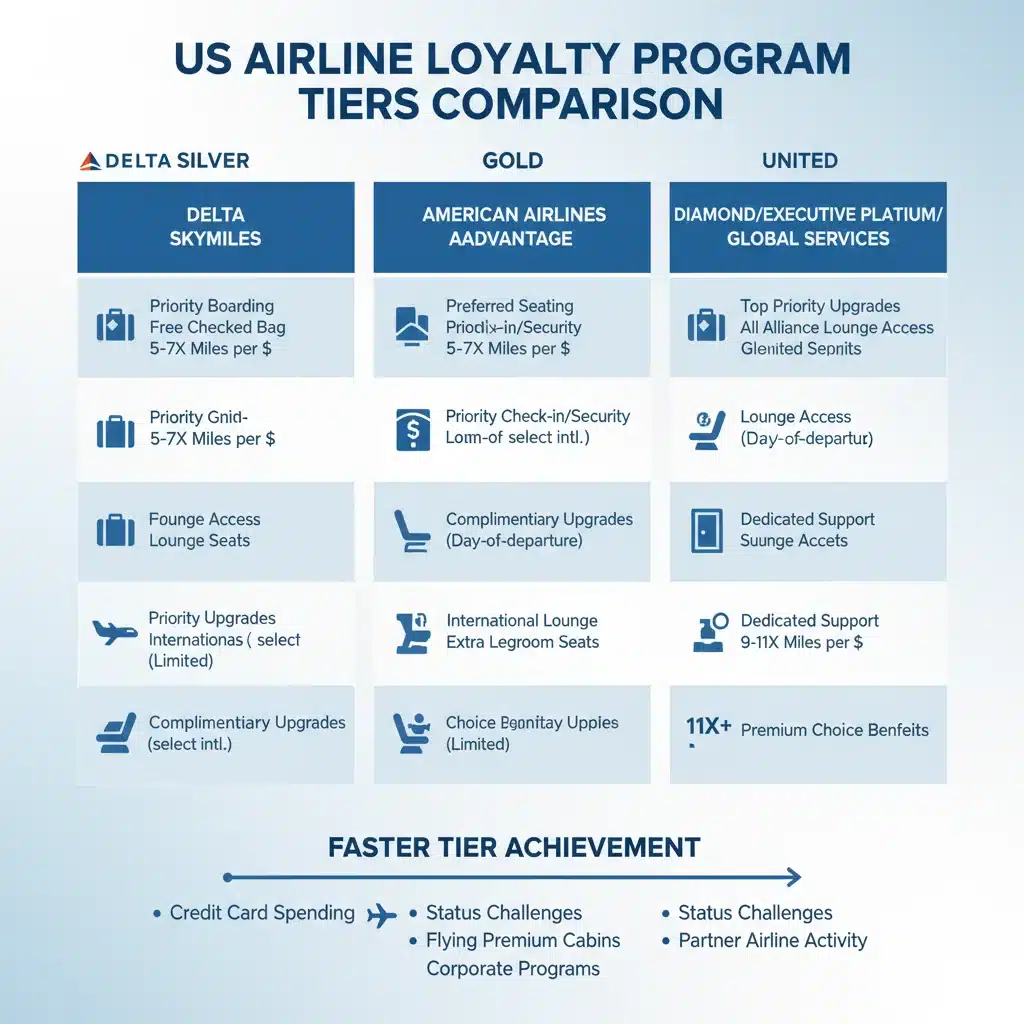
Many airline credit cards offer significant welcome bonuses that can kickstart your mileage balance, but more importantly for status, some provide Medallion Qualifying Dollars (MQDs), Premier Qualifying Dollars (PQDs), or Loyalty Points based on your spending. For example, some premium airline cards grant a certain amount of qualifying spend after reaching a spending threshold, directly pushing you closer to elite status. Others might offer waivers for lower elite tiers based on annual spending. Research the specific cards associated with your preferred airline and understand their spending bonuses and status-qualifying benefits.
Consider cards that offer direct status boosts. Some airline cards might provide a certain number of elite qualifying segments or miles simply for holding the card or spending a set amount. This can be particularly valuable for those who don’t fly enough segments to qualify organically. Always compare the annual fee against the value of the benefits you expect to receive, especially the elite status acceleration.
Hotel Co-Branded Credit Cards:
Hotel credit cards are arguably even more powerful for status acceleration. Many premium hotel cards offer automatic mid-tier elite status (e.g., Marriott Bonvoy Gold Elite, Hilton Honors Gold, World of Hyatt Discoverist) just for being a cardholder. This instantly grants you benefits like complimentary breakfast, room upgrades, and late checkout, without even stepping foot in a hotel.
Beyond automatic status, these cards often provide a significant number of elite night credits each year. For instance, a card might grant 15 or even 25 elite night credits annually. If a program requires 50 nights for top-tier status, receiving 25 nights from a credit card means you only need to stay 25 actual nights – a 50% reduction in stay requirements! This is a game-changer for achieving Elite Status Programs much faster.
Some hotel cards also offer a free night certificate each year, offsetting the annual fee and providing additional value. By strategically combining a hotel co-branded credit card with actual stays, you can reach higher tiers with significantly less effort and spending. It’s a powerful synergy that savvy travelers consistently utilize.
Strategic Spending and Manufacturing Spend for Elite Qualification
With the shift towards revenue-based qualification, strategic spending has become paramount. This doesn’t just mean putting all your travel expenses on the right card; it involves optimizing your everyday spending to count towards elite status. Many programs now award elite qualifying points or segments based on credit card spend, making every dollar count.
Optimizing Everyday Spending:
Review your monthly expenditures. Can you pay for utilities, groceries, or even rent (if applicable) with a credit card that earns elite qualifying credits? Many services now accept credit card payments, sometimes with a small fee. Calculate whether the elite status progress outweighs this fee. For example, if a card offers 1 elite qualifying night for every $3,000 spent, and you spend $30,000 annually on that card, you’ve just earned 10 elite nights without an incremental stay. This is a significant boost towards Elite Status Programs.
Consider using your co-branded card for all business expenses, if permissible. Business travel, supplies, and marketing costs can quickly add up, translating into substantial elite qualifying credits. Always ensure you are meeting minimum spending requirements for any bonuses or status tiers you are aiming for.
Understanding Manufactured Spending (Use with Caution):
Manufactured spending refers to techniques used to generate credit card spending without actually making a purchase of goods or services you intend to keep. This often involves buying easily convertible cash equivalents like gift cards or prepaid debit cards, and then using those to pay bills or convert back to cash. While it can accelerate elite qualification, it comes with significant risks and should be approached with extreme caution.
Banks and loyalty programs actively monitor for manufactured spending and can shut down accounts, claw back points, or even revoke status if they detect abuse. The landscape for manufactured spending has become significantly more challenging over the years, with fewer lucrative and safe options. By 2026, expect even tighter controls. For most individuals, focusing on organic strategic spending is a safer and more sustainable path to Elite Status Programs.
Status Challenges and Matches: Your Fast Pass to Elite Tiers
One of the quickest ways to achieve elite status, especially if you already hold status with a competing program, is through status challenges or matches. These programs are designed to entice elite members from rival brands to switch their loyalty. By 2026, expect these to remain a key strategy for loyalty programs to acquire high-value customers.
Status Challenges:
A status challenge typically involves a program offering you a reduced qualification requirement for a specific elite tier, usually over a shorter period (e.g., 90 days). For example, an airline might offer you the chance to earn mid-tier status by flying just 5,000 miles and 2 segments within three months, instead of the usual 25,000 miles and 30 segments in a year. During the challenge period, you often receive temporary elite status to experience the benefits.
These are incredibly valuable for travelers who have a burst of travel planned or can strategically schedule trips. Always read the terms and conditions carefully, as some challenges require specific types of flights or hotel stays (e.g., paid stays versus award stays). Timing is crucial; initiate a challenge when you know you can meet the requirements within the given timeframe. Successfully completing a challenge can save you months, if not a full year, of regular qualification efforts for Elite Status Programs.
Status Matches:
A status match is even simpler: if you hold elite status with one airline or hotel chain, another program might grant you equivalent status without any additional requirements. You simply provide proof of your current status (e.g., a screenshot of your account) and they’ll match it. This is often a one-time offer and is usually available to attract high-tier members.
While less common than challenges, status matches are the ultimate shortcut. Keep an eye on loyalty blogs and forums, as programs often announce status match opportunities, sometimes targeted or for specific periods. Airlines and hotels are often more willing to match status if they have a new route, a new property, or are trying to gain market share in a particular region. Don’t be afraid to politely inquire with loyalty program customer service if they offer status matches, even if it’s not publicly advertised. The worst they can say is no, and the best case is instant Elite Status Programs.

Maximizing Loyalty Program Partnerships and Alliances
The world of loyalty is increasingly interconnected. Major airlines belong to global alliances (Star Alliance, SkyTeam, Oneworld), and hotel chains often have strategic partnerships. Understanding and leveraging these relationships can significantly boost your progress towards Elite Status Programs.
Airline Alliances:
When you earn elite status with one airline in an alliance, you often receive reciprocal benefits across all member airlines. For example, Star Alliance Gold status (earned with United, Lufthansa, etc.) grants you lounge access, priority boarding, and extra baggage allowance on any Star Alliance flight, regardless of which airline operates it. This means you can focus your earning on one airline and enjoy benefits across a vast network.
Furthermore, flying on partner airlines often counts towards your elite qualification with your primary airline. Always check the fare class and specific earning rules, as some discounted economy fares on partners may earn fewer qualifying miles or segments than flights on the primary carrier. However, strategic booking on alliance partners can help you hit those thresholds faster, especially if your travel patterns take you to destinations not directly served by your preferred airline.
Hotel and Other Travel Partnerships:
Hotel chains frequently partner with airlines, car rental companies, and even cruise lines. These partnerships can offer cross-earning opportunities (e.g., earning airline miles for hotel stays, or hotel points for car rentals). More importantly for status, some partnerships offer direct status benefits or pathways.
For example, certain premium credit cards (not necessarily co-branded) might offer automatic elite status with a car rental company or even a different hotel chain as a perk. Marriott Bonvoy and United MileagePlus have a ‘RewardsPlus’ partnership, offering reciprocal benefits and accelerated earning. Hilton Honors and Lyft also have a partnership allowing you to earn Hilton points on rides. These seemingly small connections can add up, helping you accumulate points or even qualify for higher tiers without additional effort. Always look for these synergistic relationships to maximize your Elite Status Programs strategy.
Elite Status Requalification and Soft Landings
Once you’ve achieved elite status, the next challenge is often maintaining it. Requalification requirements can sometimes be as demanding as initial qualification. However, loyalty programs also offer mechanisms for ‘soft landings’ or easier requalification, particularly for long-term loyal members.
Understanding Requalification Rules:
Many programs have slightly lower requirements for requalification compared to initial qualification. Always check the specific rules for your desired tier. Some programs offer ‘rollover nights’ or ‘rollover miles,’ where any elite qualifying activity beyond your current status’s requirement counts towards the following year. This can provide a significant head start for requalifying.
Additionally, credit card spending thresholds often play an even bigger role in requalification. If you’re close to a tier, a final push of spending on a co-branded credit card could be all you need to secure your status for another year. Plan your spending throughout the year with requalification in mind, especially towards the end of the calendar year.
Soft Landings and Lifetime Status:
If you fall short of requalification, some programs offer a ‘soft landing,’ where you might drop only one tier instead of falling all the way back to general member status. This is not guaranteed and varies by program, but it’s a way for programs to retain some loyalty even if your travel patterns fluctuate.
The ultimate goal for many is lifetime status. Major hotel chains and some airlines offer lifetime elite status once you achieve a certain number of elite nights/miles and years at a specific tier. While this requires significant long-term loyalty, it’s the pinnacle of Elite Status Programs, offering benefits indefinitely without annual requalification stress. If you’re consistently loyal to one brand, track your progress towards lifetime status.
Advanced Strategies and Niche Opportunities for 2026
Beyond the core methods, there are several advanced tactics and niche opportunities that can further reduce your time to elite status. These often require more vigilance and flexibility but can yield substantial rewards.
Targeted Promotions and Challenges:
Always keep an eye on your email and loyalty program dashboards for targeted promotions. Programs frequently offer double elite qualifying nights, bonus elite qualifying miles, or reduced requirements for specific periods. These are often personalized based on your past activity and can be incredibly valuable. Act quickly when these appear, as they are usually time-sensitive.
Travel Agent Programs and Consortia:
While not direct status earning, booking through certain luxury travel programs (like Virtuoso, Amex Fine Hotels & Resorts, or Chase Luxury Hotel & Resort Collection) can provide benefits that mimic or even exceed mid-tier elite status, such as complimentary breakfast, room upgrades, and late checkout. While these bookings don’t always earn elite qualifying nights or miles, they can significantly enhance your travel experience and might allow you to focus your organic earning on a different program.
Corporate Programs and Business Accounts:
If you travel for business, explore whether your company has a corporate loyalty program or special agreements with airlines or hotels. These can sometimes offer accelerated elite status or direct status grants to employees who meet certain travel thresholds. Even small businesses can often enroll in programs that provide benefits to their travelers. This is an often-overlooked avenue for faster Elite Status Programs.
The ‘Mattress Run’ or ‘Mileage Run’ (Use with Discretion):
A ‘mattress run’ (for hotels) or ‘mileage run’ (for airlines) involves booking and completing a trip purely for the purpose of earning elite qualifying nights, miles, or segments, often at the lowest possible cost. While less prevalent due to revenue-based models, these can still be effective if you are just a few nights or miles short of a valuable elite tier.
Before embarking on such a run, carefully calculate the cost versus the value of the status you’re trying to achieve. Consider the time commitment, opportunity cost, and the actual benefits you’ll receive from the higher status. Ensure the booking will definitely count towards your elite qualification. By 2026, these strategies will likely be even more niche, requiring precise calculations to be worthwhile.
Crafting Your Personalized Elite Status Strategy for 2026
Achieving elite status faster isn’t about blindly following every tip; it’s about creating a personalized strategy that aligns with your travel patterns, spending habits, and desired benefits. By 2026, a tailored approach will be more crucial than ever.
Step 1: Define Your Goals and Priorities:
Which loyalty programs matter most to you? Do you prioritize airline upgrades, hotel suite upgrades, lounge access, or bonus earning? Focus on one or two programs where you can realistically achieve a meaningful elite tier. Spreading yourself too thin across many programs often leads to mediocre status everywhere.
Step 2: Assess Your Current Status and Travel Patterns:
Where do you stand now? How much do you actually fly or stay in hotels in a typical year? This baseline will help you determine how much ‘boosting’ you need. Are your travels primarily domestic or international? Leisure or business? These factors will influence which programs and strategies are most effective.
Step 3: Research and Select the Right Co-Branded Credit Cards:
This is often the cornerstone of an accelerated strategy. Identify the cards that offer the most direct path to elite status in your chosen programs through automatic status, elite night credits, or spending-based qualification. Don’t be afraid to hold multiple cards if their benefits stack favorably.
Step 4: Optimize Your Spending:
Direct all eligible spending towards your chosen co-branded cards. Look for opportunities to shift expenses that typically don’t earn loyalty points (e.g., bills) onto these cards, if the fees are minimal and the elite qualifying value is high. Create a budget and track your progress throughout the year.
Step 5: Be Proactive with Challenges and Matches:
If you have existing status, actively look for status match opportunities. If you have significant travel coming up, consider initiating a status challenge with a new program. These can provide a rapid boost to a new tier, allowing you to experience benefits sooner.
Step 6: Stay Informed and Adapt:
Loyalty programs are dynamic. Follow industry news, read loyalty blogs, and subscribe to newsletters. Be prepared to adapt your strategy as program rules change or new opportunities arise. Flexibility is key to maintaining a competitive edge in the world of Elite Status Programs.
The Value Proposition: Is Elite Status Worth the Effort?
After all this strategizing, a natural question arises: is elite status truly worth the effort? The answer is a resounding yes, for many travelers. The benefits can translate into significant monetary savings and vastly improved travel experiences.
Consider the cumulative value of complimentary upgrades, which can turn an economy seat into business class or a standard hotel room into a suite. Free checked bags save hundreds of dollars annually for frequent flyers. Lounge access provides a peaceful oasis amidst the chaos of airports, complete with free food, drinks, and Wi-Fi. Dedicated customer service lines can be invaluable during travel disruptions, potentially saving you hours of frustration.
Beyond the tangible, there’s the intangible value of comfort, recognition, and peace of mind. Knowing you’ll be prioritized, have access to better amenities, and receive personalized service can transform travel from a chore into a pleasure. For business travelers, these benefits can enhance productivity and reduce stress. For leisure travelers, they elevate vacations to luxurious experiences.
By strategically applying the methods outlined in this guide, you can achieve these benefits 25% faster, making the investment of time and effort far more efficient. The goal is not just to earn status, but to earn it smart, ensuring that every point, mile, and dollar spent contributes optimally to your elite aspirations. By 2026, those who master these strategies will be enjoying the pinnacle of travel luxury and convenience, while others are still waiting in line.
Conclusion: Your Path to Accelerated Elite Status by 2026
The journey to elite status in US loyalty programs by 2026 doesn’t have to be a marathon. With a strategic approach, a keen understanding of program rules, and the judicious use of co-branded credit cards, status challenges, and partnerships, you can significantly accelerate your progress. We’ve explored the evolving landscape, the power of financial products, the shortcuts offered by challenges and matches, and the synergy of alliances. Each of these elements, when combined thoughtfully, creates a potent formula for success.
Remember, the key is to be proactive, informed, and targeted in your efforts. Don’t chase every shiny new offer; instead, focus on the programs that truly align with your travel needs and provide the most value. By consistently applying these strategies, monitoring your progress, and adapting to changes in the loyalty ecosystem, you can realistically reduce the time it takes to achieve elite status by 25% or more. Imagine enjoying premium benefits, unparalleled comfort, and exclusive access on your travels, all thanks to a smarter, faster path to Elite Status Programs.
Start planning today. Review your current loyalty accounts, consider adding a powerful co-branded credit card to your wallet, and keep an eye out for those valuable status challenges. The world of elite travel benefits is within your reach, and 2026 is the year you conquer it efficiently and effectively. Happy travels, and may your elite status journey be swift and rewarding!