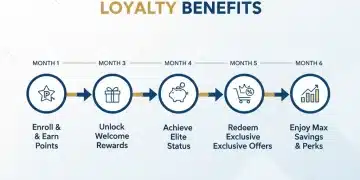
Mastering US Loyalty Tiers 2026: Maximize Benefits & Save Hundreds Annually
In the ever-evolving landscape of consumer rewards, understanding and strategically navigating US loyalty tiers is no longer just a perk—it’s a financial superpower. For 2026, the savvy consumer who masters these programs stands to save hundreds, if not thousands, of dollars annually. From airlines and hotels to credit cards and retail, loyalty programs are designed to reward consistent patronage, but only if you know how to unlock their full potential. This comprehensive guide will delve deep into the intricacies of various loyalty structures, offering actionable strategies to elevate your status, maximize your benefits, and ultimately, put more money back in your pocket.
The sheer volume of loyalty programs can feel overwhelming. Each program has its own set of rules, earning structures, redemption options, and, most importantly, distinct tiers that offer escalating levels of benefits. Our mission today is to demystify these programs, providing you with a clear roadmap to achieving elite status and leveraging those hard-earned privileges. By the end of this article, you’ll be equipped with the knowledge to make informed decisions that transform your spending into significant savings and enhanced experiences.
The Foundation: What Are US Loyalty Tiers and Why Do They Matter in 2026?
At its core, a loyalty tier system is a structured program designed by businesses to reward and retain their most valuable customers. These systems typically categorize customers into different levels (e.g., Silver, Gold, Platinum, Diamond) based on their spending, frequency of engagement, or a combination of factors. As you ascend through these tiers, the benefits become increasingly valuable and exclusive.
Why are US loyalty tiers particularly important in 2026?
- Economic Climate: With fluctuating economic conditions, every dollar saved or value gained becomes more critical. Loyalty programs offer a tangible way to offset costs for travel, shopping, and services.
- Increased Competition: Businesses are constantly vying for consumer attention. Enhanced loyalty benefits are a key differentiator, pushing companies to offer more compelling rewards to maintain market share.
- Personalized Experiences: Higher tiers often unlock personalized services, dedicated support, and bespoke offers, transforming standard transactions into premium experiences.
- Digital Integration: The seamless integration of loyalty programs with digital platforms (apps, websites) in 2026 makes tracking points, redeeming rewards, and managing status easier than ever before.
- Inflation Hedge: Earning points and miles can act as a hedge against inflation, allowing you to lock in future travel or purchases at today’s ‘value’ of points.
Understanding the specific criteria for each tier—whether it’s spending a certain amount, completing a number of stays/flights, or accumulating specific types of points—is the first step toward strategic optimization. Don’t just collect points; understand the path to elite status and the unparalleled benefits that come with it.
Airline Loyalty Tiers: Soaring to New Heights of Savings and Comfort
Airline loyalty programs are arguably some of the most sought-after, offering benefits that can significantly enhance your travel experience and reduce costs. Major US airlines like American Airlines (AAdvantage), Delta Air Lines (SkyMiles), and United Airlines (MileagePlus) all operate multi-tiered systems, typically starting with a basic member level and progressing to elite tiers such as Silver, Gold, Platinum, and even invitation-only levels like Delta’s 360° or United’s Global Services.
How to Achieve Elite Airline Status in 2026:
Earning elite status usually involves a combination of:
- Medallion Qualification Dollars (MQDs)/Elite Qualifying Dollars (EQDs)/Loyalty Points: The amount of money you spend on flights with the airline or its partners.
- Medallion Qualification Segments (MQSs)/Elite Qualifying Segments (EQSs)/Elite Qualifying Flights (EQFs): The number of flight segments flown.
- Medallion Qualification Miles (MQMs)/Elite Qualifying Miles (EQMs)/Elite Qualifying Miles (EQMs): The actual distance flown.
- Credit Card Spending: Many airline co-branded credit cards offer waivers for spending requirements or directly award elite-qualifying credits based on card usage.
Key Benefits Across Airline Tiers:
- Preferred Seating & Upgrades: Higher tiers often grant complimentary upgrades to premium economy, business, or first class, along with access to preferred seating at booking.
- Lounge Access: Elite members frequently enjoy access to exclusive airport lounges, offering comfort, food, and Wi-Fi before flights.
- Priority Services: Expedited check-in, security, boarding, and baggage handling save valuable time.
- Bonus Miles: Elite members earn a higher multiplier of miles for every dollar spent, accelerating future reward redemptions.
- Waived Fees: Baggage fees, change fees, and sometimes even award redemption fees are often waived for elite members.
- Dedicated Customer Service: Access to exclusive phone lines or agents for quicker and more personalized assistance.
To maximize your airline benefits, focus your flying on one or two alliances (e.g., Star Alliance, SkyTeam, Oneworld) to consolidate your qualifying activity. Utilize co-branded credit cards strategically to earn elite-qualifying spend or miles, making the path to higher US loyalty tiers more accessible. For instance, a Delta SkyMiles Reserve American Express Card can provide MQD waivers and direct MQM earnings, significantly boosting your status progress.
Hotel Loyalty Tiers: Unlocking Premium Stays and Exclusive Perks
Hotel loyalty programs, such as Marriott Bonvoy, Hilton Honors, and World of Hyatt, offer a world of benefits that can transform a standard hotel stay into a luxurious experience. Like airlines, these programs are structured with multiple tiers, each offering progressively better perks for frequent guests.
Earning Hotel Elite Status in 2026:
Hotel status is primarily earned through:
- Eligible Nights/Stays: The number of nights or separate stays you complete at participating hotels.
- Base Spend: The total amount of money spent on eligible hotel charges.
- Credit Card Status: Many hotel co-branded credit cards offer automatic elite status (e.g., Hilton Honors Aspire Card offers Diamond status) or provide elite night credits that count towards status.
Top-Tier Hotel Benefits:
- Complimentary Room Upgrades: Often to a better view, a larger room, or even a suite, subject to availability.
- Free Breakfast: A highly valued perk that can save a significant amount, especially for longer stays or families.
- Late Check-Out/Early Check-In: Enhanced flexibility for your travel schedule.
- Lounge Access: Executive lounge access with complimentary refreshments, snacks, and sometimes even evening appetizers and cocktails.
- Bonus Points: Elite members earn a higher percentage of points on stays, leading to faster free night redemptions.
- Guaranteed Room Availability: For top-tier elites, a room might be guaranteed even when the hotel is fully booked, with advance notice.
- Welcome Amenities: Often a choice of bonus points, a local gift, or a food and beverage credit.
To maximize your hotel loyalty, consider concentrating your stays within one or two hotel families. Leveraging co-branded credit cards is often the fastest route to mid- or top-tier status without extensive travel. For example, a single credit card can grant you automatic Gold or Platinum status, unlocking valuable benefits even for occasional travelers. This strategic use of credit cards is a cornerstone of maximizing US loyalty tiers.
Credit Card Loyalty Programs: Your Gateway to Premium Rewards
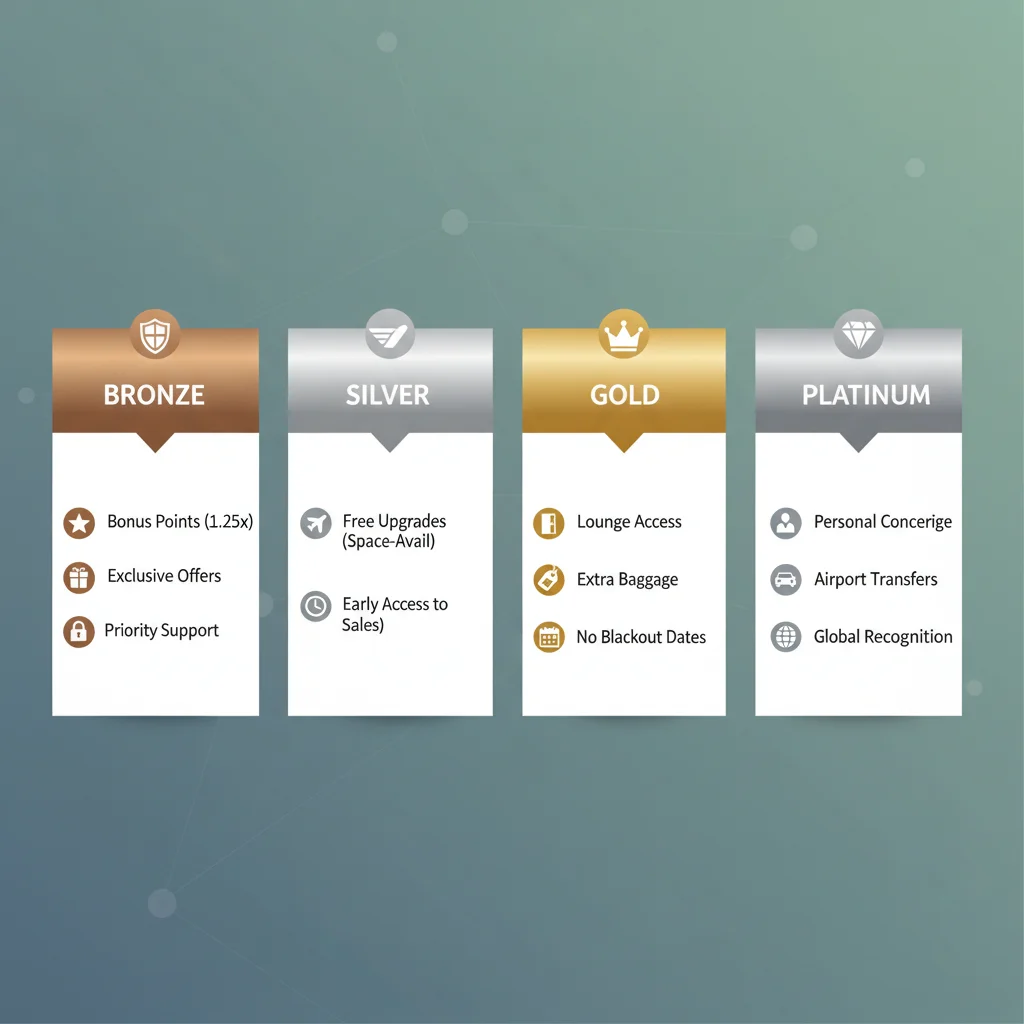
While often intertwined with airline and hotel programs, credit card loyalty programs, particularly those from major issuers like Chase (Ultimate Rewards), American Express (Membership Rewards), and Citi (ThankYou Points), operate on their own tier-like structures. These aren’t always explicitly named ‘tiers’ but rather different card products offering varying levels of benefits and earning rates, effectively creating a tiered system based on annual fees and card features.
Understanding Credit Card ‘Tiers’:
- Entry-Level Cards: Often no annual fee, basic rewards, and limited perks.
- Mid-Tier Cards: Moderate annual fee, enhanced earning rates, travel insurance, and perhaps a few premium benefits like airport lounge access or statement credits.
- Premium Cards: High annual fee, but offer extensive benefits such as comprehensive travel insurance, significant statement credits (travel, dining, streaming), extensive lounge access, elite status with partners, and concierge services.
Maximizing Credit Card Rewards:
- Sign-Up Bonuses: These are often the quickest way to accumulate a large sum of points or miles. Strategically applying for new cards can yield tens of thousands of points.
- Category Bonuses: Utilize cards that offer bonus points on specific spending categories (e.g., dining, groceries, travel) to maximize your everyday spending.
- Point Transfers: Premium credit card programs allow you to transfer points to various airline and hotel loyalty programs, often at a 1:1 ratio, providing immense flexibility and potential for outsized value.
- Statement Credits: High-annual-fee cards often come with annual travel, dining, or other statement credits that can offset a significant portion, if not all, of the annual fee, effectively making the premium benefits ‘free.’
- Referral Bonuses: Referring friends and family to credit cards can earn you additional bonus points.
The key to mastering credit card loyalty is to match your spending habits and travel goals with the right card products. Don’t shy away from annual fees if the benefits and statement credits clearly outweigh the cost. These cards are instrumental in achieving and maintaining higher US loyalty tiers across various travel providers.
Retail and Other Loyalty Programs: Everyday Savings
Beyond travel, numerous retail, dining, and service-based loyalty programs offer tiered benefits. While these may not offer the same ‘glamour’ as airline upgrades or hotel suites, they can lead to substantial everyday savings.
Examples of Tiered Retail Programs:
- Starbucks Rewards: Different levels based on stars earned, offering free drinks, personalized offers, and early access to new items.
- Sephora Beauty Insider: Tiers like Insider, VIB, and Rouge, providing exclusive discounts, free makeovers, and early product access.
- Amazon Prime: While not traditionally tiered, the Prime membership itself acts as a ‘top tier’ offering free shipping, streaming, and exclusive deals.
- Supermarket Programs: Many grocery chains offer tiered discounts or fuel points based on spending.
Strategies for Maximizing Retail Loyalty:
- Consolidate Spending: If possible, focus your purchases at retailers where you can earn and redeem points effectively.
- Utilize Apps and Digital Wallets: Many programs are integrated into apps, making it easy to track points, find offers, and redeem rewards.
- Look for Bonus Offers: Retailers frequently offer bonus points for specific purchases or during promotional periods.
- Combine with Credit Card Rewards: Use a credit card that offers bonus points on retail spending to double-dip on rewards.
While the individual savings from these programs might seem smaller, their cumulative effect over a year can be significant, reinforcing the value of understanding and engaging with all types of US loyalty tiers.
Advanced Strategies for Mastering US Loyalty Tiers in 2026
To truly maximize your benefits and save hundreds annually, you need to move beyond basic participation and adopt advanced strategies. These tactics involve a deeper understanding of program mechanics and a willingness to be proactive.
1. Status Matching and Challenges:
If you hold elite status with one airline or hotel chain, you can often leverage that status to gain equivalent status with a competitor. This is known as a status match. Some companies offer status challenges, where you receive temporary elite status and must meet reduced qualification criteria within a specific timeframe to retain it. This is an excellent way to experience benefits across different brands without starting from scratch.
2. Earning Elite Night/Segment Credits Without Flying/Staying:
As mentioned, certain credit cards can provide elite night credits for hotels or elite qualifying miles/dollars for airlines without requiring actual travel. For example, some Marriott Bonvoy cards offer 15 elite night credits annually, giving you a significant head start towards higher status. Similarly, some airline cards offer MQD waivers or direct elite-qualifying earnings through spending.
3. Leveraging Family Accounts and Pooled Points:
Some loyalty programs allow family members to pool points or miles, accelerating the accumulation process. While less common for elite status itself, this can be incredibly useful for redeeming larger awards. Always check the specific program rules regarding family accounts.
4. Soft Landings and Status Extensions:
If you’re unable to re-qualify for your current elite status, some programs offer a ‘soft landing’ to a slightly lower tier rather than dropping you to the base level. Additionally, during unforeseen circumstances (like global travel disruptions), programs may offer status extensions or reduced qualification requirements, as seen in recent years. Stay informed about these announcements.
5. Strategic Use of Portal Bonuses and Shopping Malls:
Before making any online purchase, check if the retailer is available through an airline, hotel, or credit card shopping portal. These portals offer bonus points/miles for purchases, effectively allowing you to earn rewards on spending you’d do anyway. This is a subtle yet powerful way to accumulate points towards your next redemption or elite status.
6. Understanding Redemption Sweet Spots:
Not all point redemptions are created equal. Some programs have ‘sweet spots’ where you can get disproportionately high value for your points (e.g., specific international business class routes, high-end hotel redemptions during off-peak seasons). Researching these sweet spots can save you hundreds more than a standard redemption.

Common Pitfalls to Avoid in US Loyalty Tiers
While the benefits are significant, there are common mistakes that can diminish your efforts. Being aware of these pitfalls is crucial for effective loyalty program management.
- Diluting Efforts: Spreading your loyalty too thin across many programs makes it difficult to achieve meaningful elite status in any single one. Focus on 1-2 airlines and 1-2 hotel chains.
- Points Expiration: Many points and miles expire after a period of inactivity. Always know the expiration policies of your programs and take action (e.g., a small purchase, transfer, or redemption) to keep them active.
- Overspending for Status: Never spend money unnecessarily just to achieve a higher tier. The goal is to maximize benefits on your existing spending patterns, not to incur debt for perks.
- Ignoring Program Changes: Loyalty programs frequently change their rules, earning rates, and redemption charts. Stay updated by subscribing to program newsletters and following travel rewards blogs.
- Not Valuing Benefits Correctly: Don’t just look at the face value of a perk. A free checked bag might save you $60, while a free breakfast for two for three nights could save $150+. Factor these savings into your overall valuation.
- Missing Out on Credit Card Benefits: Many people pay annual fees for premium credit cards but fail to utilize all the included benefits (e.g., travel credits, lounge access, rental car insurance). Fully leverage every perk to justify the cost.
Looking Ahead: The Future of US Loyalty Tiers in 2026 and Beyond
The landscape of US loyalty tiers is dynamic. In 2026, we can anticipate continued trends towards:
- Revenue-Based Earning: Most major programs have already shifted, or are continuing to shift, towards rewarding spending rather than just distance flown or nights stayed. This means higher spenders will find it easier to achieve status.
- Personalized Offers: Expect more tailored promotions and redemption options based on individual spending habits and preferences, driven by AI and data analytics.
- Experiential Rewards: Beyond free flights and hotel nights, there’s a growing emphasis on unique experiences (e.g., exclusive concerts, culinary events, once-in-a-lifetime adventures) as redemption options for top-tier members.
- Sustainability Initiatives: Loyalty programs may increasingly incorporate sustainable travel options or offer ways to offset carbon footprints through point redemptions.
- Increased Partnerships: Expect more cross-brand collaborations, allowing members to earn and redeem points across a wider ecosystem of partners.
Staying agile and informed will be key to navigating these changes and continuing to extract maximum value from your loyalty efforts. Regularly review your program activity, reassess your strategy, and adapt to new opportunities as they arise.
Conclusion: Your Path to Hundreds in Annual Savings
Mastering US loyalty tiers in 2026 is a journey that rewards diligence and strategic thinking. By understanding the earning criteria, valuing the benefits, and applying advanced strategies across airlines, hotels, and credit cards, you can unlock a world of premium experiences and significant annual savings. The hundreds of dollars you save on travel upgrades, waived fees, free nights, and everyday purchases can truly transform your financial outlook and enhance your quality of life.
Start today by auditing your current loyalty program participation. Identify where your spending is concentrated, and pinpoint opportunities to consolidate your efforts. Research the credit cards that align with your travel goals and spending habits. Most importantly, commit to staying informed about program changes and new opportunities. With this guide as your foundation, you are well on your way to becoming a loyalty program expert, saving hundreds annually, and enjoying the richer experiences that elite status affords.
Don’t let valuable loyalty benefits go untapped. The power to save and upgrade your lifestyle is literally in your wallet and at your fingertips. Embrace the world of US loyalty tiers and start maximizing your benefits in 2026!