Master Your 2026 Household Budget: Eliminate Hidden Costs & Save More

Are you ready to take control of your finances in 2026? The start of a new year often brings resolutions of better health, new hobbies, and, for many, improved financial management. While the desire to save money is common, truly mastering your household budget requires more than just good intentions. It demands a keen eye for detail, a willingness to challenge spending habits, and a strategic approach to identifying and eliminating those pesky hidden costs that silently erode your savings.
In this comprehensive guide, we’ll delve deep into the art of financial optimization for your household budget 2026. Our goal is to equip you with the knowledge and tools to not only track your spending but to uncover and eradicate at least 20% of those elusive hidden expenses. This isn’t about drastic cuts that leave you feeling deprived; it’s about smart, sustainable strategies that free up significant funds, allowing you to invest in your future, pay down debt, or simply enjoy a greater sense of financial security.
The financial landscape is ever-evolving, and 2026 will undoubtedly present its own set of challenges and opportunities. From fluctuating energy prices to new subscription services and changing consumer habits, staying on top of your household budget 2026 requires vigilance. By the end of this article, you’ll have a clear roadmap to a more robust and efficient financial life, ensuring your money works harder for you.
Understanding Your Current Financial Landscape: The Foundation of Your 2026 Household Budget
Before you can eliminate hidden costs, you need to understand where your money is currently going. This foundational step is often overlooked, but it’s absolutely crucial for effective budget management. Think of it as a financial audit of your life. Without a clear picture, any attempts to cut costs will be like shooting in the dark.
Step 1: Track Every Penny
The first and most critical step in managing your household budget 2026 is meticulous expense tracking. This means recording every single outflow of cash, no matter how small. Many people only track major bills, but it’s the small, daily purchases that often accumulate into significant sums over time. Consider these methods:
- Budgeting Apps: Tools like Mint, YNAB (You Need a Budget), or Personal Capital can link to your bank accounts and credit cards, automatically categorizing transactions. This offers a real-time view of your spending.
- Spreadsheets: For those who prefer a more hands-on approach, a simple spreadsheet (Google Sheets or Excel) can be highly effective. Create categories for all your expenses and manually input or import your transactions.
- Notebook and Pen: The old-fashioned way still works! Carry a small notebook and jot down every purchase. This can be particularly effective for cash transactions.
Commit to tracking for at least one full month, ideally three. This will give you a realistic snapshot of your spending habits and reveal patterns you might not have been aware of.
Step 2: Categorize Your Expenses
Once you’ve tracked your spending, the next step is to categorize it. This helps you identify where your money is truly going. Common categories for a household budget 2026 include:
- Fixed Expenses: These are usually the same amount every month and are difficult to change in the short term (e.g., rent/mortgage, loan payments, insurance premiums).
- Variable Expenses: These fluctuate month to month and offer more flexibility for adjustments (e.g., groceries, utilities, transportation, entertainment).
- Discretionary Expenses: These are non-essential items that contribute to your lifestyle but can be cut back if needed (e.g., dining out, hobbies, shopping for non-necessities).
Be honest with your categorization. Don’t try to sugarcoat spending in areas you know are problematic. The more accurate your categories, the more effective your budget will be.
Step 3: Analyze Your Spending Data
With your expenses tracked and categorized, it’s time for analysis. Look for trends, outliers, and areas where your spending doesn’t align with your financial goals. Ask yourself:
- Where is the majority of my money going?
- Are there any categories where I consistently overspend?
- Are there any expenses that surprise me?
- How does my actual spending compare to what I *thought* I was spending?
This analytical phase is where the first glimmers of hidden costs often appear. You might notice a small daily coffee purchase adding up to hundreds over a month, or a recurring subscription you forgot about. This deep dive into your financial data is the bedrock upon which you’ll build a more efficient household budget 2026.
Unmasking the Invisible: Identifying Hidden Costs in Your Household Budget 2026
Hidden costs are like financial ninjas – they operate silently, often unnoticed, yet they can inflict significant damage on your household budget 2026. These aren’t always obvious expenses; sometimes they’re subtle leaks that, when plugged, can free up substantial funds. Our target is to eliminate at least 20% of these.
Subscription Overload: The Silent Budget Killer
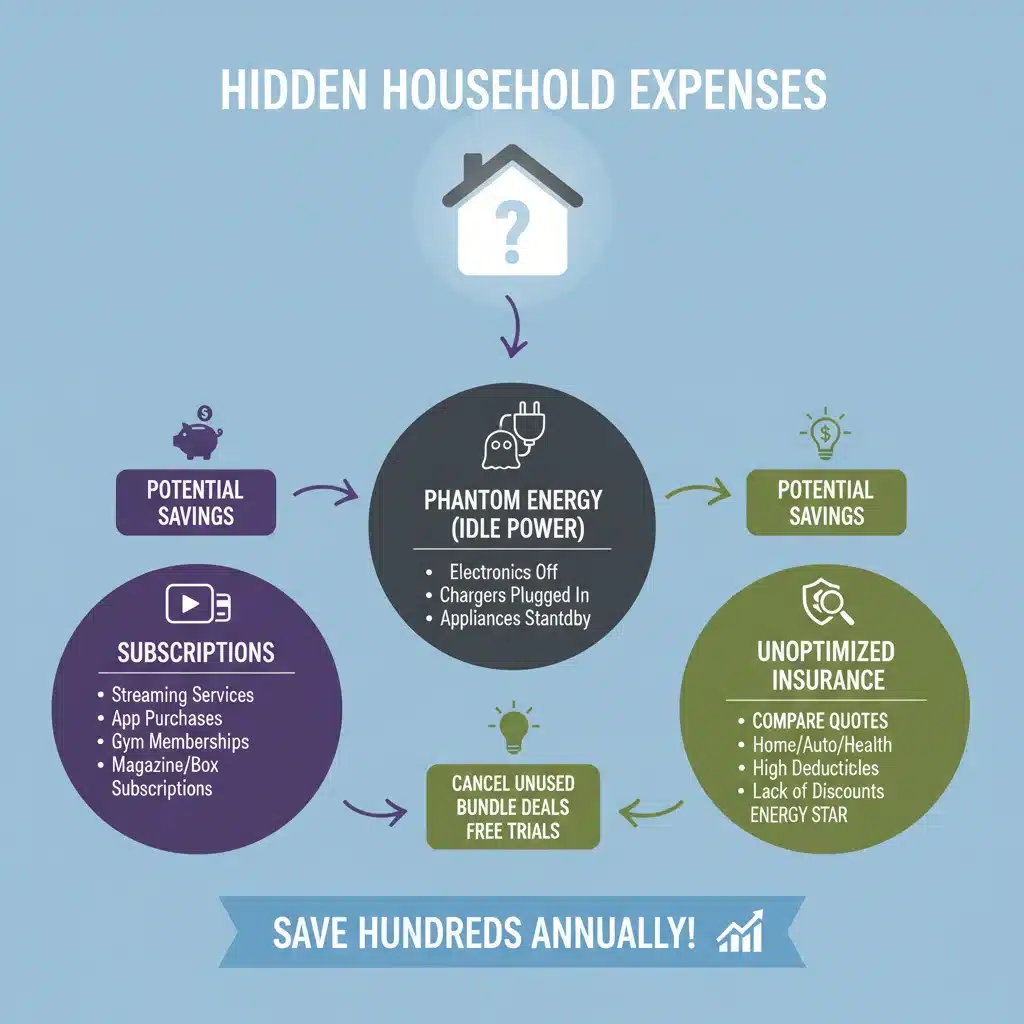
In the digital age, subscriptions are ubiquitous. From streaming services and fitness apps to software and meal kits, they offer convenience but can quickly spiral out of control. Many people subscribe to services they rarely use or have forgotten about entirely.
- Audit Your Subscriptions: Go through your bank statements and credit card bills for the last 12 months. List every single recurring subscription.
- Evaluate Usage: For each subscription, ask: Do I use this regularly? Is it essential? Is there a free alternative or a cheaper competitor?
- Cancel or Downgrade: Be ruthless. If you’re not using it, cancel it. If you only use a fraction of its features, downgrade to a cheaper plan. Consider rotating streaming services – subscribe to one for a few months, then switch to another.
You might be surprised at how much you’re spending on services you barely touch. This is often one of the easiest areas to find immediate savings for your household budget 2026.
Phantom Energy Consumption: The “Vampire Drain”
Electronics that are plugged in but not actively in use still draw power – this is known as “vampire drain” or “phantom load.” While individual devices consume little, collectively they can add up to a noticeable chunk of your electricity bill.
- Unplug Devices: When not in use, unplug chargers, TVs, game consoles, and computer monitors.
- Smart Power Strips: Invest in smart power strips that cut power to devices when they’re turned off or enter standby mode.
- Energy-Efficient Appliances: If you’re due for an upgrade, prioritize energy-efficient models (look for Energy Star ratings).
Regularly checking your utility bills for unusual spikes can also help identify if your energy consumption is higher than it should be, offering another opportunity to optimize your household budget 2026.
Unoptimized Insurance Policies: Paying for More Than You Need
Insurance is a necessity, but many people stick with the same provider and policy for years without reviewing it. This can lead to paying for coverage you no longer need or missing out on better deals.
- Annual Review: Dedicate time annually to review your home, auto, health, and life insurance policies.
- Compare Quotes: Get quotes from at least three other providers. You might find identical coverage for significantly less.
- Adjust Coverage: As your life circumstances change, so should your insurance. For example, if your car is older, you might consider increasing your deductible or dropping certain types of coverage.
- Bundle Policies: Many insurers offer discounts for bundling multiple policies (e.g., home and auto).
Don’t be afraid to switch providers if it means substantial savings for your household budget 2026. Loyalty sometimes costs you money.
Hidden Banking Fees and Interest Charges
Bank fees, overdraft charges, ATM fees, and high-interest rates on credit cards can silently eat away at your finances.
- Review Bank Statements: Look for recurring fees you might not have noticed.
- Switch Banks: If your bank charges excessive fees, consider switching to one with lower or no monthly fees, free ATMs, and better interest rates on savings accounts.
- Consolidate Debt: High-interest credit card debt is a major hidden cost. Explore options like balance transfer cards (with a 0% introductory APR) or personal loans to consolidate debt at a lower interest rate.
- Automate Payments: Set up automatic payments to avoid late fees on bills and credit cards.
Even small fees, when compounded over a year, can impact your household budget 2026 more than you realize.
Impulse Buys and Lifestyle Creep
These aren’t always “hidden” in the traditional sense, but their impact is often underestimated. Impulse buys – those unplanned purchases made on a whim – and lifestyle creep – where increased income leads to increased spending – can be significant budget drains.
- The 24-Hour Rule: For non-essential purchases, wait 24 hours before buying. Often, the urge passes.
- Budget for Discretionary Spending: Allocate a specific amount for “fun money” or impulse buys. Once it’s gone, it’s gone.
- Mindful Spending: Before every purchase, ask yourself: Do I truly need this? Does it align with my financial goals?
Combating impulse buys and lifestyle creep requires self-awareness and discipline, but the savings can be substantial for your household budget 2026.
Strategic Elimination: Actionable Steps to Cut 20% of Hidden Costs in 2026
Identifying hidden costs is only half the battle; the real victory comes from strategically eliminating them. Our goal is a tangible 20% reduction, which is achievable with focused effort. Here’s how to put your findings into action and fortify your household budget 2026.
Step 1: Prioritize and Attack the Biggest Leaks First
Review your identified hidden costs. Which ones are costing you the most? Start there. For many, this will be:
- Unused Subscriptions: These are often the quickest and easiest to cancel, providing immediate savings.
- High-Interest Debt: The interest payments on credit cards can be astronomical. Focus on paying down high-interest debt aggressively.
- Unoptimized Insurance: Shopping around for insurance can yield hundreds, if not thousands, in annual savings.
Tackling these larger items first will give you a significant boost in your savings journey for your household budget 2026 and provide motivation to continue.
Step 2: Automate Your Savings and Payments
One of the most powerful tools for budget control is automation. By setting up automatic transfers and payments, you remove the temptation to spend and ensure your financial goals are met consistently.
- Automate Savings: Set up an automatic transfer from your checking to your savings account each payday. Even a small amount adds up.
- Automate Bill Payments: Ensure all your recurring bills are paid on time to avoid late fees.
- “Pay Yourself First”: Treat your savings as a non-negotiable expense. Before you pay any other bills, allocate a portion of your income to savings or investments.
Automation makes saving effortless and prevents hidden costs like late fees from ever appearing in your household budget 2026.
Step 3: Negotiate Everything
Many people don’t realize how much power they have to negotiate prices and terms. From internet bills to gym memberships, almost anything can be negotiated.
- Call Service Providers: Call your internet, cable, and phone providers annually. Ask if there are new promotions or if they can match a competitor’s offer. Often, just threatening to switch can get you a better deal.
- Review Medical Bills: Scrutinize medical bills for errors. Negotiate with hospitals or providers for lower rates, especially if you’re paying out-of-pocket.
- Membership Fees: If you have gym memberships or other club fees, see if you can negotiate a lower rate or pause your membership if you’re not using it.
A few phone calls a year can lead to significant reductions in your household budget 2026.
Step 4: Adopt Smart Shopping Habits
Groceries and everyday essentials are significant components of most household budgets. Smart shopping can yield substantial savings.
- Meal Planning: Plan your meals for the week to create a precise grocery list. This reduces impulse buys and food waste.
- Shop with a List: Stick to your list and avoid browsing aisles where you might be tempted by unnecessary items.
- Buy in Bulk (Wisely): Only buy non-perishable items in bulk if you know you’ll use them before they expire and if the unit price is genuinely lower.
- Compare Prices: Use apps or websites to compare prices before making a purchase, especially for larger items.
- Utilize Coupons and Sales: Don’t be shy about using coupons or shopping during sales.
These habits, consistently applied, can trim hundreds from your annual grocery bill, directly impacting your household budget 2026.
Step 5: Embrace DIY and Repair Culture
In a consumer-driven society, it’s easy to replace items or hire professionals for tasks you could do yourself. Embracing a DIY and repair mindset can save a lot.
- Home Repairs: Learn basic home maintenance tasks (e.g., fixing a leaky faucet, painting, minor electrical work).
- Appliance Repair: Before replacing a broken appliance, look up common fixes online. Many minor issues can be resolved with a simple part or repair.
- Haircuts/Beauty: Consider learning to cut your own hair or do simple beauty treatments at home.
While some tasks require professional expertise, many don’t. The internet is a treasure trove of tutorials to help you save money on various services for your household budget 2026.
Maintaining Momentum: Long-Term Strategies for Your 2026 Household Budget and Beyond
Eliminating 20% of hidden costs isn’t a one-time event; it’s the beginning of a more financially savvy lifestyle. To ensure your household budget 2026 remains optimized, you need long-term strategies and consistent effort.
Regular Budget Reviews
Your budget isn’t static; it’s a living document that needs regular attention. Life changes, income fluctuates, and expenses evolve. Schedule monthly or quarterly budget reviews.
- Assess Progress: How are you doing against your savings goals?
- Identify New Leaks: Are new hidden costs emerging?
- Adjust Categories: Do your spending categories still accurately reflect your financial reality?
- Set New Goals: As you achieve one financial goal, set another.
Consistent review ensures your household budget 2026 remains aligned with your current life and future aspirations.
Building an Emergency Fund
One of the best ways to protect your household budget 2026 from unexpected hidden costs (like emergency repairs or medical bills) is to have a robust emergency fund. Aim for 3-6 months’ worth of essential living expenses in a separate, easily accessible savings account. This fund acts as a financial buffer, preventing you from going into debt when unforeseen circumstances arise.
Investing in Financial Literacy
The more you know about personal finance, the better equipped you’ll be to manage your money. Read books, listen to podcasts, follow reputable financial blogs, and consider taking a personal finance course. Continuous learning will empower you to make smarter financial decisions and spot potential hidden costs before they impact your household budget 2026.

Setting Clear Financial Goals
What are you saving for? A down payment on a house? Retirement? Your children’s education? A dream vacation? Having clear, measurable financial goals provides motivation and direction for your budgeting efforts.
- SMART Goals: Make your goals Specific, Measurable, Achievable, Relevant, and Time-bound.
- Visualize Success: Regularly remind yourself of your goals. This makes the sacrifices of cutting hidden costs feel worthwhile.
Your household budget 2026 becomes a powerful tool to achieve these aspirations, rather than just a restrictive set of rules.
Leveraging Technology for Continued Optimization
Beyond basic budgeting apps, explore other technological solutions:
- Price Comparison Tools: Browser extensions and apps that automatically compare prices across retailers.
- Cash-Back Apps/Credit Cards: Use these strategically to get a percentage back on your purchases, but only if you can pay your credit card balance in full every month to avoid interest.
- Investment Apps: Start small with micro-investing apps to grow your wealth over time.
Technology can be a powerful ally in continuously optimizing your household budget 2026 and uncovering new opportunities for saving.
Conclusion: A Financially Healthier 2026
Mastering your household budget 2026 and eliminating hidden costs is an empowering journey that transforms your financial outlook. By meticulously tracking your spending, proactively identifying those subtle financial leaks, and implementing strategic elimination techniques, you can confidently achieve our target of reducing expenses by 20% or more.
Remember, this isn’t about deprivation; it’s about intentionality. It’s about making conscious choices that align with your financial goals and free up resources for what truly matters to you. The disciplined approach you adopt now will not only benefit your household budget 2026 but will lay a strong foundation for lasting financial health and security for years to come.
Start today. Take that first step to review your subscriptions, analyze your bank statements, and challenge every expense. The power to transform your financial future is in your hands, and 2026 is the perfect year to make it happen. Your wallet – and your peace of mind – will thank you.